A famous face can get someone to try a fighting game. The harder job is giving that person a reason to care about distance, timing and the next move. The Def Jam fighting games are interesting because their answers changed so much.
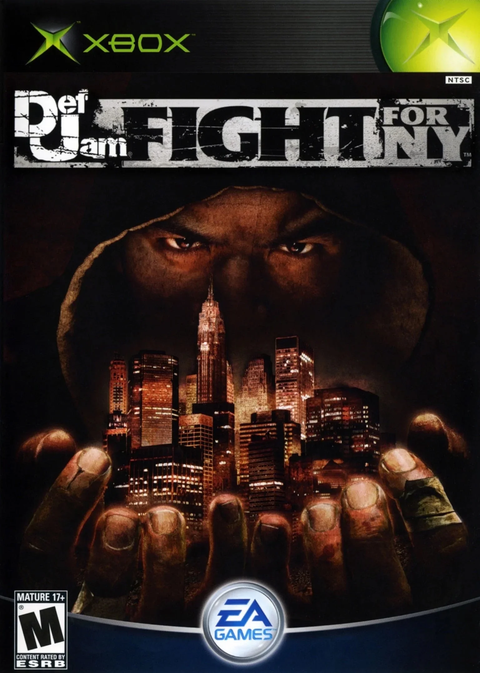
This retrospective puts Fight for NY at the center. Its combination of fighter development and environmental combat gives the celebrity premise something substantial to work with. Vendetta and Icon help explain that achievement from either side: one establishes the underground fight circuit, while the other gives the soundtrack direct control over danger.
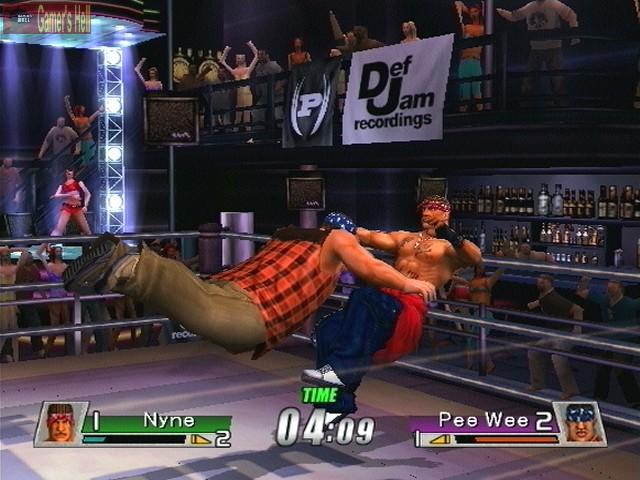
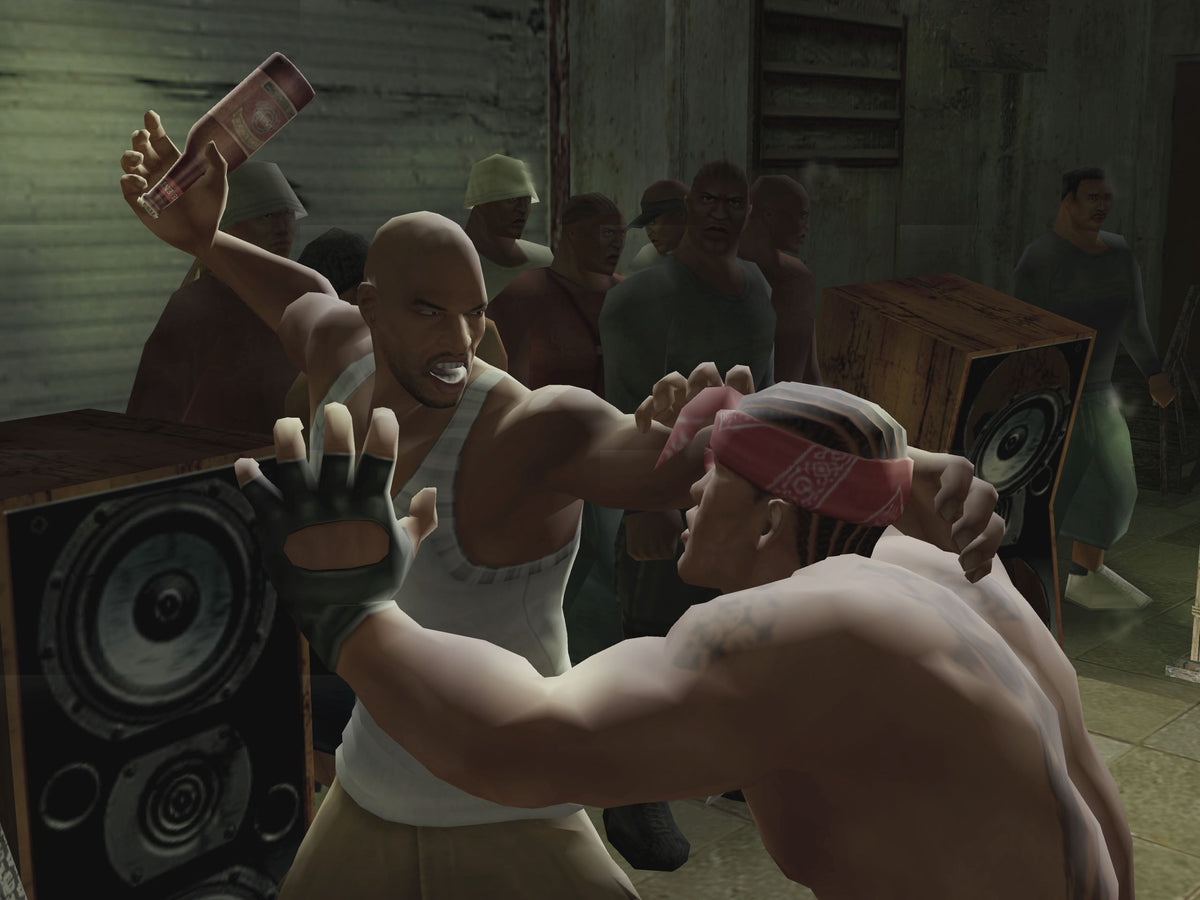
Featured image: Fight for NY brings spectators within reach of the action. EA promotional screenshot from the archived 2004 press kit.
Vendetta gave the artists a place in the competition
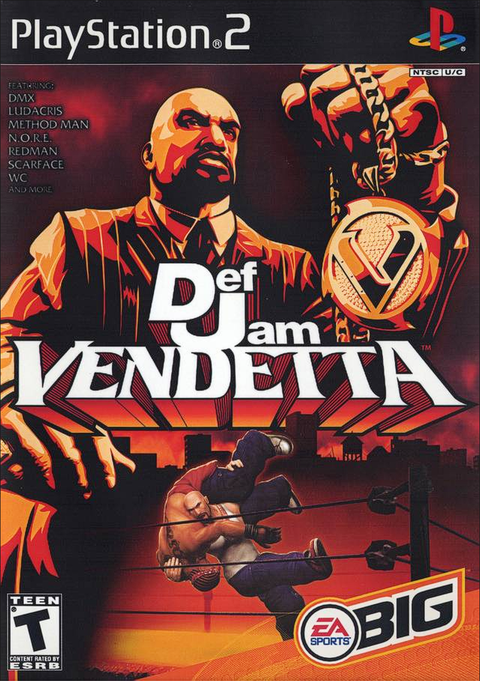
EA’s April 1, 2003 launch announcement, preserved by Nintendo World Report, introduces Def Jam Vendetta for PS2 and GameCube. Its roster included DMX, Method Man, Redman and Ludacris alongside original characters. Progression meant beating opponents, opening venues and unlocking fighters.
That structure matters. A musician becomes someone you have to overcome, rather than a name attached to a soundtrack credit. The announcement even describes artist-themed venues, including DMX’s Junkyard and Club Luda. Personality reaches into the setting as well as the character selection.
The wrestling foundation is also important to the comparison. GameSpot’s introduction to producer Josh Holmes’s diary identifies EA Canada and AKI as the sequel’s development teams. Holmes describes deliberately mixing fighting, wrestling and beat-’em-up ideas. The interesting progression is how much more responsibility the surroundings would acquire.

Fight for NY made positioning a decision about the whole room
In his September 2004 designer diary, Holmes explains that spectators could return a fighter to the action, join attacks and supply weapons. Venues also contained interactions players could learn, including objects that could be loosened and used.
The resulting question is wonderfully immediate: where are you standing? A nearby boundary can be an opportunity or a liability. Space beside an opponent has a different meaning when another participant in the fight might be waiting at its edge.

This gives a rematch something more specific to teach than a longer attack sequence. You can learn where an interaction is available and recognize an opportunity earlier. Knowing a room becomes part of knowing how to fight in it.
Holmes describes an ambition to make the basic controls approachable while retaining strategic variety. The environment is a persuasive answer to that design problem. A visible object or spectator can suggest a possibility before the player has memorized an elaborate command list.
Your fighter’s style gave the chaos a direction
The original North American PS2 manual distinguishes five disciplines: street fighting, kickboxing, martial arts, wrestling and submissions. It connects them with different priorities, including powerful punches, clinches, environmental attacks, grappling and attacks on specific body parts.
Those differences give a player a useful starting question. Do you want to close distance for a grapple, build an exchange around strikes, or work repeatedly on a vulnerable limb? The crowd may make the match messy, but your fighter can still have an intention.

The manual also documents learning additional styles at Stapleton Athletics and spending development points on skills. That makes the gym consequential. An upgrade can change what you want to do in the next confrontation, rather than simply making the same approach numerically stronger.
Blazin’ moves add another decision. The manual ties activation to a full momentum meter and a subsequent grapple. A dramatic finish therefore still needs an opening. Having the resource and successfully using it are separate parts of the exchange.
The campaign let you belong in the lineup
Fight for NY’s sketch-artist character creation, gym and clothing, jewelry, grooming and tattoo shops are documented in that same manual. Together, they give the campaign a personal focus: the fighter you develop is also the person you present to this world.
Our reading is that this makes the licensed cast more interesting. The fantasy includes having your own place among recognizable personalities. Deciding how that character looks and fights makes progression feel like building a particular identity.
The surrounding drama also gives successive bouts a purpose. Holmes describes a story driven by the struggle between D-Mob and Crow. A sequence of fights can carry changes in allegiance and status, instead of relying entirely on the satisfaction of clearing another opponent from a ladder.
Icon asked players to listen for the next opening
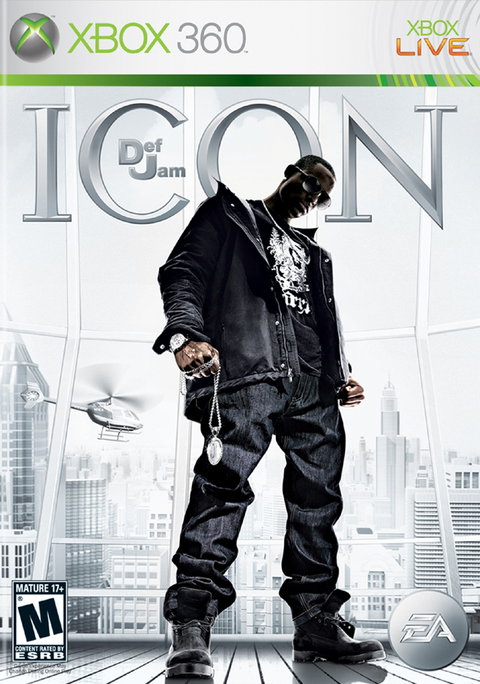
Def Jam: Icon takes another route. EA’s 2007 European PS3 manual explains hazards triggered by a song’s beats, DJ controls for scratching and song switching, and a combat bonus associated with switching to a fighter’s song.
That changes the role of awareness. In Fight for NY, learning the room helps you recognize an available interaction. Icon adds a timing question to the setting: when will the music make this location dangerous? Moving someone toward trouble and arranging the moment become linked ideas.

Its Build a Label campaign also includes signing artists, setting royalty rates and allocating spending to releases. Music becomes part of the campaign’s management decisions as well as the fight itself.
For someone seeking more of Fight for NY’s particular combat, this is a substantial change in emphasis. Icon is more useful to examine as another interpretation of the premise than as a promise of the same experience with newer presentation.
The Takeover deserves its own place in the collection
Def Jam Fight for NY: The Takeover is the PSP branch. In his September 2006 review, Ars Technica’s Ben Kuchera reported a different story and some new moves alongside the portable adaptation. Those are contemporary reported distinctions, not results of testing performed for this article.
For collectors, the practical consequence is simple: match the exact subtitle and platform to the experience you want. A familiar main title can conceal a different release. Our condition guide is useful when comparing the accompanying case and manual.
What remains worth looking for
A 2024 Guardian interview with producer Lauren Wirtzer Seawood describes complicated licensing across performers, music and brands. That context supports caution around revival talk; it cannot establish the terms or prospects of an unannounced deal.
For an actual play session, the more useful task is learning the existing game. In Fight for NY, choose an approach, notice the room’s opportunities and practice turning momentum into a usable opening. The name on the opponent’s shirt can start the conversation. The decisions inside the fight give you something to discuss afterward.
Zypher’s relevant listings include Vendetta for PS2, Fight for NY for original Xbox and Icon for Xbox 360. Compare each listing’s current selectable condition. For more of the surrounding era, explore our PS2 games feature.