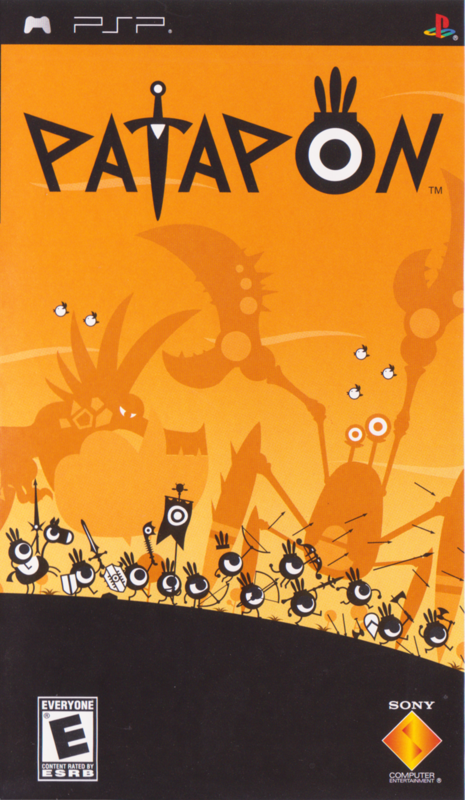
Patapon on PSP looks almost impossibly simple at first: a line of one-eyed warriors crossing a flat, storybook horizon. Then the drums begin. Movement, combat and survival all depend on four-beat phrases, turning a tiny army game into something that feels part rhythm performance, part field command.
That unlikely combination is why Patapon still matters. It does not use music as decoration or bolt timing challenges onto a conventional action game. Rhythm is the language between the player and the tribe, while strategy decides what those commands are meant to accomplish.
Four drums become a complete command system
Patapon gives the player four drum sounds: Pata, Pon, Don and Chaka. Short patterns translate into orders such as marching, attacking, defending and retreating. The most famous phrase, “Pata-Pata-Pata-Pon,” moves the tribe forward, but knowing a pattern is only the first step. The order has to fit both the beat and the situation on screen.
This creates a useful split in attention. One part of the player is listening and keeping time. Another is watching enemy movement, judging distance and deciding whether the next phrase should advance, attack or protect the formation. A late decision can be as costly as a missed beat.

Producer Hiroyuki Kotani described the idea as communicating with the tribe rather than simply issuing menu commands. That distinction is the heart of the design. The Patapons sing the phrase back, animate with the pulse and carry it forward. The response makes every successful command feel like a shared action rather than an invisible input.
The rhythm works because the army matters
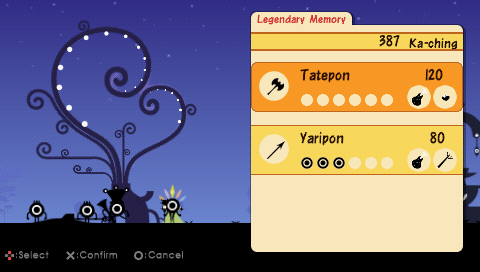
Patapon would be a clever novelty if every unit behaved the same way. Instead, preparation gives the music consequences. The tribe includes classes with different jobs, such as shield-bearing Tatepons and spear-throwing Yaripons. Players gather materials, create or strengthen Patapons, equip the force and choose a formation suited to the next mission.

That means a battle begins before the first drumbeat. A squad built for one threat may struggle against another. Equipment can improve a unit, but field position and command choice still decide whether those advantages matter. Patapon constantly moves between planning and execution: assemble the right group, then prove that plan under rhythmic pressure.

The result is unusually readable strategy. The silhouettes make unit roles and threats easy to follow on a small handheld screen, while the repeated command phrases leave room to think between inputs. The game can be demanding, but its rules are expressed through sound, motion and clear shapes instead of a crowded interface.
A visual identity built for the idea
Patapon’s look began with character art by French artist Rolito. In a 2017 PlayStation interview, Kotani recalled seeing simple spear-wielding creatures made from circles and being struck by them immediately. He proposed a war strategy game driven by drums to the developer Pyramid, then shaped the command system around those designs.
The name also became part of the mechanic. Kotani said “Patapon” appeared among names Rolito suggested, and the sounds “pata” and “pon” led directly to the memorable marching phrase. Sound designer Kemmei Adachi joined the project early because call and response was central, not an effect added after the systems were finished.
Adachi also explained that the music had to create variety while staying at the marching tempo of 120 beats per minute. That constraint helps explain the game’s distinctive feel. The soundtrack changes with the action, but it never stops serving as the timing grid the player needs to hear.

From a PSP original to a preserved PlayStation oddity
Patapon first released in Japan in 2007. Sony launched it in North America on February 26, 2008, describing it as a PSP game that combined rhythm, action and strategy through real-time drum commands. At a moment when handheld games often chased familiar console genres, Patapon used the PSP’s face buttons, screen and speakers for a structure that was difficult to confuse with anything else.
Sony returned to the game with Patapon Remastered for PlayStation 4 in 2017. The series moved again in 2025 with Patapon 1+2 Replay, an official collection for PlayStation 5, Nintendo Switch and Steam. The newer package adds difficulty choices, timing adjustment and an always-visible command display, but the core four-drum system remains intact.
That history is important because it shows the idea survived changes in hardware. The original PSP release is still the cleanest historical snapshot of the design, while the later editions make clear that its central language did not need to be replaced.
Watch the official trailer
PATAPON 1+2 REPLAY launch trailer
Official Bandai Namco Entertainment America channel. Playback may include provider advertising.
Why Patapon is still worth talking about
Patapon remains distinctive because its systems agree with one another. The art makes the battlefield legible. The music carries the control scheme. The call-and-response animation turns inputs into character. The army-building layer ensures that performance alone is not enough.
It also offers a sharp lesson in game design: a small vocabulary can create a surprising number of decisions when timing and context matter. Four sounds are enough to build a relationship between player and tribe, and enough to make a march feel triumphant when the whole formation locks into the beat.
For collectors, the PSP release also represents the original physical version of a series that later moved through digital remasters and a modern compilation. More importantly, it remains an inventive game rather than merely an unusual artifact. Patapon still speaks in its own rhythm, and almost two decades later, no other game says quite the same thing.
Zypher shop recommendations: More games like this
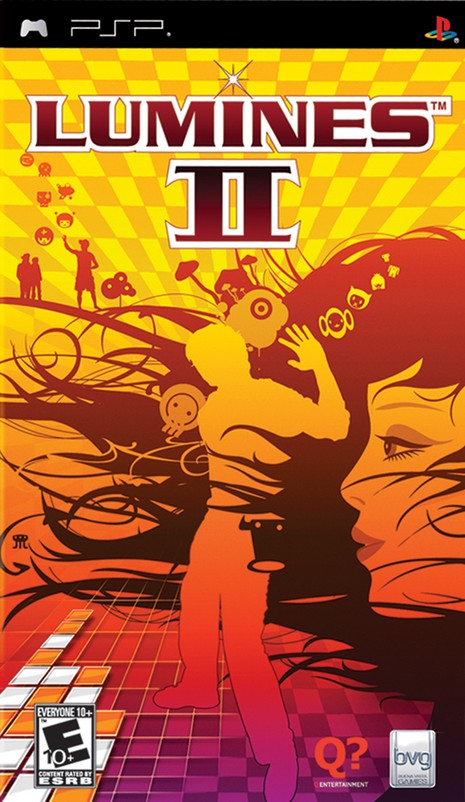
- Lumines II for PSP: another portable design where music and timing reshape a familiar genre, this time through block-matching puzzles.
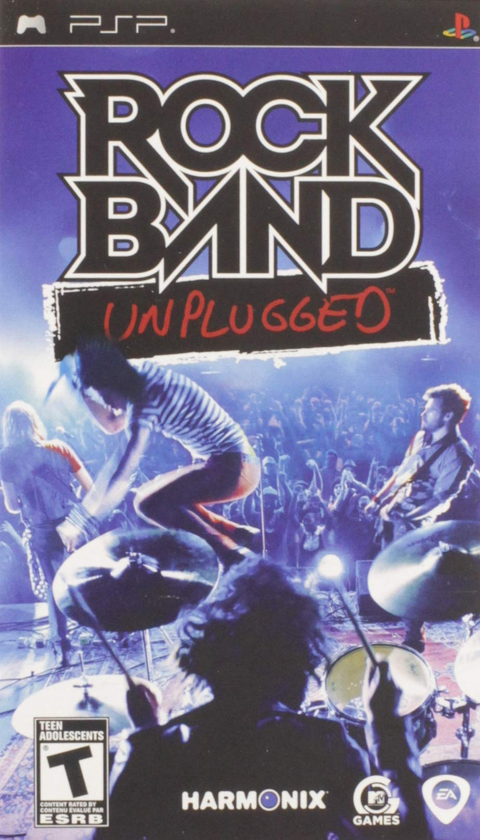
- Rock Band Unplugged for PSP: a handheld rhythm game built around keeping multiple musical parts under control.
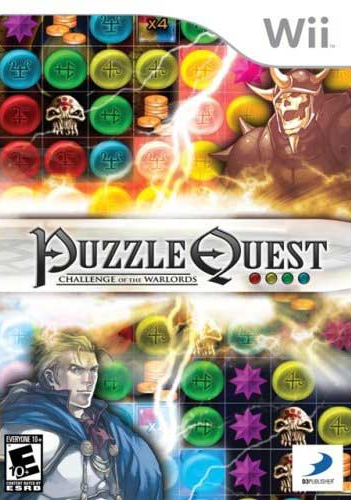
- Puzzle Quest: Challenge of the Warlords for Wii: a different hybrid that combines an immediately readable puzzle system with RPG progression and tactical choices.
Keep exploring Zypher XP
- Best PSP Games: 20 PlayStation Portable Classics Worth Playing
- Complete in Box vs Game & Case vs Disc Only
- How to Buy Used Video Games Online Without Getting Burned
If your shelf needs room, sell your old games to Zypher. Current eligibility and offers are shown on the live Buy List.
Official sources and media credit
- Sony Computer Entertainment America’s February 26, 2008 Patapon launch announcement
- PlayStation interview with producer Hiroyuki Kotani and sound designer Kemmei Adachi
- Bandai Namco’s official Patapon 1+2 Replay page
- PlayStation’s Patapon 1+2 Replay product page
Featured image and four inline gameplay screenshots are exact-game Patapon PSP captures used under the MobyGames screenshot permission, checked October 6, 2026. MobyGames permits up to 20 screenshots in commercial or non-commercial articles with credit and a link. Screenshots are presented unaltered.