Some games let you become a champion. The old SmackDown games let you become a champion, start a completely unnecessary backstage fight, and turn a perfectly serviceable evening into a dispute over who unplugged the second controller. Wrestling had arrived in the living room, and apparently the furniture was also on the card.
THQ and Yuke’s built something bigger than an annual collection of entrance music and updated tights. Across the original PlayStation, the PS2, and the SmackDown vs. Raw years, this series kept changing what it meant to play wrestling. Sometimes you were the wrestler. Sometimes you were the booker. Eventually you could write the ridiculous storyline yourself, which removed your last excuse for complaining about somebody else’s booking.
This deep dive covers the 12 main releases carrying the SmackDown name, from WWF SmackDown! in 2000 through WWE SmackDown vs. Raw 2011, released in 2010. We’ll follow the five original SmackDown entries, the seven SmackDown vs. Raw games, and the ideas that survived the name change to WWE ’12. Separate handheld versions get their own warning where it matters. They are not automatically the living-room game squeezed into a smaller box.
The Entire SmackDown Run at a Glance
The years below are calendar release years, not the year printed in the title. Yes, SmackDown vs. Raw 2011 came out in 2010. Sports games have been asking us to live in the future for a very long time.
| Release year | Game | Main home consoles | Why it matters |
|---|---|---|---|
| 2000 | WWF SmackDown! | PlayStation | The fast, accessible foundation |
| 2000 | WWF SmackDown! 2: Know Your Role | PlayStation | A bigger wrestling toy box |
| 2001 | WWF SmackDown! Just Bring It | PlayStation 2 | The jump to PS2 |
| 2002 | WWE SmackDown! Shut Your Mouth | PlayStation 2 | A richer Season Mode and a changing WWE |
| 2003 | WWE SmackDown! Here Comes the Pain | PlayStation 2 | Character differences and targeted damage |
| 2004 | WWE SmackDown! vs. Raw | PlayStation 2 | The new identity and historical online debut |
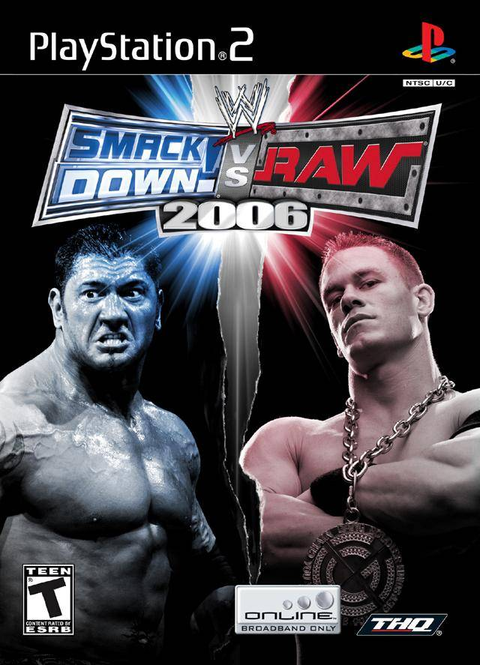
| 2005 | WWE SmackDown! vs. Raw 2006 | PlayStation 2 | GM Mode and stamina |
| 2006 | WWE SmackDown vs. Raw 2007 | PlayStation 2, Xbox 360 | Analog grappling and the Xbox expansion |
| 2007 | WWE SmackDown vs. Raw 2008 | PS2, PS3, Xbox 360, Wii | Fighting styles, ECW, and WWE 24/7 |
| 2008 | WWE SmackDown vs. Raw 2009 | PS2, PS3, Xbox 360, Wii | Tag-team focus and Road to WrestleMania |
| 2009 | WWE SmackDown vs. Raw 2010 | PS2, PS3, Xbox 360, Wii | Story Designer puts you in the writer’s chair |
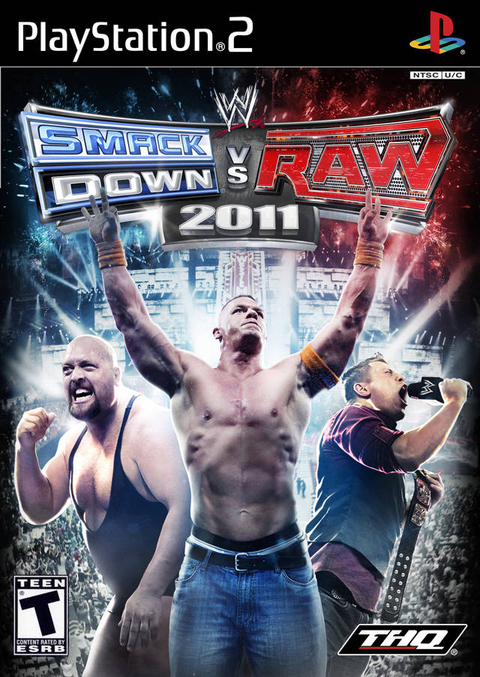
| 2010 | WWE SmackDown vs. Raw 2011 | PS2, PS3, Xbox 360, Wii | Universe Mode and more expressive weapon physics |
The main series was developed by Yuke’s and published by THQ. The WWF-to-WWE switch sits between Just Bring It and Shut Your Mouth: the company announced its new name on May 6, 2002. This is one continuous game lineage wearing the branding of a wrestling company that was changing around it.
The PS1 Years: Get in the Ring and Cause Problems
WWF SmackDown! (2000): The Foundation
The first SmackDown arrived on PlayStation with a direct proposition: recognizable wrestlers, quick access to moves, and fights that could escape the ring. Its documented modes and features include singles, tags, backstage action, a season structure, and a wrestler creator.
That combination matters more than the size of its feature list. You could get into a match without turning the controls into homework, then start imagining an entire wrestling career around it. The match was the immediate reward. The larger show was the reason to keep going.
SmackDown’s appeal lives in that short distance between an idea and the resulting nonsense. Pick two wrestlers, find a reason for them to hate each other, and get moving. A chair could handle the remainder of the conversation. It was a strong fit for the outsized personalities of the era because it gave those personalities a fast-moving playground.
Returning to it now also shows how much was still waiting to be expanded. The original is the starting point, and the sequel quickly makes that visible. It earns its place in a collection as the beginning of this particular design language: accessible action surrounded by the suggestion that an entire wrestling company exists just beyond the current match.

WWF SmackDown! 2: Know Your Role (2000): More of Everything, Including Waiting
Two SmackDown games in the same calendar year sounds aggressive. Know Your Role justified the quick return by broadening the things you could do. Ladder matches, tables, Hell in a Cell, more creation options, and a larger season framework helped it feel like a substantially bigger wrestling package. Its game and match listings are a useful reminder of just how much ended up on this PS1 disc.
The best way to understand the sequel is as a wrestling toy box. The excitement comes from having multiple ways to stage an argument. A regular match can settle a rivalry. A ladder match can make it everybody’s problem. The backstage spaces expand the playground further, giving the series a sense of possibility that a perfectly proportioned ring alone cannot supply.
There is a catch, and it is shaped like a loading screen. Contemporary criticism of the waiting between events remains relevant. The larger show can interrupt its own momentum as it loads scenes and processes the rest of the card. Nostalgia is powerful. It still cannot make a disc drive sprint.
Our reason to revisit Know Your Role is the breadth of its PS1-era imagination. Give it time to establish its rhythm, and accept that the path to your next match occasionally includes an administrative break you did not request.

The PS2 Trilogy: A Bigger Stage, Then the Sweet Spot
WWF SmackDown! Just Bring It (2001): The Awkward First Entrance
Just Bring It moved the series to PlayStation 2. It added a more elaborate presentation, larger on-screen contests, and more room to express a wrestler’s moveset. The game’s feature record includes six-man tags, six- and eight-man battle royals, two finishers per wrestler, moveset editing, and story choices tied to unlocks.
Those crowded matches refer to participants on screen. They should not be mistaken for a promise of eight human players with eight controllers. That distinction matters when an old box’s enthusiasm starts doing the talking.
This is an interesting transitional entry because moving to more powerful hardware does not automatically produce the strongest version of a series. The excitement of a new presentation can coexist with a career structure that leaves you wanting more. Just Bring It lays out possibilities that its successors would organize more effectively.
For a retrospective, that makes it valuable. You can see a familiar series learning how to occupy its new space. For somebody buying just one PS2 wrestling game, it is a harder first recommendation. Its place is clearest when you can compare it with the games immediately before and after it. The jump is real; the final shape of the PS2 formula is still under construction.

WWE SmackDown! Shut Your Mouth (2002): The Whole Show Starts Coming Together
Shut Your Mouth arrived during a major transition in WWE itself. The brand split and changing roster gave the game a different setting, while its revamped season incorporated the period’s ownership disputes and familiar storyline material. The game record places it firmly in 2002 and documents the broader roster and rebuilt season experience.
The important improvement is the feeling of belonging to the show. Exploring backstage and interacting with other wrestlers gives the next match context. The arena becomes a workplace full of people who might help you, interfere with you, or decide that your immediate future needs a fight.
That is an especially good match for professional wrestling. A feud is rarely just the bell-to-bell action. It is the encounter before it, the resentment after it, and the moment somebody wanders into the wrong conversation. Season Mode gives those pieces space to breathe.
Shut Your Mouth deserves more attention than it gets when every discussion immediately races toward Here Comes the Pain. There is a distinct reason to prefer it: the pleasure of inhabiting this version of WWE. Its appeal is as much about the journey between matches as the mechanics inside them. If your favorite part of wrestling is watching an entire card slowly become a disaster, that is a strong selling point.

WWE SmackDown! Here Comes the Pain (2003): The Argument Everybody Still Wants to Have
Here Comes the Pain is our starting recommendation for someone who wants to understand the appeal of the PS2 run. That is an editorial pick, and the case begins with how it gives different wrestlers different problems to solve.
Its attributes and expanded grapple options make strength, speed, submission ability, and other characteristics meaningful. Body-part damage gives an attack a purpose beyond emptying a general health bar. Weight restrictions complicate certain matchups. The 2003 game’s feature record documents that more differentiated approach, while its season supplies a career framework around the fighting.
This is where the series’ two impulses work particularly well together. You have enough structure to make a matchup interesting and enough speed to keep the action lively. Targeting an injured area creates a plan. Reversals and shifting control give the other wrestler a chance to ruin it. The enjoyment sits in that exchange.
The roster also catches a compelling overlap of wrestling generations. Brock Lesnar, Rey Mysterio, Goldberg, The Rock, and established names help create matchups with very different personalities. A roster earns its value through what those combinations let you do, and this one offers plenty to argue about.
It also has imperfections worth keeping in the conversation. Match commentary is absent, and its weight rules can produce awkward limitations alongside their useful distinctions. The season can be opaque about the consequences of choices. That friction is part of the actual game, even when memory has conveniently edited it out.
Here Comes the Pain gives you a convincing reason to care about the next exchange while leaving room for wrestling’s excess. That balance is why it anchors our replay list. A beautiful arena is nice. A match that makes you immediately want a rematch does considerably more work.

SmackDown vs. Raw: Becoming a Wrestler, Then Becoming the Boss
WWE SmackDown! vs. Raw (2004): A New Name and a New Direction
The original SmackDown vs. Raw followed Here Comes the Pain in 2004. It introduced online competition to this WWE line and added voiced story presentation. Its feature record also documents the Parking Lot Brawl and returning match options, while contemporary coverage discusses the returning match commentary.
The brand-versus-brand title helped the annual series feel connected to WWE’s television identity. It also introduced a tension that would follow these games for years: how much of the broadcast should the game reproduce, and how much should it leave to the player?
Voiced scenes can give the story personality, but a more authored presentation also establishes expectations about what a character should say and do. Earlier text-driven adventures gave the imagination a different kind of space. Neither approach automatically wins; they simply deliver different versions of the wrestling fantasy.
Coming directly after Here Comes the Pain makes this entry a fascinating comparison. A feature can be new without settling every question about the overall package. The 2004 game is best approached as the start of the next phase, with television presentation becoming a larger part of the pitch. Its historical online features are part of that story, rather than a claim about services available today.
SmackDown! vs. Raw 2006 (2005): Congratulations, You Are Now Management
SmackDown vs. Raw 2006 added General Manager Mode, and suddenly winning the match was only one possible job. You could draft a roster, build shows, manage contracts, and compete for audience support. The game’s mode listing and a contemporary visit to Yuke’s document that shift toward running the promotion.
This is a wonderfully dangerous feature for a wrestling fan. Everybody has opinions about who should be pushed. GM Mode asks you to turn those opinions into a working schedule while other needs compete for the same resources. The champion you want, the main event you can afford, and the roster you actually have are not always on speaking terms.
Inside the ring, stamina adds another layer of pacing. Offense carries a cost, so constant activity is no longer automatically the best answer. You have to consider when to spend energy and when to recover. That changes the texture of a match, even if a player who prefers the earliest games’ speed may find the interruptions less appealing.
This is our alternative first pick for someone who wants a fuller wrestling hobby in one package. Here Comes the Pain gets the recommendation for its match design. 2006 gets the nod when the fantasy includes running the show after the bell. You may arrive for the wrestling and discover that you have very strong opinions about contracts. A completely normal evening, apparently.

SmackDown vs. Raw 2007 (2006): Wrestling Moves to the Analog Stick
2007 expanded the main series to Xbox 360 alongside PS2 and PSP, making the home-console line broader than its PlayStation roots. Its release and feature records identify a new analog grappling system, branching season material, and environmental interaction points.
Ultimate Control moves made positioning a more explicit part of performing a move. The idea is appealing: the wrestler and surroundings become pieces you can arrange toward a payoff. You are thinking about where an opponent ends up, rather than treating every grapple as a self-contained animation.
It is a different kind of immediacy from the PS1 games. The earlier formula encourages you to get moving quickly. This approach asks for more deliberate handling of a particular moment. Learning it can produce a satisfying sense of direction; returning players also have another set of habits to unlearn.
The hardware transition is important, but the shift in interaction is the more useful reason to revisit this entry. It shows the series pursuing greater control over the choreography of a match. Put it beside 2006 and you can feel the design question changing: how should the controller let you stage a wrestling spot, rather than merely select one?

SmackDown vs. Raw 2008 (2007): ECW Arrives With a Very Busy Feature List
2008 brought the ECW brand into the series’ central identity and leaned into differentiated fighting styles. The original instruction manual describes eight styles, the Struggle Submission System, ECW Extreme Rules, and WWE 24/7, which brought the season and GM experiences under a shared mode heading.
Fighting styles give the roster another organizing principle. A powerhouse and a high-flyer should suggest different plans. That is a sensible ambition for wrestling, where a character’s identity is partly expressed through how they control a match.
The interesting question is how naturally that identity emerges. Systems can reinforce a wrestler’s character, but they can also make the classification itself feel like the star of the match. 2008 is useful to study because so many ideas are being asked to work together at once.
WWE 24/7 also changes how the larger career is presented, with superstar and general-manager paths sitting inside the same umbrella. For a collector, this entry captures an especially busy period of the annual formula. For a newcomer, it makes more sense after experiencing 2006 or 2007, when you have a clearer view of the parts it is combining. ECW supplies the obvious identity on the box; the more revealing story is how much the game is trying to coordinate underneath it.

The Final Three: Better Partners, Your Own Stories, and an Entire Universe
SmackDown vs. Raw 2009 (2008): Remember Your Tag Partner?
2009 pushed tag-team wrestling toward the center with hot tags, team finishers, and more partner actions. It also introduced Create-a-Finisher and Road to WrestleMania. The game’s feature breakdown identifies six Road to WrestleMania stories, including the cooperative Batista and Rey Mysterio campaign.
A good tag match needs a reason to care about the person waiting on the apron. When the game gives the partnership a more defined role, it gets closer to the dramatic structure of the real format: pressure, isolation, a desperate escape, and the partner finally getting involved.
Road to WrestleMania offers a different bargain from the older season adventures. A defined character and a more directed story can deliver clearer setups and payoffs. You sacrifice some of the fantasy of wandering through your own unpredictable career in exchange for a more deliberately arranged journey.
For two players who want a shared wrestling campaign, that is a particularly good reason to look at 2009. For players who want to invent their own wrestler’s entire life, its strengths may point elsewhere. The important thing is knowing which fantasy you are buying. A focused co-op story and a sprawling season are both worthwhile, but one should not be mistaken for the other.

SmackDown vs. Raw 2010 (2009): Fine, Write the Show Yourself
2010 introduced Story Designer alongside expanded creation options and a training mode. Its feature record describes the new story tool and additions to character and finisher creation. Story Designer lets the player assemble scenes, matches, and dialogue into a wrestling program.
This is one of the most revealing developments in the entire series. Early Season Mode asked you to participate in the game’s wrestling world. GM Mode let you arrange the card. Story Designer moves closer to handing you the script.
The appeal is obvious to anybody who has ever paused a wrestling show to explain a much better version to the nearest available person. You can now turn that explanation into something. The tool’s preset material creates boundaries, but those boundaries also provide building blocks. A scene does not need unlimited freedom to become funny or memorable when the right characters are assigned to it.
Our reason to revisit 2010 is authorship. It is especially interesting for players who enjoy making things as much as playing matches. Allow time for menus and construction; that is where part of the enjoyment lives. The reward is the ability to produce a wrestling story whose questionable decisions are finally all yours.


SmackDown vs. Raw 2011 (2010): The Show Learns to Keep Moving
The last SmackDown vs. Raw introduced Universe Mode and a revised physics system for objects and weapon interactions. THQ’s contemporary feature announcement describes a world in which player decisions affect rivalries, alliances, title matches, and spontaneous events. Road to WrestleMania returned separately, with backstage exploration among its changes.
Universe is significant because it attempts to keep the surrounding wrestling world active as you play. The fantasy is continuity: the latest match belongs to a calendar, and the calendar can produce another reason to compete. That is a different pleasure from finishing a clearly bounded story.
The physics changes address another enduring wrestling-game need: making a familiar object produce a less predictable result. Tables and ladders are appealing because they turn positioning into a promise of disaster. Giving those interactions more variation helps repeated matches produce new moments.
2011 is our pick for exploring the late SmackDown vs. Raw sandbox. It is also a reminder that these games were accumulating multiple ways to play. You could take a directed story, inhabit the ongoing show, create content, or simply make a match. The richness is real, and so is the challenge of keeping all those systems cohesive.

Why the Great Entries Still Work
The strongest SmackDown games understand that wrestling has several pleasures happening at once. There is the exchange inside the ring, the story surrounding it, the appeal of a particular wrestler, and the player’s desire to meddle with all three.
A matchup needs character. Here Comes the Pain makes a particularly clear case for this. When a wrestler’s strengths and limitations affect your plan, changing characters changes more than the entrance. A smaller wrestler and a powerful opponent give you a problem to solve. The game becomes more replayable when the answer changes with the pairing.
The next match needs a reason. Season Mode, Road to WrestleMania, and Universe offer different kinds of motivation. One encourages a continuing career, another delivers an authored campaign, and another maintains a broader wrestling calendar. The best choice depends on whether you want discovery, a plotted journey, or control over a continuing show.
The player needs room to be ridiculous. Backstage fights, custom wrestlers, and creative match setups give these games an identity beyond reproducing television. Wrestling already asks its audience to accept spectacular nonsense with absolute seriousness. A game can turn that into a powerful source of play. It only needs enough rules to make the resulting catastrophe satisfying.
More systems need a clear purpose. Stamina, fighting styles, analog grapples, and expanded creation tools each address a real design ambition. They also compete for the player’s attention. The ideal entry for you is the one whose extra work leads to something you enjoy doing. A long mode list is a promise of possibilities; the useful question is which possibilities will actually keep you playing.
Which SmackDown Game Should You Play First?
These are our editorial starting points, rather than an attempt to turn every wrestling fan’s preference into one compulsory ranking.
| What you want | Our starting pick | The reason |
|---|---|---|
| The PS2-era match-design showcase | Here Comes the Pain | Distinct wrestlers, purposeful damage, and lively exchanges |
| A career that feels rooted in an entire show | Shut Your Mouth | The season and backstage setting |
| To run the promotion | SmackDown vs. Raw 2006 | The original GM Mode package |
| A PS1 wrestling toy box | Know Your Role | Variety and scope, with patience for loading |
| A shared campaign | SmackDown vs. Raw 2009 | The cooperative Road to WrestleMania story |
| To write your own nonsense | SmackDown vs. Raw 2010 | Story Designer |
| The late-series ongoing sandbox | SmackDown vs. Raw 2011 | Universe Mode and varied object interactions |
A useful three-game tour would be Know Your Role, Here Comes the Pain, and 2006. That gives you the expansive PS1 playground, the PS2 combat showcase, and the management turn. Add 2011 when you want to see the series trying to keep an entire wrestling universe in motion.
If you already love one entry, try the game immediately before or after it. Changes become much easier to understand when the older controls and mode structure are still fresh in your hands. A series can make a significant change without making a universal improvement. Your preferred balance of speed, control, and career freedom is the thing to follow.
Collecting Them Without Buying the Wrong Experience
Start with the platform, not just the year. Later SmackDown vs. Raw games appeared across home consoles and handhelds. The Nintendo DS versions have their own game records and substantially different designs. PSP and Wii editions also deserve version-specific checks. A screenshot from one machine cannot establish the visuals, controls, or full feature set of another.
That is why the captions in this article name the platform shown. The history spans multiple systems, but an illustration should always tell you which version you are actually looking at. A familiar title on a different case can still mean a different evening.
Check the game you mean to play. The first SmackDown vs. Raw has no year in its title. 2006 is the next installment. Meanwhile, the calendar release year usually sits one year behind the annual number. Confirm the complete title and console before clicking through a listing, especially when a seller abbreviates everything to “WWE game.” That description is doing the absolute minimum.
Check the disc, region, save setup, and controllers. Look at the actual media and the console’s compatibility requirements. For PS1 and PS2 multiplayer, verify the specific game’s controller and multitap arrangements rather than turning the number of wrestlers on screen into a player-count assumption. Keep your memory-card setup ready if a long season is the main attraction.
Buy for the offline content you can establish. Historical online announcements, downloadable rosters, and community-sharing features are not promises of present-day service availability. Older redemption codes and inserts also should not be treated as guaranteed extras in a used copy. Identify the modes and characters supplied by the version you are buying, then treat anything else as a separate question.
To explore Zypher’s own listings, start with Know Your Role on PS1, Here Comes the Pain on PS2, SmackDown vs. Raw 2006 on PS2, or SmackDown vs. Raw 2011 on PS2. Check each listing’s selected condition and current availability. These links are to our store.
The SmackDown Name Left. The Ideas Stayed.
WWE ’12 replaced the SmackDown vs. Raw name in 2011. In a contemporary discussion of that transition, creative director Cory Ledesma described the need to pull apart accumulated systems and make the experience feel cohesive again. That is a revealing place to end this chapter: the annual formula had become large enough that its own complexity needed attention.
The games that followed would continue exploring careers, creation, management, and ongoing wrestling worlds. SmackDown had already established how much people wanted to participate in the entire show. They wanted to be the champion, build the champion, book the champion, and occasionally decide that the champion needed to lose to a homemade wrestler with a deeply unfortunate outfit.
The legacy is that mixture of structure and freedom. The match gives your choices consequences. The surrounding modes give those consequences a story. The creation tools let you contribute something the developers could never have reasonably anticipated.
Pick the version whose strengths fit what you love about wrestling, learn its rhythm, and let the card get out of hand. Somewhere in this series, your next completely unnecessary rivalry is waiting.
Sources and Image Credits
This retrospective draws on the linked game records, contemporary coverage, the original SmackDown vs. Raw 2008 instruction manual, WWE’s corporate name-change announcement, and THQ’s contemporary feature and transition announcements published by WWE. Release years refer to the original calendar release, with version differences identified where relevant. Recommendations and design analysis are Zypher XP editorial judgments.
Featured image: Here Comes the Pain gameplay, via WWE’s video-game history. Individual screenshot sources and platforms appear in the captions. MobyGames material is credited as Data by MobyGames.com; other selected catalog screenshots are credited to LaunchBox. Game imagery belongs to its respective rights holders.