A flashing dot should be reassuring. You have a device, the device has found something, and now you possess useful information. Alien: Isolation takes that little technological comfort and squeezes it until it becomes another reason to stare nervously at a doorway.
Creative Assembly's 2014 horror game follows Amanda Ripley as she investigates her mother's disappearance aboard Sevastopol. The station offers machinery to operate and supplies to collect, but the most interesting tool is the one that tells you just enough to make a bad situation harder to ignore.
The motion tracker does not hand Amanda control of the room. It gives her another thing to worry about while she tries to understand it.
A dot is information, not an explanation
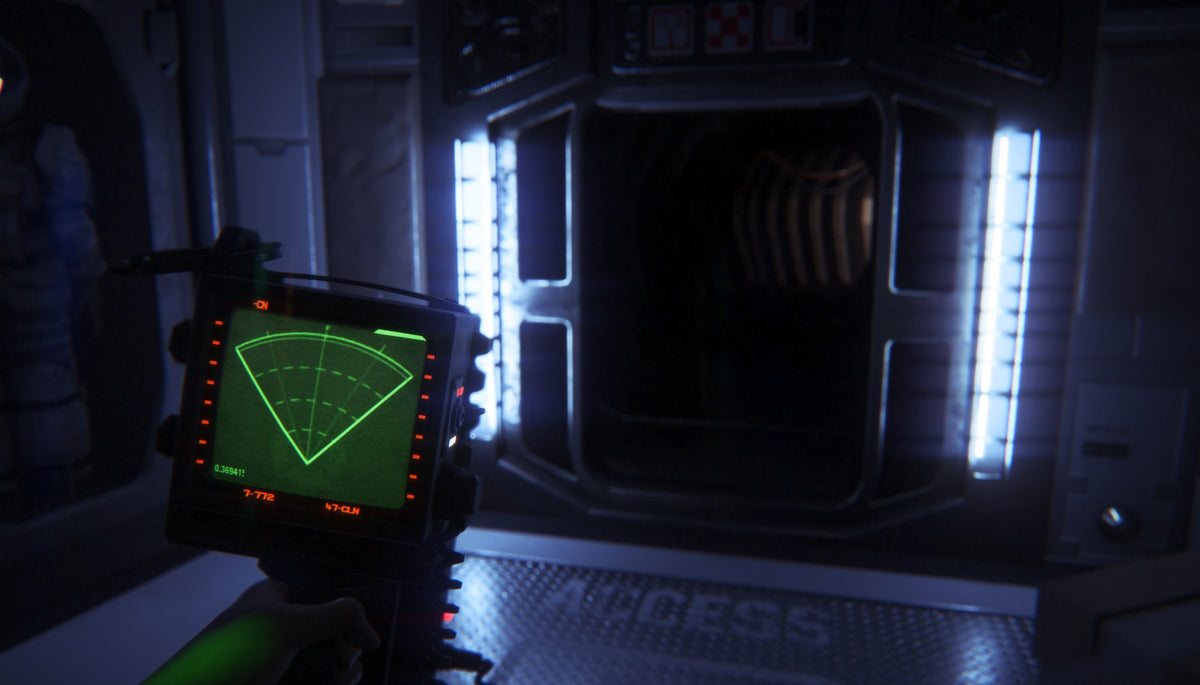
The official manual describes the tracker as a display of nearby movement. Its cone covers the space ahead, indicators cover movement to the sides and behind, and a number gives the distance to the nearest movement. A separate marker points toward the current objective.
Notice what that gives you: direction, movement and proximity. The useful reading is narrower than “the game has told me exactly what is happening.” A detected movement is a reason to investigate your situation, not a guarantee that you understand the threat.
That uncertainty is the point. A conventional waypoint can simplify a room into a destination. Here, the destination and the danger are different pieces of information that you still have to reconcile. Yes, that is where you need to go. No, the station has not agreed to make the trip pleasant.

You cannot give every surface your full attention
Feral's manual explains the visual tradeoff directly: looking at the tracker focuses your view on the device, while another input refocuses on the surroundings. The information tool and the space containing the threat compete for your attention.
It is an effective piece of interface design because the screen does not become a detached strategy map. Amanda is still standing somewhere. The corridor still has depth. A number can change while your attention is on it, and looking away from that number means accepting that the picture may change again.
Our reading is that this is where the tracker earns its place in the horror. It makes information feel physical. You are not simply receiving a warning from an invisible director. You are choosing to consult a handheld object while surrounded by things you would also rather keep watching.
The device is doing its job. Unfortunately, its job is not “make this comfortable.”
The station turns ordinary tasks into commitments
Saving happens at designated points and takes several exposed seconds. Crafting also leaves the game running. Running makes more noise than walking or crouching. Those are separate rules, but together they make a simple trip through Sevastopol less automatic.
A save point is valuable because it protects progress. Getting to one and finishing the process are still actions inside the hostile environment. The same applies to preparing equipment. A menu is not necessarily a safe room merely because your attention has moved onto it.

That gives the industrial setting a purpose beyond looking suitably grim. A workstation, a doorway and a place to pause all matter because you have things to do around them. The game keeps turning a straightforward intention into a question about timing.
It also helps explain why the horror can work without a constant stream of surprises. Anticipation has something concrete to attach to. You know what you want to finish, and you know finishing it requires a little more attention than you currently feel comfortable spending.
A reactive threat is more interesting than a perfect radar
Sega's description emphasizes an Alien that responds to the player and uses its senses to hunt. Amanda is equipped to scavenge, improvise and make choices under pressure. That is a different promise from a combat game where identifying the target is usually the first step toward removing it.
We are deliberately avoiding a pretend universal trick here. “Do this and the Alien can never get you” would undermine the very quality that makes the game worth discussing. The appeal is that a useful tool can improve your understanding without turning the whole encounter into a solved procedure.

Our Amnesia spotlight looks at horror built around manipulating the environment without conventional combat. Isolation's particular strength in this comparison is its uneasy relationship with information. The tracker offers help you want, in a form that never quite feels like enough.
Buying the original means checking the exact edition
This is commentary on the original game's design, supported by its PC manual and publisher material. The PC images illustrate that design; they are not evidence that an Xbox 360 or PS3 copy has identical image quality, performance or included content.
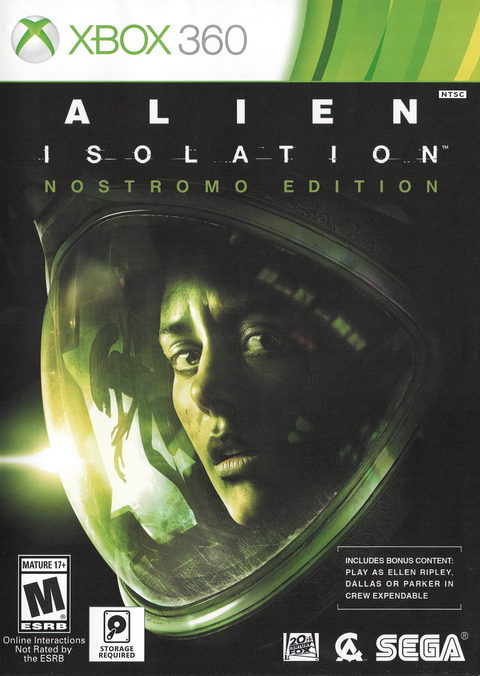
Edition names deserve attention, too. A used Nostromo Edition box is not proof that an accompanying download code is present, valid or unused. Read the actual listing and included items instead of treating the name on the cover as a fresh entitlement.
Bring the problem home with Zypher
Want a physical copy? Check our Xbox 360 Nostromo Edition and separate PS3 listing for availability and condition options. Buy from Zypher with the correct platform and included items in mind. The station already has enough unpleasant surprises.
Sources and image credit
Official PC manual; Sega's original-game Steam listing and promotional images. Checked October 21, 2026. Original game by Creative Assembly; Alien rights belong to their respective owners, with game copyright Sega. This is researched design commentary, not a claimed new Zypher playthrough.