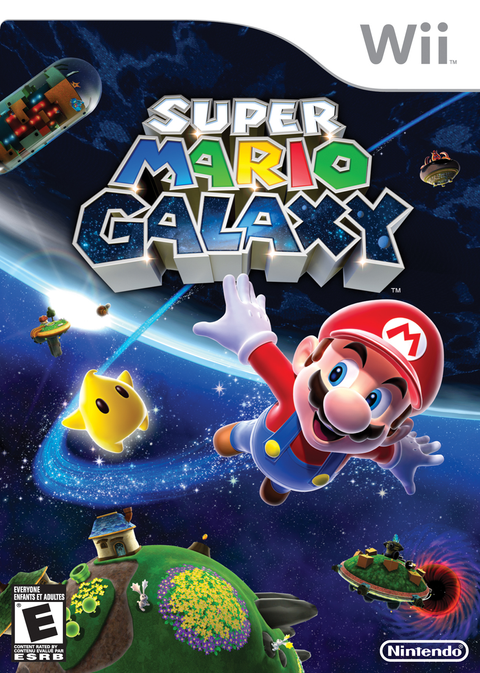
When Super Mario Galaxy landed in Europe on November 16, 2007, 3D platformers were stuck wrestling with the same old camera flaws and sprawling flat expanses. Many developers at the time treated Nintendo's motion-sensing remote as an excuse for shallow party games. Instead of leaning into easy gimmicks, this cosmic adventure took the plumber's classic acrobatic action into deep space and made gravity the core design principle.
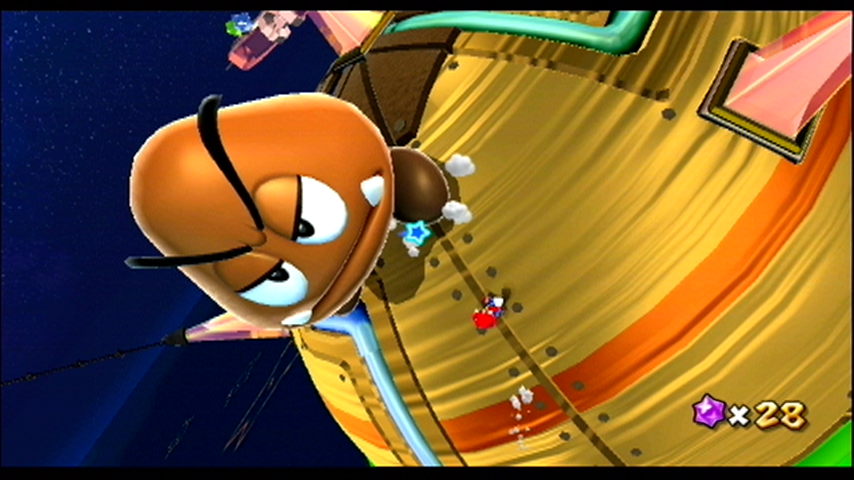
By breaking levels apart into gravity-defying stages set among the stars, the game changes how players approach spatial navigation. You sprint across spherical planetoids, leap upside down along curved surfaces, and watch local gravitational pull keep your footing anchored to floating celestial shapes. This planetoid structure solves a stubborn hurdle of early 3D exploration, because running around self-contained spheres gives leaps a predictable focal point and keeps the action tightly framed.
The Kinetic Toolkit: Spin Moves and Mid-Air Precision
Traversing these curving environments relies on an expanded movement repertoire. Mario brings back his trusted jumps, giving veterans access to the triple jump, wall jump, side somersault, long jump, backflip, and ground pound. When combined with spherical physics, these jumps arc along unexpected angles, rewarding players who carefully read the local gravity field before committing to a vault.
The defining addition to Mario's movement kit is the spin move. Executed by giving the Wii Remote a quick shake, this versatile technique acts as an essential extension of every leap. Giving the remote a gentle flick mid-jump stretches out your airborne hangtime, rescuing mistimed hops and letting you redirect Mario toward safe landings on distant planetary terrain.
Beyond extending leaps, the spin functions as an active offensive tool and discovery mechanic throughout the journey. A fast shake lets Mario batter surrounding adversaries or interact with cosmic stage elements without requiring a traditional power-up. It gives physical platforming an immediate, kinetic cadence that turns routine movement into an expressive tool for testing space.

The Pointer Economy and Co-Star Dynamics
Exploration in Super Mario Galaxy also demands active pointer management. While your left thumb steers movement via the Nunchuk analog stick, the Wii Remote's infrared pointer continuously sweeps across the television screen. Pointing directly at shimmering clusters lets you hoover up Star Bits as they drift across deep space, turning ambient backgrounds into continuous pickup opportunities.
These harvested Star Bits serve as more than shiny cosmic trinkets. Players can aim the on-screen cursor and fire Star Bits directly at approaching adversaries to stun them before moving in for an attack. This dual-layer interaction transforms routine platforming runs into split-attention tasks where you navigate tricky terrain with one hand while targeting distant threats with the other.
That pointer system expands further through the game's Co-Star Mode, which invites a second player into the action simultaneously. The co-star partner uses their own remote to immobilize enemy targets and launch Star Bits, shielding Mario during challenging sequences. When the two players coordinate their inputs, the co-star can even trigger special high jumps that boost Mario past demanding platforming obstacles.

Cosmic Transformations and Fresh Faces
Stage design constantly shifts expectations by introducing new mechanics and specialized suits. Slipping into the Bee Mario suit gives Mario the ability to fly through the air, allowing him to float between high platforms and cross open water hazards safely. In contrast, the Boo Mario suit transforms the plumber into a spirit, granting the power to turn invisible and slip past obstacles that normally block physical progress.
The celestial setting also introduces Rosalina, the Watcher of the Stars, making her debut appearance. She assists Mario throughout his galactic mission as he searches for Princess Peach and tracks down her friend, the Grand Star. Her presence provides emotional grounding to an epic interstellar adventure, making each cleared constellation feel like a vital step toward restoring light to the cosmos.

What First-Time Players Need to Know Today
Jumping into Super Mario Galaxy on genuine hardware requires understanding its specific controller requirements. The game is built strictly around the Wii Remote paired with a Nunchuk, though it also supports a Wii Remote Plus setup. If you plan to play on legacy systems, remember that standard Classic Controllers will not drive this adventure, because the spin shake and Star Bit pointing mechanics are hardwired into the experience.
Accessing the game has shifted as digital storefronts evolve over time. Nintendo released a downloadable Wii edition on the Wii U console on February 4, 2016, offering off-TV play. However, digital purchases across the Wii U and Nintendo 3DS family eShop systems ended permanently on March 27, 2023, as outlined on the official Nintendo Super Mario Galaxy game page.
Because original digital storefronts are closed, physical discs remain the standard path for gaming on authentic consoles. Enthusiasts building out an authentic library can find copies of Super Mario Galaxy on Nintendo Wii through our retro catalog. If you are exploring the broader hardware ecosystem of that era, our guide on identifying Wii models that play GameCube games provides useful context for selecting the right console setup.
For newcomers tackling these gravity-defying planetoids for the first time, patience with the orbital physics pays off quickly. Do not panic when the ground arches upside down or an orbit pulls you sideways; your feet will stick so long as gravity remains active beneath you. Keep your pointer steady, shake your wrist gently for airborne corrections, and enjoy one of the most inventive 3D platformers ever designed.