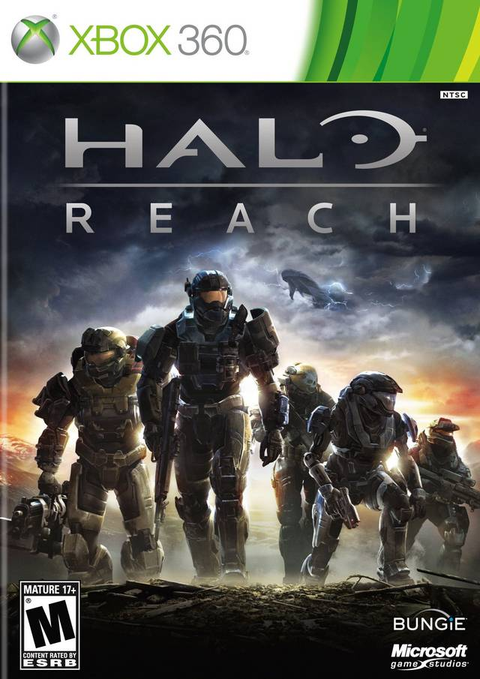
Halo: Reach tells you exactly what kind of story it is before the first rifle comes up. Reach is going to fall. Noble Team is not walking into a victory parade. Bungie’s trick was turning that fixed destination into one of the most flexible campaigns in the series.
The result is a 2010 Xbox 360 game that feels different from the numbered Halo trilogy without throwing away the series’ combat language. Weapons, vehicles, enemy ranks and wide spaces still form the sandbox. Reach changes the pressure around them by putting the player inside a squad, introducing armor abilities and building each mission around a planet that is visibly running out of good options.
A prequel that does not waste time pretending
Microsoft announced Halo: Reach for a worldwide launch beginning September 14, 2010, describing it as Bungie’s Xbox 360 prequel about Noble Team’s final stand. The broad outcome was already part of Halo history. Suspense had to come from the people, places and decisions inside that outcome.
That framing gives the campaign an unusual rhythm. Noble Six joins an established unit rather than arriving as the single legendary answer to every problem. Teammates move through battle spaces, call attention to threats and give each mission a sense that the operation is larger than the player’s crosshair. The game still lets you be a Spartan. It simply remembers that a military disaster should involve more than one extremely busy helmet.

Armor abilities make movement a loadout decision
The original Halo: Reach manual assigns armor abilities their own control and documents options including Sprint, Jet Pack, Hologram and Active Camouflage. These are not just louder ways to deal damage. They change how the player approaches distance, cover, elevation and enemy attention.
That matters because Halo works best when the fight is a problem rather than a firing range. A Jet Pack can turn a wall into a route. Hologram can draw fire long enough to expose a position. Sprint helps close or escape a bad angle. The ability does not replace shooting; it changes the few seconds before the shooting, which is usually where a good Halo story starts and a terrible grenade throw becomes somebody else’s problem.

The campaign keeps changing the shape of the fight
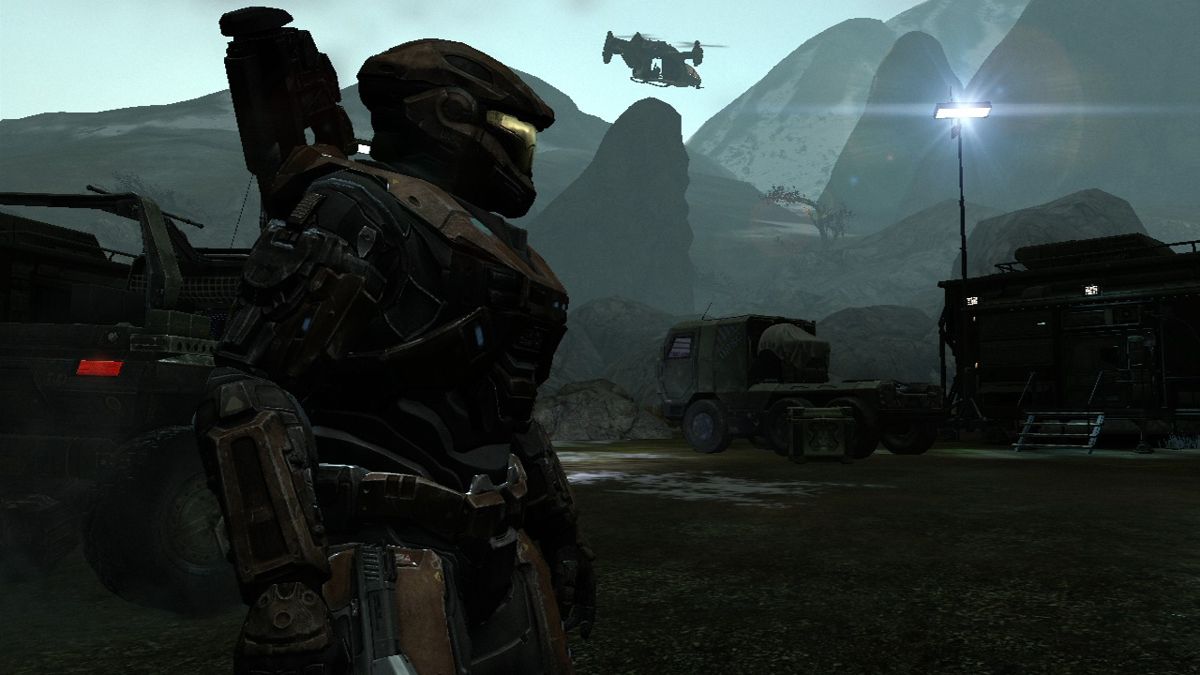
Reach moves between rural settlements, military installations, city streets and more specialized operations without making every mission feel like the same hallway wearing a new coat of paint. Open ground gives vehicles and long-range weapons room to matter. Tighter interiors increase the value of corners, grenades and threat identification. Visibility itself becomes a tool when the night-vision filter enters the picture.
Its combat spaces also support recovery. Losing the weapon you wanted does not mean the encounter is broken; it means the next available weapon becomes the plan. A vehicle can be transportation, mobile cover or a spectacular argument with a guardrail. That flexibility is central to Reach’s lasting value. The campaign supplies authored stakes, but the moment-to-moment route through a battle remains personal.

Firefight and Forge make the package much bigger
The disc is not only a campaign delivery device. Firefight turns the sandbox into a survival challenge built around waves of enemies, while Forge gives players tools to rearrange and build play spaces. Halo’s official retrospective notes that Reach expanded Firefight with armor abilities and additional customization. That combination matters because the same weapons and movement systems can support a directed mission, a repeatable endurance test and a player-authored map.
It also explains why Reach became more than a story people finished once. Campaign asks how Noble Team responds to collapse. Firefight asks how long a squad can hold. Forge asks what kind of problem the player wants to build next. Three modes, one sandbox, far less menu decoration pretending to be content.
What still works, and which version makes sense now
The original Xbox 360 version needs an honest service note. Halo Support says the legacy Halo 360 servers were turned off on January 13, 2022. For Reach, campaign, Firefight, custom games, Forge, split-screen and LAN remain listed as available, while server-dependent features such as file share and challenges are gone. Playing the 360 software through backward compatibility does not restore those retired services.
Halo: The Master Chief Collection is the modern alternative. Xbox’s current listing includes Reach among six Halo games and identifies the collection as optimized for Xbox Series X|S. Xbox Wire’s 2019 release coverage also confirms that Reach joined MCC on Xbox One, Windows PC and Steam, with campaign and Firefight alongside its multiplayer, Forge and Theater components.
That leaves two sensible reasons to own the original physical release. It is the direct Xbox 360 edition for a period-correct shelf and machine, and its surviving offline modes still represent a substantial game. MCC is the practical choice for current online services and modern presentation. They are related releases, not interchangeable boxes.
Why Reach still earns the spotlight
Halo: Reach matters because it accepts a known ending and refuses to make the journey passive. Its squad framing gives the campaign a different emotional center. Armor abilities alter the route into combat. Firefight and Forge prove the sandbox can survive outside a scripted mission. Even the current version choice asks the player to decide what matters more: the original Xbox 360 artifact or the maintained collection.
If the original release belongs in your collection, check Zypher’s live Halo: Reach for Xbox 360 listing for the currently available condition options. Have older games taking up space while Noble Team waits for shelf room? Sell your old games to Zypher, then put that space to work.
Research checked October 22, 2026. Sources: Microsoft’s 2010 Halo: Reach launch announcement, the original Xbox 360 manual, Halo Support’s legacy-service notice, Xbox Wire’s 2019 MCC release coverage and the current Xbox MCC store listing. This is source-based editorial analysis, not a claim of a new hands-on test. Featured and inline images are exact Halo: Reach Xbox 360 catalog gameplay assets with retained source identity; captions include their required catalog credit.