The stealth games that turned soldiers into legends, legends into weapons, and the player into part of the conspiracy.
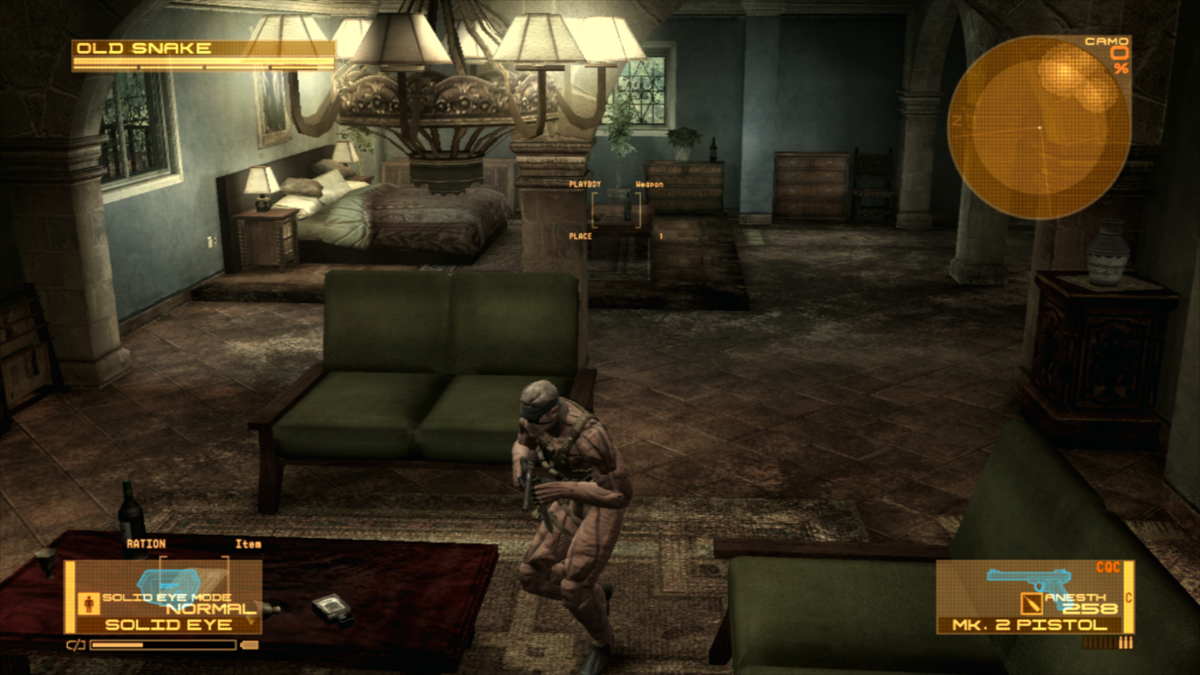
Featured image: Old Snake in Metal Gear Solid 4: Guns of the Patriots (PlayStation 3). Screenshot via MobyGames / GTramp. © Konami.
Metal Gear can make you spend ten minutes watching a guard walk past a door, then ask whether you have any meaningful control over your own life. It can interrupt a nuclear crisis to discuss a cardboard box. It can make an enormous walking weapon feel less dangerous than the person explaining why the world needs it.

That combination is the franchise. Strip away the jokes and you lose the humanity. Strip away the stealth and you lose the feeling of operating inside a system larger than yourself. Strip away the politics and the robots become expensive targets. Strip away the melodrama and nobody would care whose face was under the bandanna.
The simplest way to understand the entire series is this: Metal Gear is about people being assigned roles, then deciding whether to obey them. A government assigns a soldier a mission. A father assigns his children a legacy. A computer system assigns society an acceptable reality. A famous soldier assigns another man his identity. The player receives an objective marker and usually follows it.
This retrospective follows both halves of that story: how the games work, and what those games are doing with the people inside them. It covers the principal original releases, the important alternate branches, the handheld and online experiments, and the remakes and collections. It is not a list of every regional SKU, soundtrack pressing or promotional crossover.
1. First, untangle the two timelines
Release order and fictional chronology are not interchangeable. Metal Gear spends years building your image of Big Boss before showing you his earlier life. It introduces Raiden after you already know what it feels like to be Solid Snake. Its later prequels assume that you recognize the historical destination even when the characters cannot.
My recommendation for a first serious trip through the franchise is release order. Chronological order is rewarding for a replay, but it converts deliberately delayed revelations into background information. Knowing what happened is not the same experience as learning it in the order the games constructed.
| Game | First release | Principal story setting | Its central design shift |
|---|---|---|---|
| Metal Gear | 1987 · MSX2 | 1995 | Avoiding enemies becomes the main action |
| Metal Gear 2: Solid Snake | 1990 · MSX2 | 1999 | More elaborate detection, sound and infiltration |
| Metal Gear Solid | 1998 · PlayStation | 2005 | 3D staging and voiced character drama |
| Metal Gear Solid 2: Sons of Liberty | 2001 · PlayStation 2 | 2007 / 2009 | Richer interactions and an unreliable mission framework |
| Metal Gear Solid 3: Snake Eater | 2004 · PlayStation 2 | 1964 | Camouflage, stamina, treatment and CQC |
| Metal Gear Solid 4: Guns of the Patriots | 2008 · PlayStation 3 | 2014 | Battlefield infiltration and automated camouflage |
| Metal Gear Solid: Peace Walker | 2010 · PSP | 1974 | Repeatable missions, cooperation and Mother Base |
| Metal Gear Solid V: Ground Zeroes | 2014 · Multiple platforms | 1975 | A compact, replayable infiltration sandbox |
| Metal Gear Solid V: The Phantom Pain | 2015 · Multiple platforms | 1984 | Open-ended operations and a growing military organization |
The historical spine and dates are supported by Konami’s archive and title histories; later releases and MGSV’s setting are documented separately. The table deliberately excludes alternate continuities from the principal spine rather than pretending every Snake belongs to one uninterrupted biography.[1] [2] [3] [4] [5] [6] [7] [8] [9]
The useful chronological version
Snake Eater → Peace Walker → Ground Zeroes → The Phantom Pain → Metal Gear → Metal Gear 2 → Metal Gear Solid → Sons of Liberty → Guns of the Patriots. Portable Ops occupies 1970, between Snake Eater and Peace Walker, but deserves a separate continuity qualification. Rising is a later Raiden-centered branch, not the missing final chapter of Big Boss’s story.
If the 8-bit games are initially too much of a barrier, starting with the 1998 Metal Gear Solid is a reasonable compromise. Read the included previous-operations material, then return to the MSX games when their relationships have acquired meaning. Do not mistake that practical compromise for a claim that the originals are irrelevant.
2. The foundations: Metal Gear was already more than “old MGS”
Metal Gear, 1987: power comes from not starting the fight
The first Metal Gear sends rookie FOXHOUND operative Solid Snake into Outer Heaven after Gray Fox disappears while investigating a new weapon. Big Boss provides instructions over the radio. Before the franchise has cinematic close-ups, it already has its essential arrangement: a vulnerable operative, an enormous hostile installation, a distant authority and incomplete information.[10]
The original design reverses the usual action-game priority. A room full of soldiers is not primarily a room full of things to shoot. It is a moving access problem. Where can they see? Where will they turn? What can Snake collect without creating a bigger emergency? A successful crossing can be satisfying precisely because nothing spectacular happens.

That restraint gives the eventual confrontation with the weapon its meaning. Snake is not a walking army from the first screen. The fortress is an institution he has to penetrate. Its size, locked routes and dependence on information make the player feel subordinate long before the story begins questioning the chain of command.
Big Boss’s betrayal is therefore more than a final villain reveal. The same system that taught you how to operate has been compromised from within. Metal Gear establishes its recurring trick early: mission instructions are part of the fiction, not an automatically trustworthy layer above it.
Kojima later described the project in relation to the MSX’s limitations, his reluctance to make a conventional war game and an escape-oriented inspiration. That account is more useful than the myth that one designer simply woke up and invented all stealth. The important achievement was turning avoidance into a coherent, repeatable design.[11]
The NES version and Snake’s Revenge are not the same historical route
“The original Metal Gear” can mean different software. The MSX2 game and the NES adaptation should not be treated as identical copies. Likewise, the 1990 NES game Snake’s Revenge is not another name for Metal Gear 2: Solid Snake. They are distinct sequels, and the later principal saga follows the MSX2 Metal Gear 2. Modern collection labeling is worth reading carefully here.[12]
This matters more than winning an argument about what counts. Someone returning to the game they rented as a child may remember a different opening and progression from the version being discussed in a franchise retrospective. That memory is not necessarily wrong. The brand reached different audiences through different software.
Metal Gear 2: Solid Snake, 1990: the overlooked blueprint
Metal Gear 2 brings Snake back for the Zanzibar Land crisis. Its political trigger combines nuclear power with control over an oil-producing microorganism, OILIX. Campbell replaces Big Boss as the voice directing the operation. The returning relationships make the mission feel less like a clean assignment and more like unfinished personal history.[2]
Its importance is mechanical as well as narrative. Sound, crawling, radar and more developed enemy behavior bring infiltration closer to the recognizable language of later Metal Gear. A guard is not just an obstacle occupying a square; the player can manipulate attention and choose a posture. The environment becomes something to read and influence.[13]

The later 3D games did not emerge from an empty design space. They expanded a vocabulary that was already being built here. Playing Metal Gear 2 after knowing MGS can produce the strange feeling of recognizing an ancestor’s face in an old photograph.
The confrontation with Gray Fox also makes the saga’s soldier problem personal. Combatants can understand each other intimately while remaining trapped in opposite roles. Big Boss’s promised refuge for soldiers is disturbing because it does not merely protect people from war’s aftermath. It makes continued conflict the condition under which those people remain valuable.
That is the seed of the entire Big Boss tragedy: a proposed escape from exploitation that starts to depend on reproducing the circumstances that made soldiers exploitable.
3. Metal Gear Solid: the blockbuster works because it is intimate
Shadow Moses is not just a military facility. It is a dramatic enclosure. Snake encounters people in corridors, cells, communications windows and carefully staged confrontations. The 1998 game keeps returning to a small set of relationships until a large geopolitical conspiracy feels like an argument happening within a damaged family.
The official premise is simple: infiltrate the seized nuclear-disposal facility, assess the terrorists’ strike capability and rescue hostages. The game then dismantles the idea that fulfilling the visible objective means understanding the actual operation.[14]
Why the stealth is still readable
The overhead perspective and radar encourage a particular kind of thinking. First you simplify the room into routes and sightlines. Then you act. Corners, crawlspaces and distractions let you turn that abstract map into a physical crossing. Getting caught is frightening because it disrupts your information advantage, not just because a health bar starts falling.

First-person observation exists, but this is not MGS2’s general first-person aiming system. That distinction matters when assessing the original or its remake. The PlayStation game asks you to work within restrictions that help make its encounters legible. Its friction is part of the structure, even when that friction is inconvenient.
Wall knocking is a perfect small example. The guard’s route looks fixed until Snake contributes a sound. Suddenly the player has authored a new event inside the patrol system. This is the series in miniature: observe a rule, discover how to perturb it, exploit the response.[15]
The bosses are different kinds of relationship
Revolver Ocelot turns a room into an exercise in positioning and restraint. Sniper Wolf makes distance emotional as well as tactical. Vulcan Raven asks you to think about a space differently from an ordinary corridor. Psycho Mantis attacks the assumption that the television contains the whole game.
Mantis’s famous interaction with player data and controller conventions is not simply a joke about hardware. It briefly makes the player, rather than just Snake, the person being observed. The exact implementation changes across releases, so preserving the scene is also a preservation problem: an input device or memory interface can be part of the writing.[16]
The cyborg ninja brings a different charge. Gray Fox’s body is evidence that military service can continue after the person has apparently been used up. His spectacular abilities do not cancel the horror of what has been done to him. Metal Gear’s coolest character designs often carry an accusation inside the power fantasy.
Genes are the premise, not the verdict
Liquid makes inheritance into a grievance. His relationship to Solid Snake and Big Boss is filtered through a belief that biological origin fixes worth. The game surrounds that belief with manipulation: identities, medical information and mission explanations are all less stable than they first appear.
The useful reading is not that the hero wins because he secretly has the better genetic specification. It is that the brothers’ obsession with the specification is itself a trap. A person’s future cannot be reduced to the story somebody tells about their manufacture. Konami’s original MGS2 introduction explicitly describes the preceding game’s theme in terms of escaping DNA’s restraints.[17]
Otacon makes this argument human. He begins as a weapons designer whose imaginative attachment to robots has been severed from what the machine can actually do to people. His growth is not into a stronger combatant. It is into someone willing to accept responsibility, help another person and later oppose the proliferation of his own field’s technology.
Snake and Otacon’s partnership is consequently one of the franchise’s most important relationships. One understands violence at ground level; the other understands the systems that package it. Neither can solve the problem alone. Their friendship offers a form of chosen inheritance that is very different from Liquid’s fixation on blood.
The game’s weakest stretches are worth admitting. Some required returns through familiar spaces interrupt the momentum, and certain dramatic treatments of women or bodies can undercut its seriousness. But the central achievement remains: a tightly bounded infiltration becomes a story about whether people can live beyond the purposes for which others designed them.
4. Sons of Liberty: the sequel that makes expectation part of the trap
MGS2 first demonstrates that it can give you a more technically elaborate Solid Snake adventure. The tanker is wet, crowded with information and full of responsive detail. Then the main operation shifts to Raiden. You are no longer simply playing the returning legend; you are a newcomer trying to understand him.
The tanker takes place in 2007, and the Big Shell operation follows in 2009. Konami’s history describes the latter as a mission to rescue the president from terrorists whose leader is using Snake’s name. Those layers of representation are not incidental. Before the plot reaches artificial intelligence, it is already asking who controls the image of a hero.[4]

The systems are more specific, not just more numerous
First-person weapon use lets the player target particular objects and vulnerabilities. Guards can be held up. Downed bodies can be moved. Railings offer hanging routes. A radio can be a tactical target rather than scenery. These additions make a room less like one puzzle with one answer and more like a collection of connected mechanisms.[18] [19]
Alert, evasion and caution are separate conditions. Losing sight of Snake or Raiden does not instantly restore the world to normal. Guards can search and clear spaces. The player must account for the afterlife of a mistake: where the search will go, what evidence remains and when it is safe to move again.[20]

That richer simulation matters to the story. MGS2 wants you to feel that the world is concrete and responsive before it begins making its explanatory framework unstable. An unreliable commander is more disturbing when the environment itself has taught you to trust its precision.
Raiden is not a disposable obstacle between you and Snake
Raiden gives the series a protagonist who has absorbed a model of heroism before acquiring an honest understanding of his own history. His relationship to training, authority and the legend of Solid Snake makes him a useful counterpart to the player. He has rehearsed being the right kind of operative. The question is who chose the rehearsal.
Meanwhile Snake becomes impressive in a new way. You see him from outside his head. He is no longer only the body you move through the room; he is a person whose judgment you cannot directly command. Removing him from the protagonist position can make him feel more legendary, not less.
The script’s late revelation that the operation has been manipulated turns familiar sequel patterns into evidence. Similar missions and recognizable dramatic functions stop being merely reassuring repetition. They suggest that behavior can be produced by arranging a person’s circumstances.
The information-age argument is bigger than “it predicted social media”
The Patriots’ control project concerns the selection and organization of information, not merely the circulation of individual lies. A society can retain enormous quantities of data while losing the ability to decide which parts form a meaningful account of reality. Whoever sets the filtering rules can shape the available past and, through it, the possible future.
That is why reducing MGS2 to a prophecy about one platform or one modern technology makes it smaller. Its original official introduction centers the question of passing memories and ways of life to future generations in a digitized world. That question includes institutions, education, storytelling and the player’s own appetite for a familiar sequel.[17]
The game also refuses to make a rebel automatically virtuous. Solidus opposes the Patriots, but opposition does not erase what he has done to other people. Wanting to break a controlling system is different from respecting the people caught inside it.
For me, the most valuable movement is from exposure to responsibility. Discovering that an authority is false does not provide a complete replacement philosophy. Raiden still has to decide what to remember, whom to trust and how to live. Snake’s function is not to give him one more perfect script. It is to suggest that choosing is possible.
MGS2 can be exhausting. Its late exposition sometimes crowds out the dramatic space a revelation needs. Some players will find its repeated interruptions more distancing than productive. But it remains a remarkably ambitious sequel because it risks disappointing the audience in order to examine what that audience wanted.
5. Snake Eater: the wound beneath the legend
Snake Eater moves to 1964 and puts the future Big Boss, then Naked Snake, at the center. His mentor, The Boss, appears to defect. Snake is eventually ordered to kill her. The political crisis has enormous stakes, but its emotional mechanism is brutally direct: becoming the state’s hero means destroying the person who taught him how to be a soldier.[5]
This is why the prequel works as more than an explanation of familiar names. The player knows Big Boss’s reputation from later events. The game shows the experience that makes his subsequent distrust understandable, while leaving room to judge what he eventually chooses to do with that distrust.
The body becomes part of the mission
Camouflage makes the immediate environment matter differently. Snake is not simply behind cover or outside it. Posture, movement, uniform and surroundings contribute to concealment. The player studies ground, grass and trees as usable surfaces, not just as decoration around an abstract route.[21]

Stamina and food interrupt the fantasy of the infinitely capable operative. Injuries can require treatment, and untreated serious wounds constrain Snake’s life capacity. Equipment weight and supplies become considerations within the Survival Viewer. The mechanics insist that a legendary soldier still has a body with needs.[22] [23]
Not all of that is smooth. Repeated menu visits can make survival feel administrative. Yet that inconvenience also distinguishes Snake Eater from a game in which recovery is merely a background timer. You participate in keeping Snake operational. The mission does not get to pretend that wear and injury vanish between encounters.

CQC makes the mentor relationship playable
Close Quarters Combat gives Snake a language of grabs, throws and close-range control. The Boss is not only the person he loves and respects; she is part of the origin of the way he fights. Their eventual confrontation turns learned technique into emotional history.
The final battle is effective because its beauty does not make it innocent. A field of flowers is still a battlefield. Snake’s competence is precisely what allows the mission to demand the unbearable thing. The game requires participation in the action, then lets the political explanation change what that participation means.
The Boss’s apparent betrayal is revealed as part of a mission in which her reputation and life become expendable. The victory ceremony and the private understanding of her sacrifice do not agree. Big Boss’s title is therefore not an uncomplicated reward. It is a permanent reminder of the distance between the official story and the person who paid for it.
A warning about sympathetic villains
Understanding Big Boss’s wound is not the same as excusing Outer Heaven. The series becomes more interesting when both statements remain true: he was used, and he later helps create systems that use others. Treating the prequel as proof that he was secretly right flattens the tragedy into brand loyalty.
The End illustrates the game’s broader confidence in patience, observation and unconventional problem-solving. The Sorrow changes the register from tactical competence to the moral residue of violence. The Cobra Unit’s theatrical identities make them more than a collection of military specialties. They turn combat into encounters with exaggerated emotional states.
There is an important edition distinction, too. The original Snake Eater’s camera and the later Subsistence approach are not the same experience. Camera control changes what you can know before moving and how quickly you can improvise. A remake or reissue can preserve a story while materially changing the kind of attention its spaces demand.
6. Guns of the Patriots: a world that cannot stop fighting
MGS4 turns the military-industrial background into the operating condition of everyday life. In its 2014 setting, private military companies and technological control have made war into a managed economy. Snake is visibly, painfully older. The body that once seemed capable of surviving every escalation now looks like a bill that history has finally presented.[6]
The battlefield replaces the isolated base
In the earlier games, the enemy generally occupied a facility that Snake needed to enter. MGS4 places him among combatants whose conflict does not exist solely because he arrived. The question becomes how to move through someone else’s battle without assuming that every armed person belongs to one simple, unified enemy.
OctoCamo automates part of the camouflage relationship by adapting Snake’s appearance to surfaces. That is a meaningful shift from repeatedly selecting uniforms. The player spends less time declaring an appropriate disguise in a menu and more time finding a useful position within the space. The threat ring offers another way of reading nearby danger.[24]
The game’s arsenal creates a provocative contradiction. You are confronting a world organized around weapons while receiving a rich assortment of weapons through which to interact with it. The contradiction is not automatically a design failure. It becomes a question about complicity: how easily does opposing the war economy become another way of participating in it?
Closure is both its strength and its burden
MGS4 works hard to connect people, technologies and conspiracies introduced across earlier games. That can be rewarding when a relationship receives an emotional conclusion. It can be less rewarding when ambiguity is converted into a technical explanation that is tidier than the drama needed.
The Patriots’ institutional history connects the earlier support network, Zero, Big Boss and competing interpretations of The Boss’s legacy. The conflict is no longer just a hero fighting a hidden committee. It is the long aftermath of people trying to preserve an ideal by converting it into a system of control.
The return to Shadow Moses is especially revealing. A place once navigated as immediate danger is now a repository of memory. Familiarity becomes an emotional mechanic. The player brings an earlier game into the new one, and the site’s changed condition supplies meaning that dialogue alone could not.
Snake’s physical ordeal near the climax makes endurance the point. The series’ super-soldier fantasy contracts into the insistence that a damaged person keep moving. Whether that sequence feels moving or manipulative will depend on the player, but its purpose is not difficult to read: the mission is consuming the body performing it.
The ending’s most humane decision is to allow the possibility of living beyond the assignment. After so much prophecy, inheritance and apparent inevitability, the thought that Snake might spend his remaining time as a person rather than as a weapon is radical within this universe.
MGS4 is not the cleanest entry. Its playable rhythms can feel subordinate to the demands of a very large farewell. But judged as Solid Snake’s conclusion, its exhaustion is thematically appropriate. The world keeps asking a familiar hero to solve one more crisis. Eventually, the responsible answer has to include letting him stop.
7. Portable Ops: the army enters the design
Portable Ops, first released for PSP in 2006, follows Big Boss in the aftermath of Snake Eater. Konami’s original product description places it six years later and explicitly marketed it as connective tissue between MGS3 and the original Metal Gear. Its story involves the FOX revolt and Snake’s need to recruit allies rather than simply complete an operation alone.[25]

Its franchise-level contribution is the change in unit of concern. Snake is still important, but personnel become part of the design. People are no longer only sources of information, hostages, bosses or bodies to avoid leaving in the open. They can become the organization through which future missions are possible.
Recruitment also changes the meaning of a successful encounter. Taking an enemy out can become the first stage of bringing that enemy into your force. The soldier is both a tactical obstacle and a prospective resource. Later games make that relationship smoother and more extensive, but Portable Ops deserves recognition in the design history rather than dismissal as an inconvenient footnote.
The contemporary Ryan Payton interview is useful evidence of the team’s ambition: this was presented as a substantial portable Metal Gear, with cinematic and narrative ambitions rather than merely a minor companion product.[26]
The continuity caveat
Do not reduce Portable Ops’s status to “everything happened exactly this way” or “nothing about it matters.” Original marketing, later core-saga selections and subsequent discussion have not always used the same boundaries. The safe approach is to discuss its own story and its design contribution, while not making a disputed detail carry the explanation of the entire principal saga.
You can follow the central Big Boss sequence from Snake Eater to Peace Walker without treating Portable Ops as mandatory homework. You can also play it as an important transitional experiment. Those positions are compatible. Its historical value does not depend on winning every canon debate.
Portable Ops+ is a related expansion of the portable format, not a new numbered chapter equivalent to Peace Walker. Names that look like small punctuation changes can conceal very different packages, which is one reason Metal Gear collectors need to inspect actual contents.[1]
8. Peace Walker: building your own contradiction
Peace Walker’s 1974 Costa Rica story begins with a request for Big Boss’s independent military force to investigate an armed presence. A recording associated with The Boss draws him into the operation. The past has become something that can be replayed, analyzed and reconstructed through technology.[7]
The title’s peace is not a settled condition. It is an argument about deterrence, human choice and whether violence can be made rational by assigning it to a machine. The Boss’s memory sits inside that argument because Big Boss is still struggling with what her final act meant.
The mission is now one turn of a larger machine
Mother Base gives infiltration a persistent organizational context. Recruiting personnel and developing equipment make returning to a mission part of a productive loop. You do not only become better at sneaking. Your institution becomes better at supporting the next operation.[27]

That loop is compelling because it converts almost every excursion into progress. It is also ideologically loaded. The player is encouraged to admire growth: more people, better weapons, greater capability, a more impressive military home. The practical rewards arrive faster than the moral questions can be settled.
The result is one of the series’ clearest examples of mechanics complicating dialogue. Big Boss can say that soldiers need a place where governments cannot discard them. The player can agree. But the base still needs resources, missions and reasons to remain useful. Independence from states does not automatically produce independence from war.
Cooperation is not a minor bonus
Peace Walker’s cooperative emphasis offers a different version of the legendary operative. Other players can participate in operations that earlier games would frame as the achievement of one extraordinary man. The practical experience of assistance complicates the individual legend.
There is also tension in the repeatable boss structure. Fighting a large machine can be an enjoyable cooperative project; repeating an encounter for progression can make the story’s urgency feel like a resource schedule. That is not simply evidence that handheld design is inferior. It reflects a different intended rhythm of return, repetition and social play.
Kojima’s retrospective discussion specifically identifies Peace Walker’s social possibilities as something he wanted to explore. It is a mistake to treat the game as a smaller MGS4 merely because it began on PSP.[11]
The important emotional turn is Big Boss’s response to The Boss’s legacy. He does not simply receive a clear moral instruction and follow it. He processes a sacrifice through the needs of the institution he is building. Peace Walker makes the transition from wounded individual to self-authorizing military leader feel less like one sudden villainous decision and more like a sequence of persuasive compromises.
It is essential context for MGSV. Without it, the destruction of Mother Base can register as an impressive disaster. With it, the player understands the systems, labor and sense of belonging being destroyed, and why the survivors might mistake revenge for rebuilding.
9. Ground Zeroes: one place, many approaches
Ground Zeroes is the 1975 prologue to The Phantom Pain, released separately in 2014. Its rescue operation links the characters and consequences of Peace Walker to the catastrophe that precedes MGSV’s main campaign.[28]
Its most important design decision is concentration. Camp Omega is a place to learn rather than a corridor to consume once. Sightlines, patrols, extraction choices and approaches acquire value through repeated observation. Familiarity does not eliminate the game; familiarity is how the player becomes inventive.

This is a useful correction to the assumption that a stealth sandbox needs an enormous map. A compact space can support considerable variation when its components interact meaningfully. One road, a line of lights, a route around a building and a change in timing can matter more than several additional square kilometers.
The shift toward more fluid control also alters failure. In older games, discovery often sharply changes the mode of play. Here the player has more room to recover, reposition and improvise within the same physical situation. It becomes possible to preserve a plan’s intent after losing its perfect execution.
That fluidity has a cost. Readability must now come from observation and feedback rather than predominantly from an overhead abstraction. Some of the old board-game clarity gives way to a stronger sense of being physically present.
The treatment of captivity, torture and sexual violence is much darker than the franchise’s sillier surface might lead a newcomer to expect. Those elements should not be marketed as proof of automatic maturity. The relevant question is whether the writing gives the affected people sufficient subjectivity, or uses suffering mainly to propel someone else’s revenge.
Ground Zeroes is best understood as a concentrated statement of MGSV’s new infiltration language and a severe narrative rupture. It is not the whole Phantom Pain campaign, and a package containing one should not be assumed to contain the other.
10. The Phantom Pain: tactical freedom and a stolen identity
The Phantom Pain resumes in 1984, with Snake recovering from a long coma and moving into a revenge-driven military project with Miller and Ocelot. Konami’s contemporary product description places the initial rescue operation in Soviet-occupied Afghanistan. The released game expands the organizational and operational ideas that Peace Walker made central.[8]
Its great achievement is permission to improvise
MGSV does not merely offer a list of approved stealth solutions. It supplies interacting tools, enemy behaviors, terrain, time and support options, then gives the player room to assemble a method. Choosing the approach is part of the mission, not preparation that happens before the real game begins.
Mobility matters enormously. Traversal, aiming and close-range actions belong to a more continuous physical vocabulary. Snake can move from observation to action to recovery without feeling as if every change requires entering another conceptual interface. Small actions combine into plans that feel personal.
The horse is a good example of the design’s layered thinking. It is transportation, but positioning and hiding alongside it also have tactical implications. Even the manual’s warning that the iDroid does not pause the game matters: accessing information is an activity performed inside danger, not necessarily outside time.[29]

Fulton extraction and staff development make an enemy position potentially valuable in several ways. You may want the target, the personnel, the materials, a vehicle or simply a clean completion. The game repeatedly asks what kind of operation you are actually running, even when the stated objective sounds narrow.[36]

The institution makes loss tangible
Mother Base is not only a menu representing progress. Its soldiers and spaces give the military project a visible body. That makes the game’s episodes of internal fear, infection and loss more pointed. The organization that promised protection cannot always protect its own people.
Miller is particularly important here. Revenge does not give him a stable identity; it narrows the field of identities he can imagine. Suspicion starts to look like vigilance. Punishment starts to look like necessary discipline. The base’s survival can become the explanation for almost anything done in its name.
Skull Face’s attack on language pushes the saga’s concern with inheritance into another register. Language is not just a communications tool. It carries affiliation, memory and the categories through which people recognize the world. A weapon aimed at that level threatens the conditions of belonging, not merely a population count.
The Venom revelation changes the meaning of the whole project
The late identity reveal establishes that Venom Snake is not the original Big Boss but a medic transformed into his double. The man whose legend is supposed to protect soldiers has allowed another soldier’s identity to become expendable. Venom bears the face, risks and symbolic work of the role while the original pursues his own project.
My reading is that this is the sharpest accusation the prequels make against Big Boss. It is not enough to say he has become more ruthless. He reproduces the central injury of Snake Eater at another person’s expense: a soldier’s life is reorganized around an institution’s need for a usable story.
The player can experience the reveal as recognition, betrayal or both. You helped create the legend through countless decisions, but the name under which those decisions circulate was assigned. The same system that offered unusual tactical freedom also predetermined the identity that would receive its credit.
That does not mean every player is morally equivalent to Big Boss, nor that the game has only one correct interpretation. It means its freedom is deliberately not absolute. Choosing how to execute a mission is different from choosing the institution, history and identity that make the mission possible.
Ambiguity is not a substitute for production evidence
The Phantom Pain’s repetition, uneven narrative distribution and unresolved threads are legitimate subjects of criticism. The cassette-heavy delivery can encourage attentive exploration, but it can also separate crucial understanding from the dramatic moment that would give it force.
What should not happen is turning every frustration into a confidently invented account of development. A missing or unevenly resolved element does not, by itself, establish who ordered it removed, what a budget was, or what a hypothetical complete version would have contained. Criticize the released work first; distinguish documented production history from an attractive fan explanation.
For all its tensions, MGSV gives the franchise an extraordinary last inversion of the hero fantasy. The machine does not merely command a famous soldier. It can manufacture one. What survives the manufacture is the question of whether the person underneath still has somewhere to go.
11. The branches are part of the franchise, not disposable homework
Ghost Babel: a different Solid Snake, not a PlayStation port
The Game Boy Color Metal Gear Solid, known in Japan as Ghost Babel, is a separate adventure rather than the 1998 PlayStation game reduced to a cartridge. Its branding can obscure that distinction. It belongs to an alternate narrative branch and returns to an overhead infiltration format.[30]
Its value is the demonstration that Metal Gear’s identity does not require cinematic scale. Constrained presentation can sharpen the relationship between patrol patterns, routes and deliberate movement. The franchise can survive a different technology when the underlying problems remain expressive.

It should not be inserted into the main timeline as if the name on the Western box settles continuity. Nor should it be treated as merely a curiosity because its original hardware was less powerful. Its 2026 inclusion as bonus content in Master Collection Vol.2 gives that distinction practical importance for new readers.[31]
Acid and Acid 2: stealth becomes a planning economy
Metal Gear Acid changes the question from “Can I execute this maneuver?” to “Can I construct and afford this sequence of actions?” Cards determine available capabilities within a tactical format. Konami’s original introduction explicitly described it as a non-action reinvention designed for portable hardware, with cards functioning as weapons and abilities.[32]
The clever part is that it does not abandon infiltration. It relocates tension. Instead of relying primarily on reflex and continuous movement, the player manages an action vocabulary assembled in advance. Preparation becomes something you can inspect, modify and blame when a plan fails.

Acid 2 continues that distinct branch rather than serving as another chapter of Solid Snake’s principal biography. The two games deserve attention because they expose how much of Metal Gear is a set of relationships between information, capability and risk, rather than one required camera angle.[1]

Metal Gear Rising: Revengeance: Raiden changes genres without escaping the argument
PlatinumGames’ Rising is a character-action game built around Raiden’s cyborg capabilities. Parrying and Blade Mode replace patient avoidance as the dominant grammar. The developer’s own explanation describes how a well-timed parry can lead into a counter and a cutting opportunity.[33]

The contrast with Solid Snake is productive. Snake’s best infiltration often leaves little visible trace. Rising makes the trace spectacular. The body, previously a site of injury, training and control, becomes an extravagant cutting instrument. Its power is exciting, but the story does not allow power to become a complete moral defense.
Raiden’s confrontation with his own appetite for violence matters as much as the external villains. The language of protecting people can hide motives that are less comfortable to acknowledge. Senator Armstrong’s politics intensify the series’ habit of presenting liberation rhetoric that licenses domination rather than abolishing it.
Calling Rising “not Metal Gear” because it is not principally a stealth game misses the useful distinction. It is not a substitute for the stealth saga, but it is an important branch examining familiar concerns through another developer’s action design. Konami’s own product description presents that change of emphasis directly.[34]
Metal Gear Survive: the mechanics outlive their original dramatic framework
Survive redirects the franchise toward survival, gathering, construction and cooperative defense. It is not a missing numbered continuation of Solid Snake’s story. Its existence asks a practical franchise question: how much identity resides in a movement system or toolset, and how much resides in the dramatic context around them?
There is room to find individual systems interesting without claiming they reproduce the earlier saga’s appeal. Likewise, disliking its direction does not justify inventing commercial numbers or development motives. The useful criticism is specific: what do the recurring survival demands make you pay attention to, and is that what you wanted a Metal Gear game to foreground?
One ownership distinction is unambiguous. Konami’s support documentation states that an online connection is required for both single-player and multiplayer. A single-player mode is therefore not, by itself, evidence of offline independence. This is a documented requirement, not a claim that its servers have been tested in this research session.[35]
12. Online, mobile and the less convenient history
Metal Gear Online is not one permanent service
The name Metal Gear Online has been used for different generations of multiplayer. The Subsistence-era experiment, the MGS4-era game and the version associated with MGSV should not be treated as one continuously interchangeable product. Owning a campaign does not establish that its original multiplayer is still available.
MGSV’s competitive mode was described by Konami as the third iteration. Its official site records an October 2015 console service start and a January 2016 Steam start, which also illustrates why an early announcement is not necessarily the final operational record. Separate the campaign, FOB-related systems and dedicated competitive mode when discussing what a particular release offers.[36] [37]
Multiplayer also changes the intellectual appeal of stealth. A human opponent can recognize a bluff, remember a habit or interpret suspicious behavior in ways that differ from a patrol routine. Metal Gear’s tools become a shared vocabulary for deception rather than only a private conversation between the player and the level designer.
Mobile, Touch and Social Ops are different experiments
Metal Gear Solid Mobile brought a distinct mobile adventure to phones; Nokia’s 2008 announcement identifies it as the first Konami title planned for the N-Gage platform. It should not be confused with the later iPhone shooting game merely because both were made for phones.[38]
Metal Gear Solid Touch reworked material from MGS4 around touch shooting. Konami’s April 2009 full-version announcement describes twenty stages across five chapters. That is a translation of recognizable situations into another interaction format, not a full mobile port of MGS4.[39]
Metal Gear Solid: Social Ops belongs to the mobile social-game branch. Konami’s preserved December 2012 announcement describes assembling units from franchise characters and machines, with cooperative and competitive events. Its collecting structure is a different use of the series’ accumulated history from Acid’s tactical card design.[40]
These games are also reminders that preserving a franchise is not just preserving its most prestigious console discs. Mobile operating systems, distribution systems and services create their own historical vulnerabilities. An old announcement proves that a product existed; it does not prove that a reader can install and use it now.
Arcade and illustrated retellings
Metal Gear Arcade took multiplayer shooting into a dedicated cabinet format. In his 2010 hands-on report, WIRED’s Daniel Feit described stereoscopic visuals, head tracking and a gun controller. That hardware-centered experience is not captured by listing “another Metal Gear shooter” in a chronology.[41]
The Digital Graphic Novel/Bande Dessinée releases belong to another branch: adapting existing stories through illustrated presentation. Konami’s archive and Legacy Collection page document those works. They can be interesting interpretations of the material, but a retelling should not silently replace the interaction, timing and uncertainty of the game it adapts.[1] [27]
13. The people beneath the codenames
Metal Gear becomes easier to follow when names are treated as relationships rather than as a vocabulary test. “Snake” can be an operative’s codename, a family resemblance, an institutional symbol or a role imposed on another person. The confusion is sometimes cumbersome, but it also serves the series’ concern with identity.
| Person | Essential distinction | What the character brings into focus |
|---|---|---|
| Naked Snake / Big Boss | The soldier at the center of Snake Eater and the prequel military project | How a legitimate grievance becomes an institution that repeats the injury |
| Solid Snake | Big Boss’s genetically engineered son, not simply a younger version of him | Choosing relationships and responsibilities beyond inherited purpose |
| Liquid Snake | Solid’s brother and Shadow Moses antagonist | Identity organized around a story of biological injustice |
| Solidus Snake | Another Big Boss clone, central to MGS2 | Rebellion that can reproduce domination |
| Venom Snake | The medic made into Big Boss’s double | A person’s identity appropriated to maintain a legend |
| The Boss | Naked Snake’s mentor, not another name for Big Boss | The human cost concealed by official history |
| Raiden | MGS2’s principal playable character; later Rising’s cyborg protagonist | Training, trauma and the difficulty of choosing a life outside violence |
| Otacon / Hal Emmerich | The engineer who becomes Snake’s partner | Responsibility for what technical imagination makes possible |
| Revolver Ocelot | A recurring operative across changing allegiances and generations | Performance and deception as instruments of history |
| Kazuhira Miller | Big Boss’s organizational partner; the older Master Miller belongs to the same character history | Belonging, military enterprise and revenge becoming inseparable |
| Zero | Snake Eater’s commander and a foundational figure in the Patriots’ history | The desire for order hardening into control |
Solid Snake and Big Boss are not interchangeable heroes
They share skills, appearance and narrative echoes. Their difference is ethical direction. Big Boss increasingly seeks a world that guarantees a place for soldiers. Solid Snake’s strongest relationships point toward a world in which a person might not have to remain a soldier to matter.
That is why the latter’s significance does not depend on being the most knowledgeable person in the conspiracy. He repeatedly acts without possessing a complete explanatory map. His best decisions arise from attention to people rather than from a final claim to understand history’s one correct destination.
Ocelot is more useful as a performer than as a flowchart
You can chart Ocelot’s affiliations until the page resembles a malfunctioning subway map. The more illuminating question is what a particular performance allows him to accomplish. The showmanship, gun handling, concealed commitments and assumed roles make him an agent of mediation between the legend and the machinery behind it.
That does not excuse every awkward explanation in his story. It does explain why he belongs so thoroughly to a franchise in which identity is something people stage, conceal, inherit and weaponize.
The support cast prevents the world from becoming only Snake’s autobiography
Meryl, Naomi, Mei Ling, Campbell, EVA, Strangelove, Rose, Olga, Amanda and others bring different kinds of knowledge, loyalties and consequences. Their best scenes remind us that the protagonist’s mission is not the only life taking place.
When the writing reduces those people to an explanation, a reveal or somebody else’s source of pain, the world becomes smaller. When it allows them to want things independently, Metal Gear’s conspiracies acquire the human scale necessary to make them worth caring about.
14. What Metal Gear is actually arguing
Anti-war does not mean pretending weapons are uninteresting
The franchise is fascinated by military hardware, capability and expertise. It also keeps showing how fascination can become complicity. Otacon’s early relationship to robot design is the clearest small example: technical enthusiasm can be sincere and still have consequences its author preferred not to imagine.
The player occupies a similar position. A new tool is exciting. A successful extraction is satisfying. A larger base feels like progress. The games become most interesting when they allow those feelings to exist and then ask what they are helping sustain.
That is a more demanding argument than “war is bad” delivered between enjoyable fights. It asks why institutions and individuals can keep reproducing something they claim to oppose. The answer is partly that the reproducing actions can feel useful, protective, skilled and even loving at the local level.
Deterrence is a story people must keep believing
A nuclear weapon in Metal Gear is rarely just a large bomb. It is leverage: the claim that possession changes what others can safely demand, attack or ignore. A mobile launch platform makes that leverage harder to contain, but the political value still depends on expectations about who will use it and under what conditions.
Peace Walker’s interest in automated retaliation makes the problem especially sharp. Removing an uncertain human decision can look like a route to credibility. It can also remove the very hesitation that might prevent disaster. A system optimized for a declared purpose can be terrifying because it is working, not because it has malfunctioned.
Genes, memes and institutions are different forms of inheritance
MGS asks whether biological origin fixes a person’s life. MGS2 moves toward information, memory and cultural transmission. MGS3 adds the instability of historical position: who is named hero or traitor changes with a mission and a political settlement. Later games turn those questions into organizations and identities that survive their founders.
The continuity between these ideas is not that every sequel has one neat philosophical label. It is that people arrive in a world already full of explanations for what they are supposed to become. The series repeatedly distinguishes receiving an inheritance from endorsing it.
Conspiracy is most interesting when it does not absolve ordinary choices
Hidden systems can explain the arrangement of a crisis. They should not become an excuse that makes every individual blameless. Big Boss’s injury does not compel every later act. Otacon’s deception by others does not eliminate his responsibility for his work. Raiden’s manipulation does not make the question of his future meaningless.
My preferred reading of the saga is therefore not fatalistic. It is suspicious of grand promises that remove the need for judgment. The Patriots promise order. Big Boss promises a home. A mission briefing promises a clear objective. Metal Gear’s recurring question is what each promise requires you not to notice.
15. The craft: why the melodrama sticks
Boss encounters are alternative interpretations of the game
An ordinary patrol teaches a general rule. A strong Metal Gear boss asks whether that rule is sufficient. Can you stop thinking only about the weapon in your hand? Can you understand a sound, an absence, a history or an interface differently?
This is why a list of boss health bars does not explain the series. The encounter changes the relationship between player and system. Mantis reaches toward the hardware. The End makes observation and patience central. The Boss turns the player’s learned fighting vocabulary against its emotional origin. Rising’s encounters make defense an aggressive rhythmic act.
The codec turns exposition into companionship
A radio conversation is an efficient way to deliver information, but efficiency is not its only function. Repeated calls create the feeling that Snake is alone physically but not socially. Someone can be available to explain a weapon, discuss a strange discovery or reveal an unexpected interest.

That companionship is why an unreliable call has force. The game is not only undermining an information channel. It is disturbing a relationship that may have made the player feel less isolated.
Sound does strategic and emotional work
The alert cue changes the meaning of a room instantly. Footsteps, a suspicious response and radio chatter tell you that an action has entered somebody else’s awareness. Music can then elevate a confrontation beyond the literal exchange of attacks.
Rising takes that relationship toward overt combat theater, while the stealth games often make the absence of commotion valuable. In both cases, sound helps define what kind of competence the player is performing.
Yoji Shinkawa’s visual identity and the danger of the lone-genius story
Shinkawa’s character and mechanical imagery help make Metal Gear recognizable before a plot summary begins. The relationship between the expressive artwork and the rendered games is part of the franchise’s identity, not decorative packaging around Kojima’s ideas. Konami’s original MGS2 site prominently documents Shinkawa’s art and interviews.[42]
Kojima is the defining authorial presence of the principal saga, but games require designers, engineers, artists, writers, actors, audio teams, translators, producers and many other collaborators. The alternate branches make that plurality especially visible. Treating the entire history as one man’s uninterrupted monologue erases both the labor and the creative differences that make it interesting.
16. Where the franchise fights itself
Its compassion and its camera do not always agree. Metal Gear can make powerful arguments about people being turned into objects while framing women in ways that do precisely that. An elaborate in-universe explanation for a costume does not automatically answer a criticism of how the image is presented. The Boss’s dramatic authority and Quiet’s visual treatment invite very different discussions, and neither should be flattened into a universal verdict on every woman in the series.
Its explanations can consume its mysteries. A revelation can transform earlier events. Too many can make an emotionally clear action feel like an appendix to a technical scheme. MGS4 is particularly exposed to that problem because closure becomes an enormous logistical responsibility.
Its anti-war argument can get crowded by its own military pleasures. That tension is sometimes productive and sometimes insufficiently examined. It is not enough to assume that making the player uncomfortable must always have been the intended goal. A critical reading should distinguish a contradiction that yields insight from one that merely persists.
Its repetition can be expressive or simply tiring. Returning to a location, rebuilding a force or performing another extraction can make a theme tangible. It can also become labor. The same mechanic can do both for different players, or at different points in one campaign.
Its most compelling politics are not necessarily its most detailed conspiracies. The series is often strongest when a huge structure becomes a concrete human choice: whether to fire, whom to help, what to remember, whether to allow someone to stop being useful.
Loving Metal Gear does not require defending every exposition dump, tonal swerve or visual decision. Its ambition makes specific criticism more worthwhile, not less. The franchise has enough substance to survive being taken seriously.
17. Remakes, revisions and what to actually look for
Metal Gear’s edition names are not interchangeable seals of completeness. Integral, Substance, Subsistence, HD, Legacy, Master Collection and Delta refer to different kinds of revision or packaging. Start with the content you want, then inspect the exact release.
| Edition or branch | Useful distinction |
|---|---|
| Integral / VR Missions / Special Missions | Expanded and region-dependent MGS-era releases and training content; do not assume every box has identical contents. |
| MGS2: Substance | An expanded MGS2 package, including additional mission material and Snake Tales; not a new principal story following Sons of Liberty. |
| MGS3: Subsistence | A revised Snake Eater release associated with a controllable camera and additional material. Later reissues should not be assumed to retain every original extra. |
| The Twin Snakes | The 2004 GameCube remake of MGS, not the original PlayStation software. |
| Snake Eater 3D | A 2012 Nintendo 3DS adaptation, separate from both the PS2 original and Delta. |
| HD Collection / HD Edition | Inspect platform and region. The shared branding alone is not a guarantee of identical game selection. |
| The Legacy Collection | A PS3-era compilation. Konami’s Japanese contents page identifies MGS/Integral as downloads via enclosed product code, a material caveat for a used copy. |
| Master Collection Vol.1 | The early saga collection, with separately documented bonus material and digital books. |
| Master Collection Vol.2 | MGS4, Peace Walker’s HD Collection version and Ghost Babel bonus content; not a package containing all the later numbered games. |
| Metal Gear Solid Delta: Snake Eater | A remake of Snake Eater, not a newly set sequel to it. |
The archive, manuals and collection pages establish those distinctions. Specific extras, downloads, language options and compatibility should always be checked against the actual platform edition rather than inferred from a family name.[1] [27] [31] [43] [44]
The Twin Snakes is a useful remake debate in miniature
The GameCube remake revisits Shadow Moses with revised presentation and a more expansive action vocabulary. The resulting question is not only which version looks better. How does a space designed around one set of player capabilities behave when the capabilities change?
A new way to aim can make an old encounter easier to solve. A more acrobatic cinematic can make Snake seem less vulnerable. Those are interpretive changes even when the broad plot remains recognizable. The Twin Snakes is worth discussing as a particular retelling, not treating as an invisible replacement for the original.

Delta preserves a story while changing its physical expression
In his February 2025 explanation, producer Noriaki Okamura described keeping Snake Eater’s story and setting while refreshing animation and gameplay. He identified a New Style over-the-shoulder option, a Legacy Style view and a quicker camouflage-selection interface. The announced release date was August 28, 2025.[45]
The critical question is what happens to vulnerability when movement, visibility and response become more contemporary. Greater comfort can help new players reach the story. It can also alter the relationship between knowing where danger is and being able to react to it. Neither “faithful” nor “modernized” settles that question by itself.
The important 2026 availability correction
As checked on October 19, 2026, Konami’s August 27, 2026 launch notice says Master Collection Vol.2 is available for Switch 2, Switch, PS5, Xbox Series X|S and Steam. It includes MGS4, Peace Walker’s HD Collection version and Ghost Babel. MGS4 should therefore no longer be described simply as trapped on PS3.[31]
The same notice limits online play within that collection to Peace Walker and states that crossplay is not supported. Do not infer a return of MGS4’s original Metal Gear Online from the presence of the campaign.
These are publisher-documented availability and feature statements, not claims of firsthand performance testing on every platform. Prices, stock, download requirements, patches and service conditions can change. No current retailer inventory or trade-in eligibility is promised here.
For collectors, “complete” needs an object
A complete box can be missing a usable code. A disc can contain a campaign without its original online context. A modern compilation can improve access while presenting a version of the game that differs from the original hardware experience.
Decide whether you are collecting a playable route through the story, a specific historical edition, packaging, supplementary material or the original input experience. Those are different goals. There is no single box whose title makes all the distinctions disappear.
18. Why the whole franchise still matters
The most impressive thing about Metal Gear is not that its plot is complicated. Complication is easy to produce. What is harder is making a locked door, a radio call, a familiar face or a new piece of equipment change meaning because of the story around it.
The MSX games make avoiding combat an active form of competence. MGS makes that competence intimate. MGS2 turns the mission framework against the player’s expectations. MGS3 gives military legend an emotional wound. MGS4 asks what happens when the institutions never let the soldier retire. Peace Walker makes institution-building attractive. MGSV gives unprecedented room to act while revealing how deeply a role can already have been assigned.
The branches test the same identity from other angles. Ghost Babel strips away scale. Acid makes action into planning. Rising turns power and violence into an overt performance. The online and mobile experiments expose how technologies of play reshape what parts of a franchise survive.
There is no need to pretend all these works are equally successful. They are not even trying to produce the same experience. The value of the entire franchise is that its disagreements remain visible: between freedom and instruction, spectacle and vulnerability, solidarity and exploitation, history and the person history uses.
At its best, Metal Gear does not tell you that becoming a legend is the highest form of life. It shows you how much a legend can cost the people required to maintain it.
And then, after hours of conspiracies, it leaves you with a comparatively simple possibility: perhaps the most important thing a soldier can do is become someone who is allowed to live for something else.
Explore the original physical editions
The original platforms are part of the story. These listings identify specific editions, rather than treating every release carrying the Metal Gear name as the same package. Check the current listing for condition, included materials and availability.
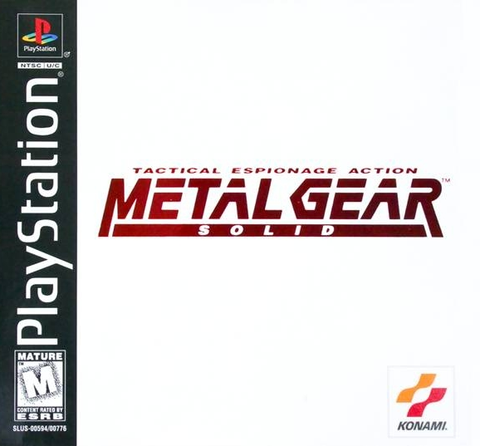
- Metal Gear Solid for PlayStation: the 1998 game’s original console version.
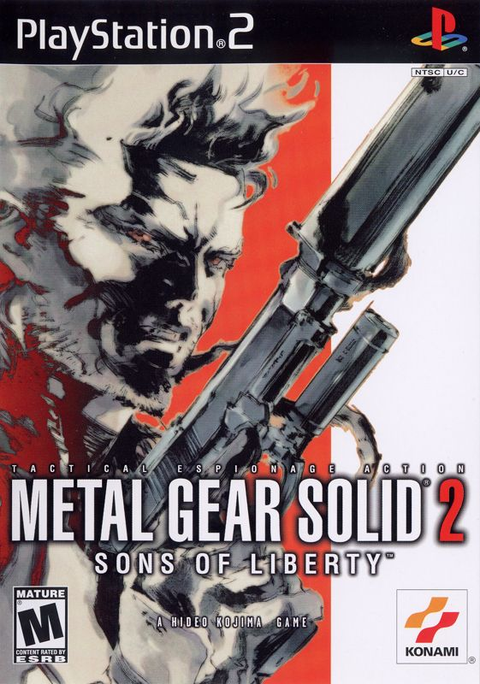
- Sons of Liberty for PlayStation 2: distinguish it from Substance and later collections.
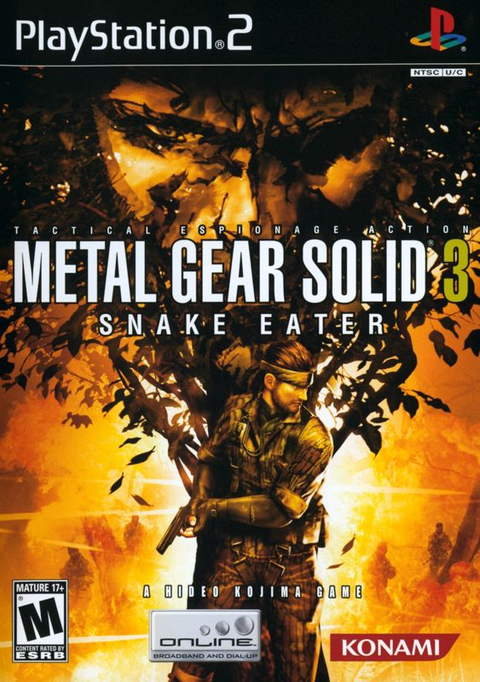
- Snake Eater for PlayStation 2: distinguish the original release from Subsistence and Delta.
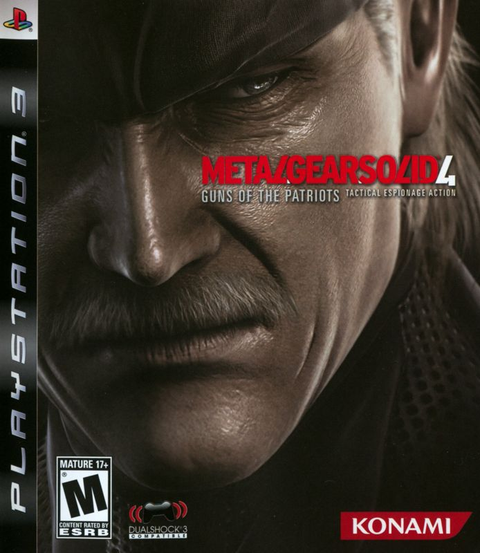
- Guns of the Patriots for PlayStation 3: the original PS3 edition rather than the later Master Collection version.
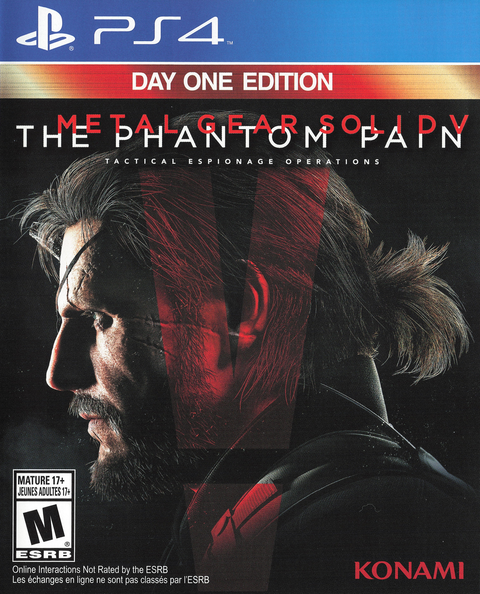
Used copies do not guarantee unused bonus or download codes. A Day One label on a Phantom Pain listing is not a promise of redeemable digital extras. For more platform context, read our PS2 classics guide and PSP classics guide. For another look at how a game builds a convincing world, explore our Grand Theft Auto IV deep dive.
Official Metal Gear Master Collection Vol.2 trailer
Konami links this overview from its August 27, 2026 launch announcement. Watch the official trailer on YouTube. YouTube may display advertising; this link opens the provider’s player.
19. Sources and research notes
Primary publisher histories, game manuals, contemporary announcements and developer interviews underpin the historical and mechanical discussion. The interpretations, comparisons and evaluations are original critical readings, not claims that a developer has certified one definitive meaning. Narrative discussion concerns the released games; this is not a transcript, a walkthrough or a claim of firsthand testing. No review scores, sales estimates, budgets or undocumented explanations of development decisions have been supplied.
Sources were checked on October 19, 2026 (UTC). Original publication dates and regional differences are identified below. Historical announcements are not used as proof of current retailer stock or a working multiplayer service.
- Konami: Metal Gear archive · Japanese, current archive. Original platforms, first-release years, edition and adaptation identities. Regional dates are not generalized to worldwide simultaneous launches.
- Konami: Metal Gear 2 history · Japanese. Zanzibar Land, 1999, OILIX and the returning characters.
- Konami: Metal Gear Solid history · Japanese. Shadow Moses, 2005, principal cast and the gene/destiny framing.
- Konami: Sons of Liberty history · Japanese. Tanker/Big Shell settings, principal cast and the meme framing.
- Konami: Snake Eater history · Japanese. 1964, Naked Snake, The Boss, mission premise and CQC background.
- Konami: Guns of the Patriots history · Japanese. 2014 war-economy premise and principal relationships.
- Konami: Peace Walker history · Japanese. 1974 Costa Rica premise, Miller, the recording and supporting cast.
- Konami: The Phantom Pain product page · European English. 1984 opening premise, platforms and September 1, 2015 release listing.
- Konami: Ground Zeroes launch announcement · March 20, 2014, Europe. Release, prologue relationship and setting.
- Konami: Metal Gear MSX-version manual, story · English. Snake, Gray Fox, Outer Heaven and Big Boss’s command role. The later saga’s 1995 placement is distinguished from the manual’s opening historical wording.
- Hideo Kojima interview, PlayStation Blog · July 23, 2012. Creator’s account of the first game, the 3D transition and Peace Walker’s social ambitions. Used as attributed recollection, not an exhaustive production history.
- Konami: Snake’s Revenge manual and Metal Gear 2 manual · Distinct official manual identities. Read alongside the archive and principal-saga history; the names are not synonyms.
- Konami: Legacy Collection historical overview · 2013, Japanese. MG2’s sound, radar and crawling design; historical context rather than modern service availability.
- Konami: MGS manual, introduction · English. Infiltration objectives, hostages and the danger of unnecessary combat.
- Konami: MGS manual, stealth techniques · English. Peeking, luring, wall knocking and associated controls.
- Konami: MGS manual, editing saved data · English. The collection’s virtual saved-data support; the discussion distinguishes original hardware interactions from later implementations.
- Konami: original MGS2 introduction · Contemporary English site. Explicit thematic statements on DNA, memories and transmission across generations. No long quotations reproduced.
- Konami: MGS2 manual, basic controls · English. First-person weapon use, radios, hanging and body movement.
- Konami: MGS2 manual, stealth techniques · English. Hold-ups, enemy response and tactical actions.
- Konami: MGS2 manual, alert levels · English. Normal, alert, evasion and caution, including searching and room clearing.
- Konami: MGS3 manual, camouflage · English. Concealment and camouflage systems.
- Konami: MGS3 manual, Survival Viewer · English. Food, equipment, weight and treatment.
- Konami: MGS3 manual, medical information · English. Game-specific injury/treatment mechanics, not real-world medical guidance.
- Konami: Legacy Collection MGS4 overview · 2013, Japanese. OctoCamo and the threat ring. Shared source with note 13; claims are narrowly summarized.
- Konami: Portable Ops product description · Japanese. December 21, 2006 Japanese release; original six-years-after-MGS3 premise and connective marketing.
- Ryan Payton interview, Shacknews · August 23, 2006. First-person developer interview on the portable project’s ambitions. It is evidence of contemporary intent, not a final adjudication of every later continuity question.
- Konami: Legacy Collection contents and Peace Walker overview · 2013, Japanese. Base growth and package/code distinctions. Same underlying source as notes 13 and 24; not independent corroboration.
- Konami: Ground Zeroes launch announcement · March 20, 2014. Camp Omega, 1975, replayable infiltration and the prologue’s relationship to TPP. Same source as note 9.
- Konami: TPP PC manual, horseback controls · English. Mounting, side concealment, perspective and the iDroid’s non-pausing behavior.
- Konami: original Ghost Babel/Game Boy Color site · Contemporary English branding; read alongside the archive and the modern collection’s distinct Ghost Babel listing.
- Konami: Master Collection Vol.2 launch notice · August 27, 2026, US English. Current documented release, platforms, included games and online caveats. Also the European notice; these are matching publisher notices, not two independent reviews.
- Konami: Metal Gear Acid introduction · Contemporary English site. Portable-first, card-based non-action design and a distinct story.
- Takahisa Taura: Parrying the Blade Mode · PlatinumGames developer blog, January 30, 2013. Parry, counter and Blade Mode relationship.
- Konami: Metal Gear Rising product description · European release listing February 22, 2013. Action-oriented branch and platform identity.
- Konami: Survive internet/connectivity support · Checked October 19, 2026. Connection requirement for both single-player and multiplayer. Legacy subscription names in the source are not repeated as current subscription advice.
- Konami: MGSV release announcement · March 4, 2015. Weather/day-night design, CQC, Fulton, Mother Base and the third MGO iteration. Early projected service dates are superseded by the operational record in note 37.
- Konami: MGSV Metal Gear Online site · Japanese. Recorded console and Steam service-launch dates. The page is not used to claim a live match was tested.
- Nokia: Konami games for N-Gage · May 20, 2008, corporate press release. Mobile’s platform identity and announced distribution.
- Konami Touch press release, preserved by DigitalChumps · Release dated April 23, 2009, page April 24. Full-version scope and touch-shooting design; not proof of a current App Store listing.
- Konami Social Ops announcement, preserved by 4Gamer · December 4, 2012, Japanese. Unit assembly and event structure. The preserved announcement supports December 4 rather than silently adopting conflicting secondary dates.
- Daniel Feit: Metal Gear Arcade hands-on · WIRED, February 22, 2010. Attributed original reporting on the exhibition cabinet; no claim of firsthand use by this article’s author.
- Konami: original MGS2 site · 2002 archive notices identify Shinkawa’s artbook, art gallery and interviews.
- Konami: MGS2 manual, Snake Tales · English. Additional stories starring Snake, distinct from the main campaign.
- Konami: Master Collection Vol.1 contents support · Dated October 24, 2023; checked October 19, 2026. Collection-specific contents documentation. Also the official explanation of its Master and Screenplay books.
- Noriaki Okamura: Delta’s release and design approach · Konami producer, PlayStation Blog, February 12–13, 2025. Story preservation, revised animation, New/Legacy styles and quick camouflage selection. No all-platform performance claim is inferred.
Gameplay image credits
Gameplay screenshots via MobyGames. Each caption links to its exact source page and credits the contributing account. The images illustrate the specific games and platforms named beside them; a screenshot from a remake or rerelease is not presented as the original version.MobyGames. Twenty distinct screenshots illustrate the platforms named in the captions. Each credit links to the exact screenshot page.
Images are used under MobyGames’ screenshot-use permission for credited articles. Game imagery and trademarks belong to Konami and their respective owners. Screenshots retain their original composition, HUD elements and capture marks.
Further primary reading
Konami’s MGS, MGS2 and MGS3 manuals separate mechanics from the memories that build around them. Its Vol.2 manual index identifies the platform-specific manuals for MGS4, Peace Walker and Ghost Babel. The collection’s digital screenplay/master books are appropriate next sources for a line-by-line narrative study; they contain spoilers and should not be confused with new playable episodes.