

A battlefield victory in Rise of Nations can be satisfying on its own. Conquer the World asks a second question: what did that victory buy your nation on the larger map?
The campaign connects real-time scenarios through a strategic layer of territories, armies and diplomacy. An attractive target might offer a useful reward, create an awkward frontier or help position another attack. That is a different decision from choosing which unit to produce next, even though the next unit may be how you finish the job.
This feature examines the standard Conquer the World framework documented in Microsoft's original manual, using actual Rise of Nations: Extended Edition PC screenshots. Expansion campaigns can have their own rules and historical limits. Check the selected campaign's Rules panel before assuming that every strategic map follows an identical timetable.
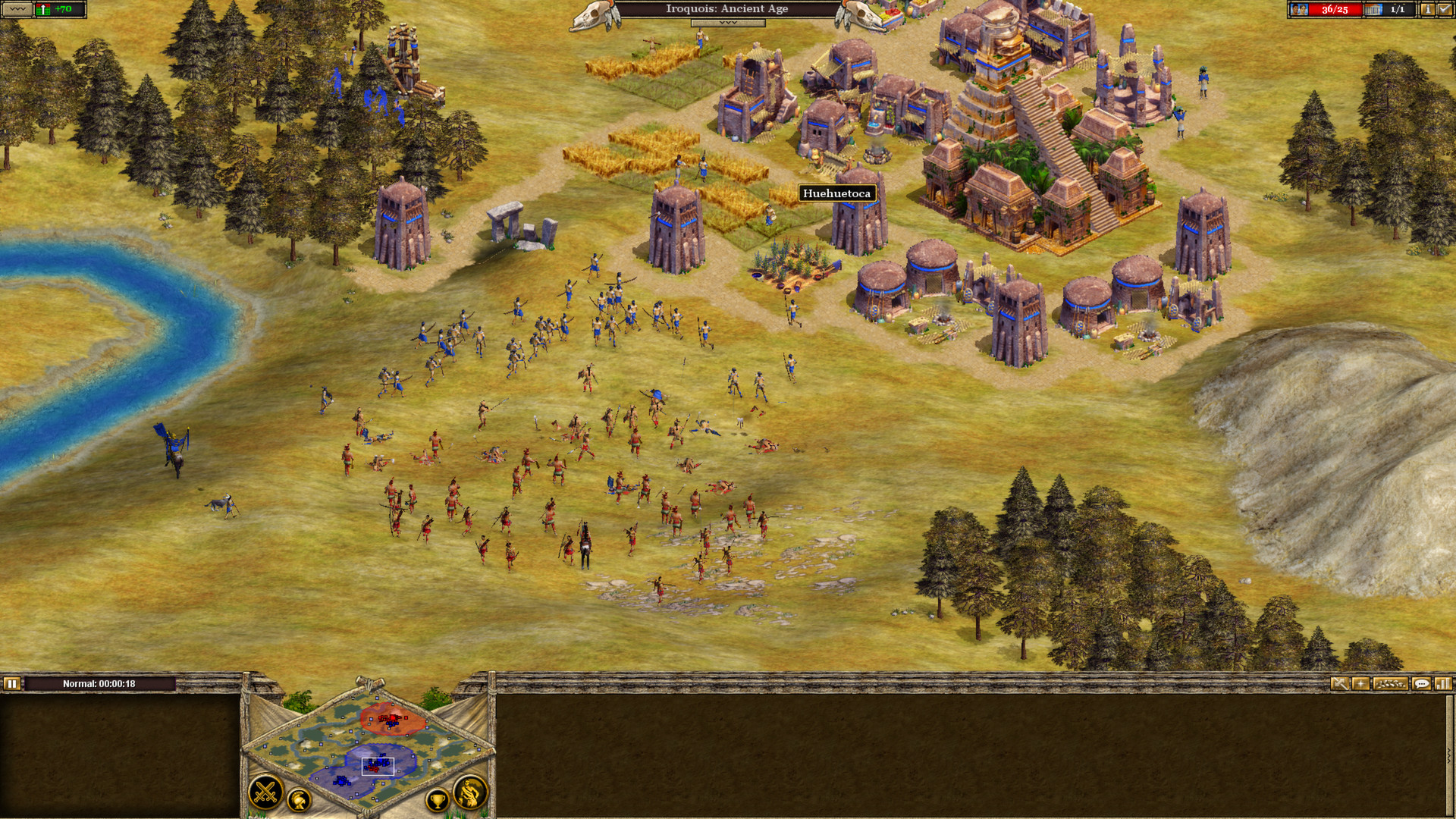
Choose the territory before choosing the army composition
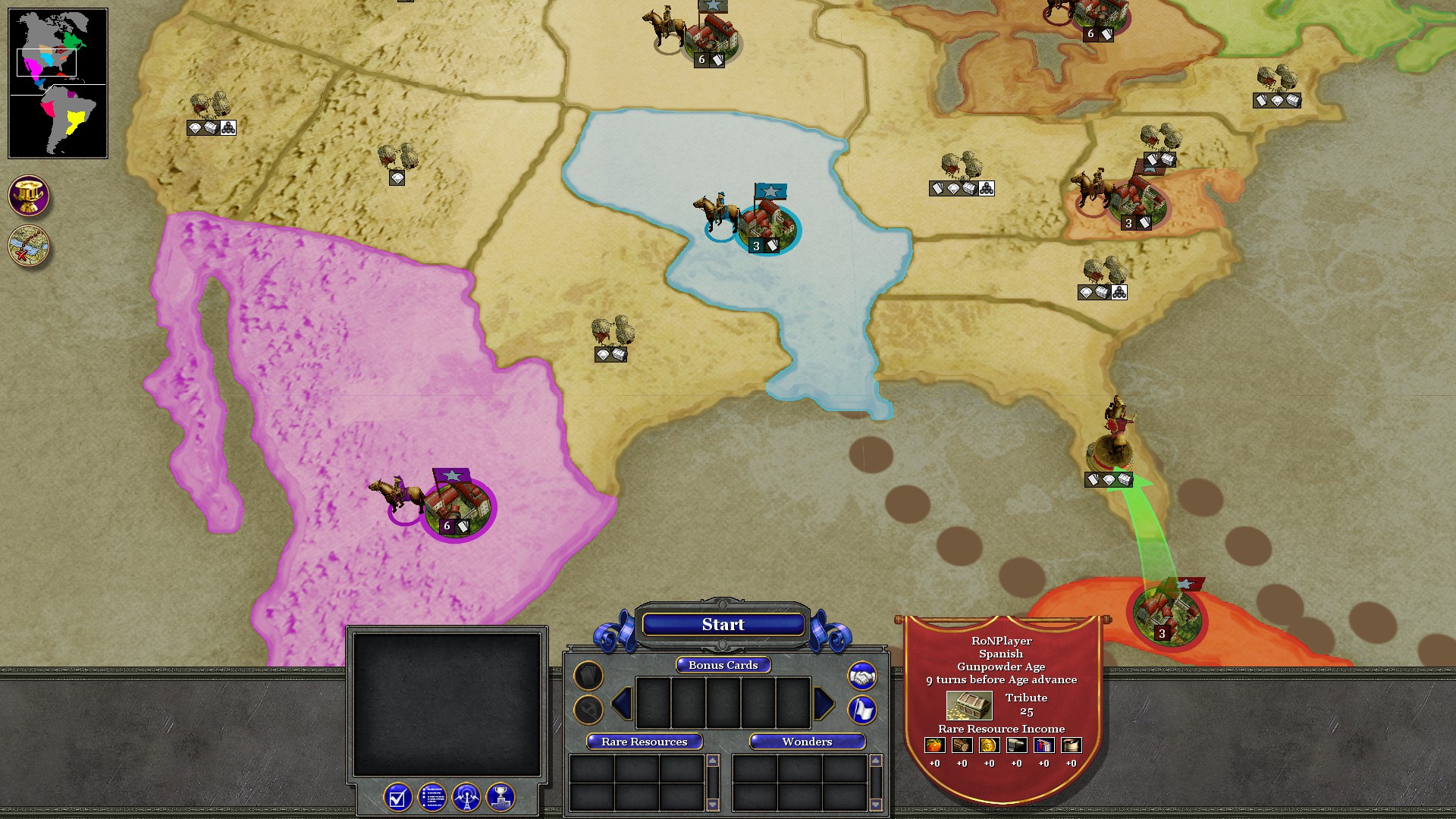
The standard campaign begins with a capital territory and an army figure. The manual describes allowed adjacent attacks with green arrows. A normal turn allows one initiated attack, with an overrun exception; that makes target selection more deliberate than clicking every exposed neighbor in succession.
Before starting a battle, examine the destination's displayed strength and rewards. Consider both what you gain and the borders you create. Taking a territory because it is available can leave you defending a shape you never intended to own.
Our recommendation is to name the strategic purpose in a short sentence. Perhaps the attack secures a particular resource, improves access to the next target or protects a vulnerable part of the empire. That sentence gives you a reason to choose between two plausible wars without pretending one route is universally best.
The scenario has an objective of its own
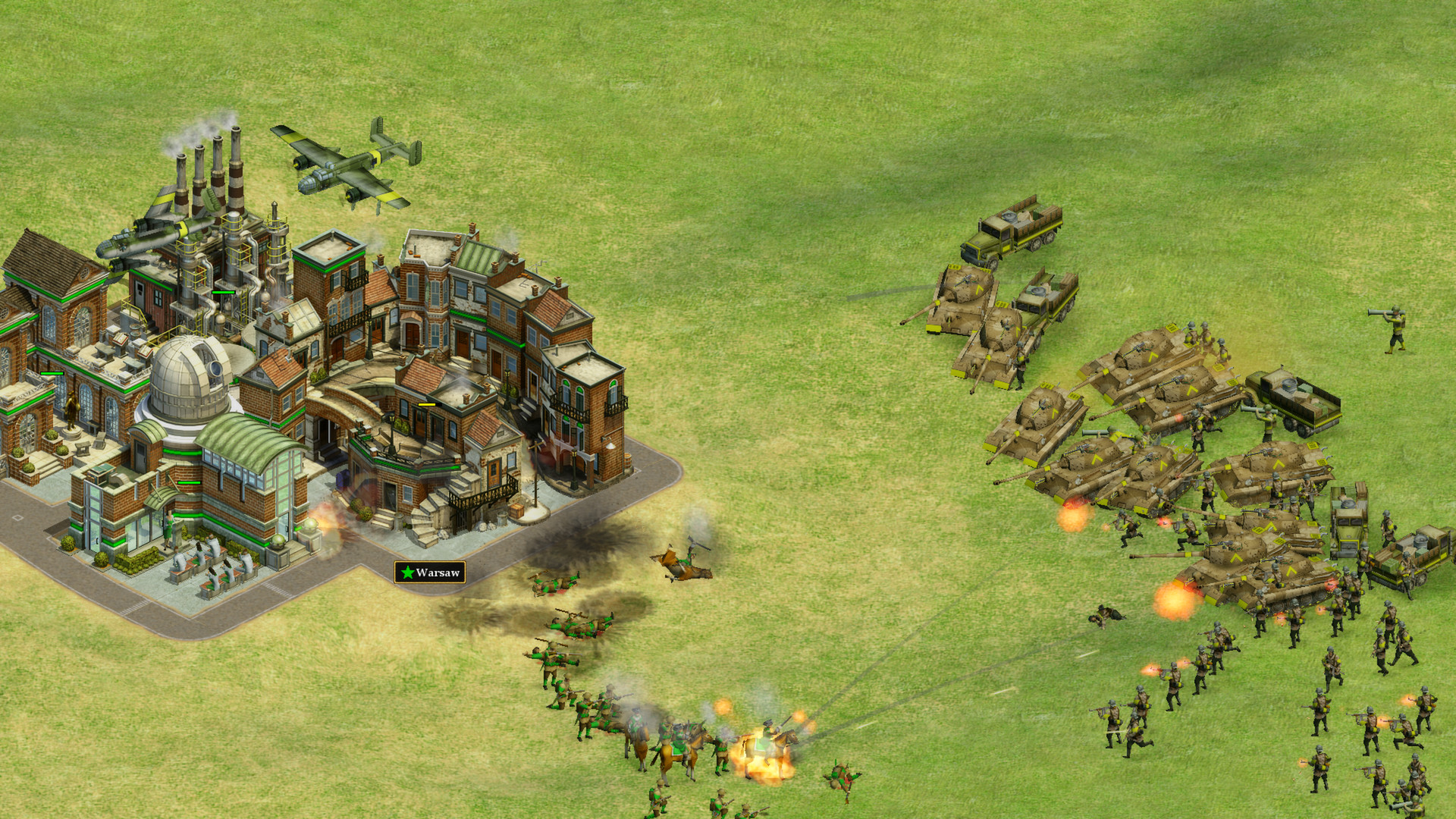
After committing on the strategic map, you enter a real-time scenario. The original manual gives defending a city and capturing an opposing capital as examples of different objectives. Read the actual briefing before treating every map as a standard open-ended match.
That distinction changes what useful preparation means. A force assembled to hold a position has a different job from one expected to push across the map. Expensive development can be sensible in one situation and consume the time needed for the objective in another.
Keep an eye on the victory condition while fighting. A busy battle can encourage you to answer every nearby threat, even when an opportunity elsewhere would advance the mission. The campaign's strategic purpose and the scenario's immediate condition should both remain visible in your plan.
Bonus Cards are a commitment, not a permanent technology
Bonus Cards can supply resources, forces or other advantages. In the standard rules, a card is used once. Some are earned through territory gains; random cards can also be bought. Read the particular card before deciding that a promising name solves the problem in front of you.
That creates an enjoyable tension between preparing and hoarding. Saving every card for a future emergency means the current army receives none of their help. Spending them casually leaves fewer options for a demanding encounter. A good reason to play one is being able to identify the part of the battle it should improve.
For example, extra starting help is most meaningful when you have a concrete opening in mind. Choose the opening, read the card's effect, and see whether the two actually match. Treat the card as a tool in the operation rather than an excuse to stop thinking about it.
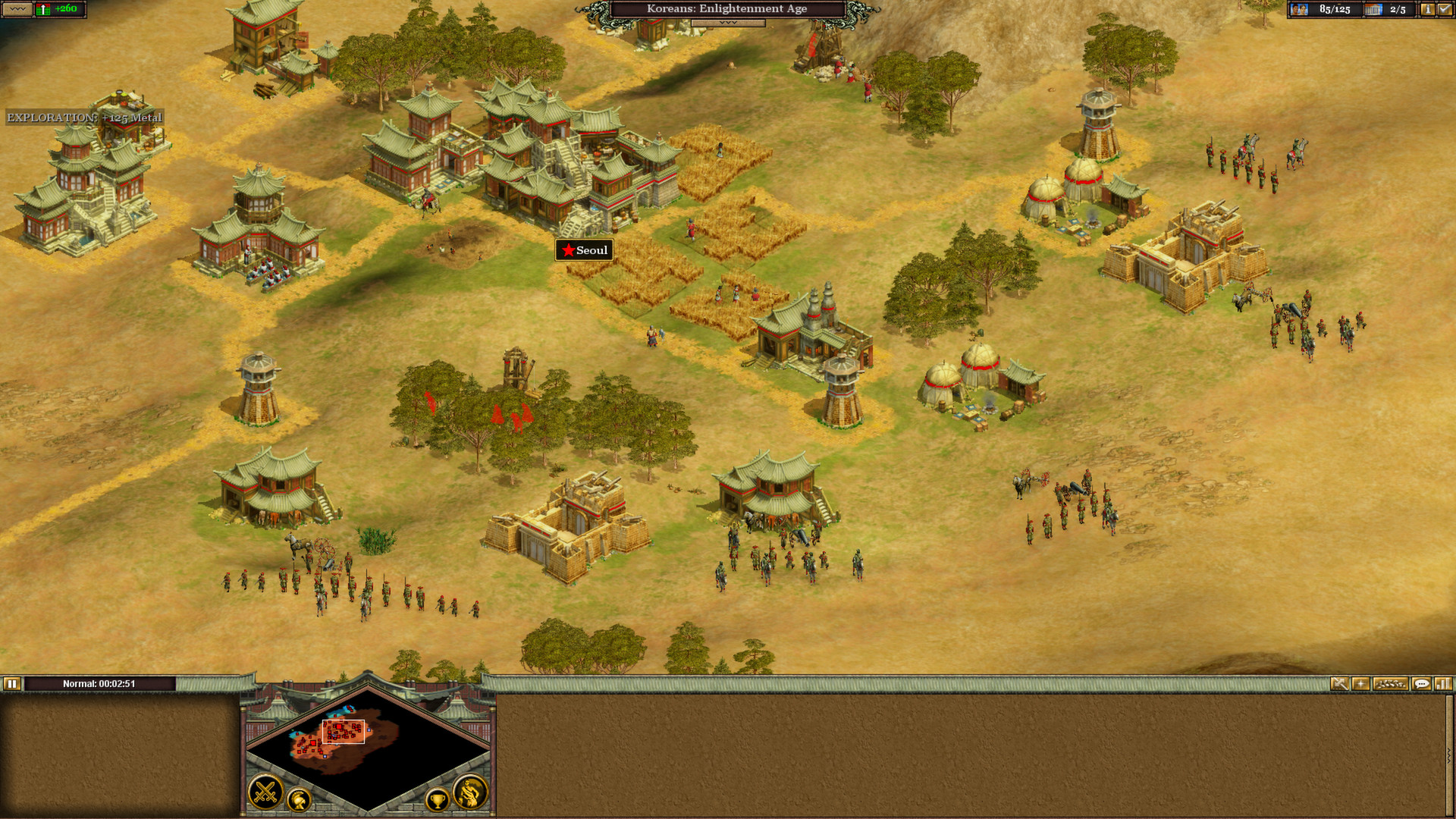
Tribute belongs to the strategic economy
The manual describes Tribute as the campaign-level counterpart to Wealth. It can fund territorial upgrades, cards, land purchases and diplomatic actions. It therefore connects your wars to choices made outside the real-time battlefield.
The distinction matters when you return from a successful mission. A reward is not automatically an instruction to spend it immediately. Look across the empire before selecting another purchase. A defensive improvement on an exposed frontier may support the next move more effectively than another speculative card.
Use the strategic interface to compare the actual offers. The information panel tracks the broader position, while territory details explain what a particular location contributes. Money spent to make a plan safer and money spent to create a new opportunity can both be sensible. Their value depends on what you are trying to do next.
Armies on the world map are not individual battlefield units
A campaign army figure represents strategic presence. A Supply Center can allow another army, and adjacent friendly or allied armies can support a battle under the standard rules. Those are reasons to study positioning before clicking Start.
Think about what moves together and what stays behind. Expanding in one direction can change where help is available for the next engagement. The campaign lets a sequence of battles develop a geography of its own instead of erasing every consequence when a mission ends.
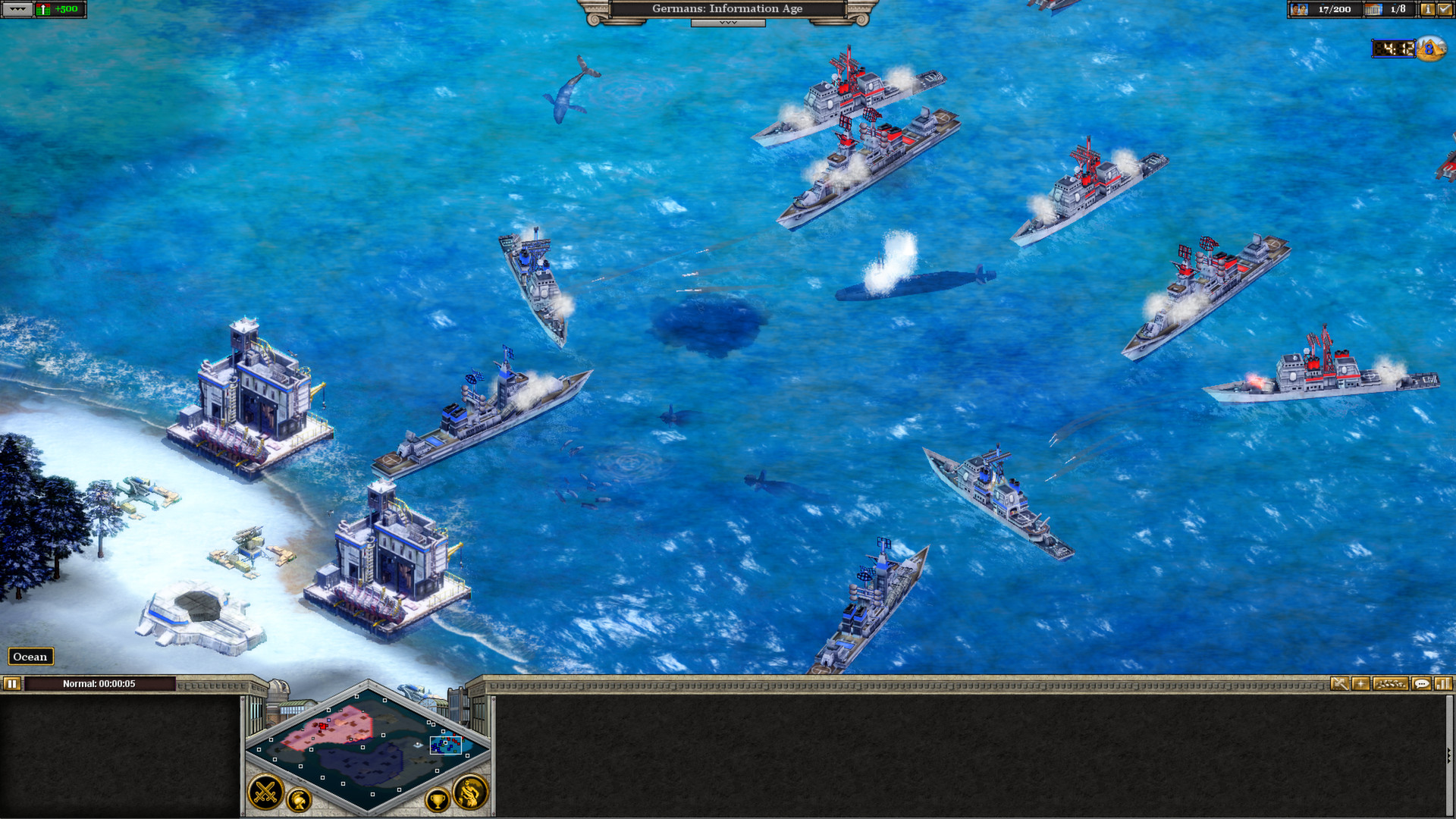
That is also why the strategic screen in the accompanying gallery deserves attention alongside the spectacular fleets. The world map is playable information: who controls what, which routes exist and where your next commitment would land. The naval screenshot shows the tactical game; it is not a picture of a campaign army counter.

An age is a campaign setting as well as a research goal
The standard Conquer the World campaign moves through narrower historical periods over several scenarios, rather than asking every individual battle to traverse all of history. The strategic information panel indicates the turns remaining before the next age advancement.
Our take is that this gives the historical sweep room to breathe. You can spend more than one encounter thinking with a particular set of tools. A newly available era changes the military vocabulary without making the earlier territorial decisions irrelevant.
Check the campaign you selected before following an older walkthrough. Extended Edition packages the base game with Thrones and Patriots; use the rules for the campaign you select. A rule described for the standard world campaign should not silently become advice for every named expansion scenario.
For a good first campaign evening, aim to understand one complete cycle: select a worthwhile territory, read the mission, spend a card deliberately if needed, complete the objective and assess the resulting map. The satisfying part is watching those decisions connect across the boundary between the two games happening on your screen.
Collecting your next strategy game? Browse Zypher’s current games and check the exact platform and edition. You can also sell your old games to Zypher when the shelf needs a new campaign.
Sources: Original Microsoft manual, Conquer the World chapter; Publisher’s Extended Edition listing. Interpretation and practical recommendations are Zypher editorial judgment. Original image proportions retained; Zypher is an independent retailer.


