Silent Hill's nastiest trick is making you question what you are trying to find. A missing child. A person who cannot possibly have sent that letter. A way out of your own apartment. The objective sounds reasonable. The place you have to search has apparently filed a formal complaint against reality.
That is why reducing this series to fog, nurses, and Pyramid Head sells it short. The games have used occult horror, family relationships, guilt, distorted memories, and ordinary places that become unbearable. They have also disagreed with each other about what a Silent Hill game should actually do.
This is our franchise deep dive through the original run, the stranger experiments, the lost Silent Hills project, the remake, Silent Hill f, and Townfall. We discuss setups and design, with major revelations and endings left alone. Current release information was checked on October 23, 2026. The recommendations and critical readings are Zypher's editorial take.
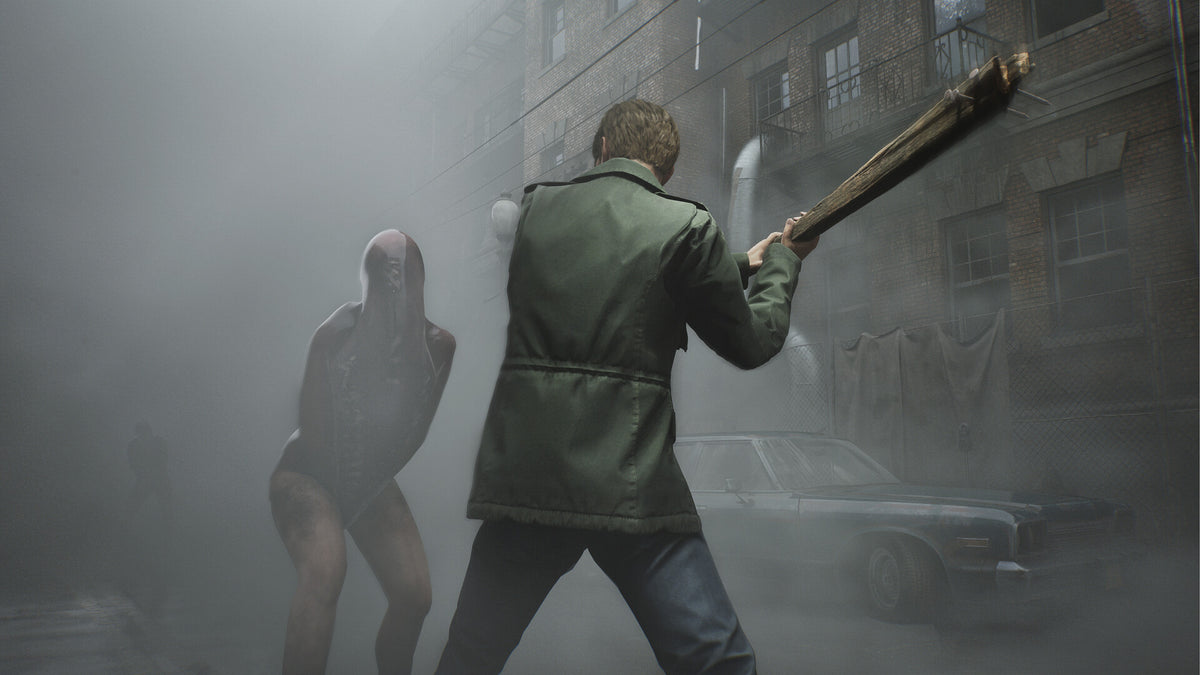
Featured image: James confronting a creature in the Silent Hill 2 remake, from Konami's official PC gallery. Historical screenshots below identify their actual edition and platform.
1999: Harry Mason needs his daughter, not a mythology lecture
The original Silent Hill on PlayStation begins with Harry Mason losing track of his daughter Cheryl after a car crash. Konami's original-game description is almost disarmingly simple: wake up, discover she is gone, head into town.
That human objective does important work. Harry does not need to understand the supernatural machinery before you understand why he keeps going. Searching an awful place makes sense when someone you love is missing. It also means the player can be frightened and motivated at the same time.

The old game's streets do not offer the reassuring sweep of a modern sightseeing camera. Fog cuts off the distance, darkness narrows your attention, and the sound of nearby trouble can arrive before a clean view of it. A map becomes valuable because the town refuses to make itself visually convenient.
The trick is the relationship between those systems. Limited visibility on its own can simply be irritating. Give the player a destination, a threatening sound, and enough uncertainty about the route, and the same limitation becomes a decision. How far do you keep walking before checking where you are?
The first game's occult storyline matters, too. This was never only a town that invents a personalized punishment for every visitor. Treating the entire franchise as a universal guilt simulator makes later stories easier to summarize and much harder to understand. Harry's search establishes a different dramatic starting point from James Sunderland's.
2001: Silent Hill 2 changes whose nightmare you are investigating
Silent Hill 2 introduces James, drawn back by a letter apparently written by his dead wife Mary. Konami's description puts that impossible invitation at the center. It is a new protagonist and a different story, rather than Harry's next chapter.
Our reading is that the second game's power comes from the gap between an objective and a motive. You can understand what James says he wants without feeling certain that you understand him. Other people in town do not neatly serve as tour guides to his explanation, either. Their presence makes the place feel less like a puzzle constructed exclusively for the player.

The monsters and spaces invite interpretation, but interpreting them is different from getting permission to explain away every uncomfortable detail. A frightening image can have a relationship to a character without becoming a neat one-line answer on a lore chart. The game benefits from leaving you with something to sit with.
This is also where the franchise's most recognizable imagery can become a trap for the franchise itself. Pyramid Head has become a Silent Hill identifier far beyond one game. For us, a recognizable creature is most effective when its role belongs to the story being told. Repeating the silhouette is easier than rebuilding that relationship.
Collectors should distinguish the original PS2 release from later versions. Our Silent Hill 2: Restless Dreams listing is for the original Xbox, not the 2024 remake. A familiar title and a different subtitle are useful information, not decoration.
Silent Hill 3: Heather gives the early story a different center
Released in 2003, Silent Hill 3 follows Heather Mason. It returns to the storyline connected with the first game, so our advice is to play the original before this one if you want that connection to land properly. Playing 2 first does not supply the same preparation.
Konami describes Heather's ordeal through the collision between her past and her fears. That emphasis is useful: the series is doing more than moving another adult man through another set of grim buildings.
Heather's perspective makes familiar public spaces feel invasive. The question is not simply whether there is a monster nearby, but what it means when a world appears to be making decisions about your body and your future. That is our critical reading, not a claim that every image has one official explanation.
It also exposes the weakness of the idea that Silent Hill 2 invented a template every sequel should follow. Three has its own central character, story obligations, and emotional pressure. Judging it only by how closely it resembles James's experience misses the reason to make it.
2004: The Room makes home part of the problem
Silent Hill 4: The Room begins with Henry Townshend trapped in his apartment, escaping through a mysterious portal into threatening spaces. The publisher listing on GOG identifies the 2004 game, its ghosts, and its movement between first-person and third-person presentation.
That is a substantial change in the series' architecture. A room ordinarily gives a horror player something to return to: a recognizable layout, a boundary, a little control. Building the premise around being trapped there makes that same familiarity uncomfortable.
The apartment turns the idea of retreat into a question. If the place where you live is also the thing you cannot escape, going home stops being a solution. The title does a considerable amount of damage with three extremely ordinary words.
We would approach The Room after at least one of the earlier games. Its appeal is easier to appreciate when you can recognize how deliberately it changes the arrangement. It is also a reminder that experiments were part of the early series, rather than something invented only after development moved to other studios.
Origins: the handheld prequel and the danger of explaining more
Silent Hill: Origins on PSP arrived in 2007, with a PS2 version following later. Konami identifies it as a prequel to the first game's events.

That is a different creative assignment from introducing a new visitor with a new problem. A prequel has to work toward a situation the audience may already know. Every explanation adds context, but also takes a little territory away from the unknown.
For a first-time player, we would still choose release order over story chronology. Learn what the original does before visiting the game designed to stand behind it. A chronological starting point is not automatically the most effective introduction.
The PSP version also belongs in a physical history of the series. It puts this kind of slow exploration into a handheld format, which is a different proposition from simply bringing a console disc along. Check the platform on the listing: our linked copy is the UMD edition.
Homecoming: a family search with a different combat emphasis
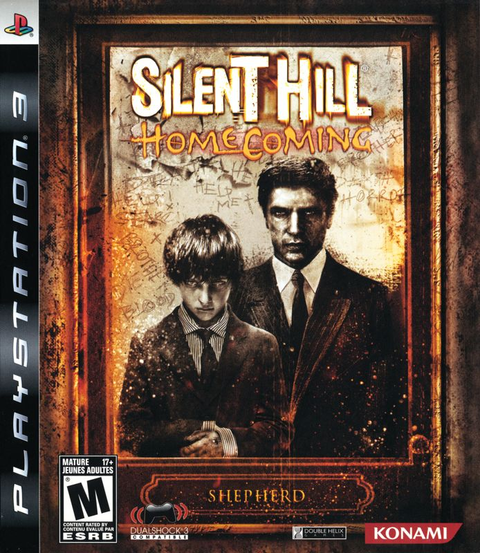
Double Helix's Silent Hill: Homecoming follows Alex Shepherd, returning to Shepherd's Glen while investigating his brother's disappearance. That setup and studio credit are documented in Konami's PC listing. Konami’s US launch announcement records the console release on September 30, 2008. A regional PC storefront date should not be mistaken for the original console launch.

Homecoming makes combat a more conspicuous part of the moment-to-moment experience. That creates a tension worth discussing without turning it into a rule that horror must have bad controls. A player who can respond more directly to an attack has more agency. The game then has to find other ways to make the encounter uncomfortable.
Our issue with using familiar monsters as the main selling point is the same here as elsewhere: the connection between a creature, a place, and a person matters more than recognition alone. A greatest-hits lineup can tell you which franchise you bought. It cannot, by itself, tell a new story.
If this branch interests you, check Homecoming on PS3 or the separate Xbox 360 listing. Those are the console editions discussed here, not a promise about how the PC port behaves on your computer.
Shattered Memories: the reimagining that refuses to be a replacement
Silent Hill: Shattered Memories on Wii reimagines the first game's premise instead of straightforwardly remaking its original sequence of events. It also appeared on PSP and PS2. The Wii release began in North America in 2009, with regional releases continuing into 2010.
The important distinction is design. In a preserved entry from Konami's original development blog, the team explains that Harry cannot kill the creatures pursuing him. Nightmare sequences require evasion. The absence of combat is a deliberate organizing choice.

That separates exploring from being chased in a very different way. When you cannot solve a pursuit with enough ammunition, the question becomes how to get through it. Meanwhile, the quieter sections have room for investigation and the game's psychological framing.
Our recommendation is to treat it as an alternative interpretation after the original. Going in expecting the same game with a Wii flashlight risks overlooking what it is trying to change. The familiar premise is the starting material, not a guarantee of the same destination.
It is one of the clearest examples of why a franchise can benefit from a different viewpoint without discarding its identity. You can change the player's available actions and still make uncertainty about people, memories, and places carry the fear.
Downpour: a new visitor, and room to get sidetracked
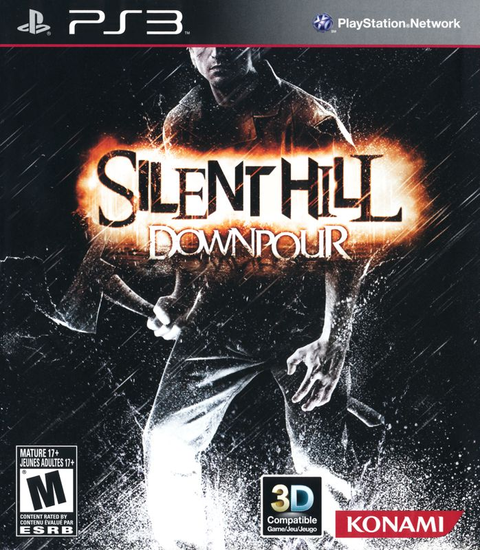
Silent Hill: Downpour arrived on PS3 and Xbox 360 in 2012, following Murphy Pendleton. Konami's description frames the story around discovering his past. It is another distinct protagonist, not a continuation of Alex's campaign.

In a contemporary interview, producer Devin Shatsky described side quests outside the central storyline. Those optional investigations give this entry a useful place in the series discussion. Side stories can make a location feel as though its troubles extend beyond the main character's next objective. They can also interrupt urgency, so the effect depends on how much you want to explore.
We would choose it for that interest in another interpretation of the town, after trying the early games. A franchise deep dive does not need to pretend that every entry is equally essential, or that a game with rough edges has nothing worth discussing.
The PS3 listing at Zypher is the physical console release. That distinction matters when comparing it with newer games that happen to share the series name.
HD Collection, Book of Memories, and the other branches
Silent Hill HD Collection packages versions of Silent Hill 2 and Silent Hill 3 for PS3 and Xbox 360. Konami lists those two games. It does not include the original Silent Hill or The Room, and it is not the 2024 Silent Hill 2 remake. “Collection” is doing less work here than an optimistic buyer might hope.
Silent Hill: Book of Memories took another direction on Vita in 2012. PlayStation's contemporary introduction describes a survival-horror action RPG, with multiplayer rather than the familiar solitary campaign format. Buy it because that experiment interests you, rather than expecting a portable Silent Hill 5.
The edges of the catalog include Japan's Game Boy Advance Play Novel, the light-gun Silent Hill: The Arcade, and mobile experiments including Orphan and The Escape. These are different formats, not missing numbered chapters that every newcomer needs to complete.
Ascension moved into interactive streaming in 2023. Konami's business report describes viewers influencing scenes and the developing story. That is a different product category from buying a traditional Silent Hill campaign. The format is the distinction to understand before making comparisons.
P.T. and Silent Hills: an unfinished future that still matters
The 2014 PS4 P.T. was a playable teaser connected to Silent Hills, the project associated with Hideo Kojima and Guillermo del Toro. The full project was canceled in 2015, and the teaser was removed from PlayStation Store. Siliconera's contemporary report records both the cancellation and removal.
A repeating domestic corridor is a remarkably economical horror structure. Repetition teaches the player what to expect, then makes a small change feel enormous. You do not need a huge map if the player no longer trusts the room they have already seen.
That is the lasting design lesson we take from P.T. Its legend can sometimes overshadow the work that actually released afterward, but it is worth keeping the categories straight. A memorable teaser is not a finished campaign, and a canceled project's possibilities are not evidence that every imagined feature would have survived production.
2024: a short experiment and a large reconstruction
Silent Hill: The Short Message launched on PS5 in January 2024 as a free, short-form experience with a contemporary young protagonist. Producer Motoi Okamoto's announcement explicitly presents it as an experiment in the revived series. It is separate from P.T. and from the remake.
Bloober Team's Silent Hill 2 remake followed in 2024. Its adoption of an over-the-shoulder camera required rebuilding combat and some scenes, as the developers explained when revealing it. Original collaborators Akira Yamaoka and Masahiro Ito were involved.
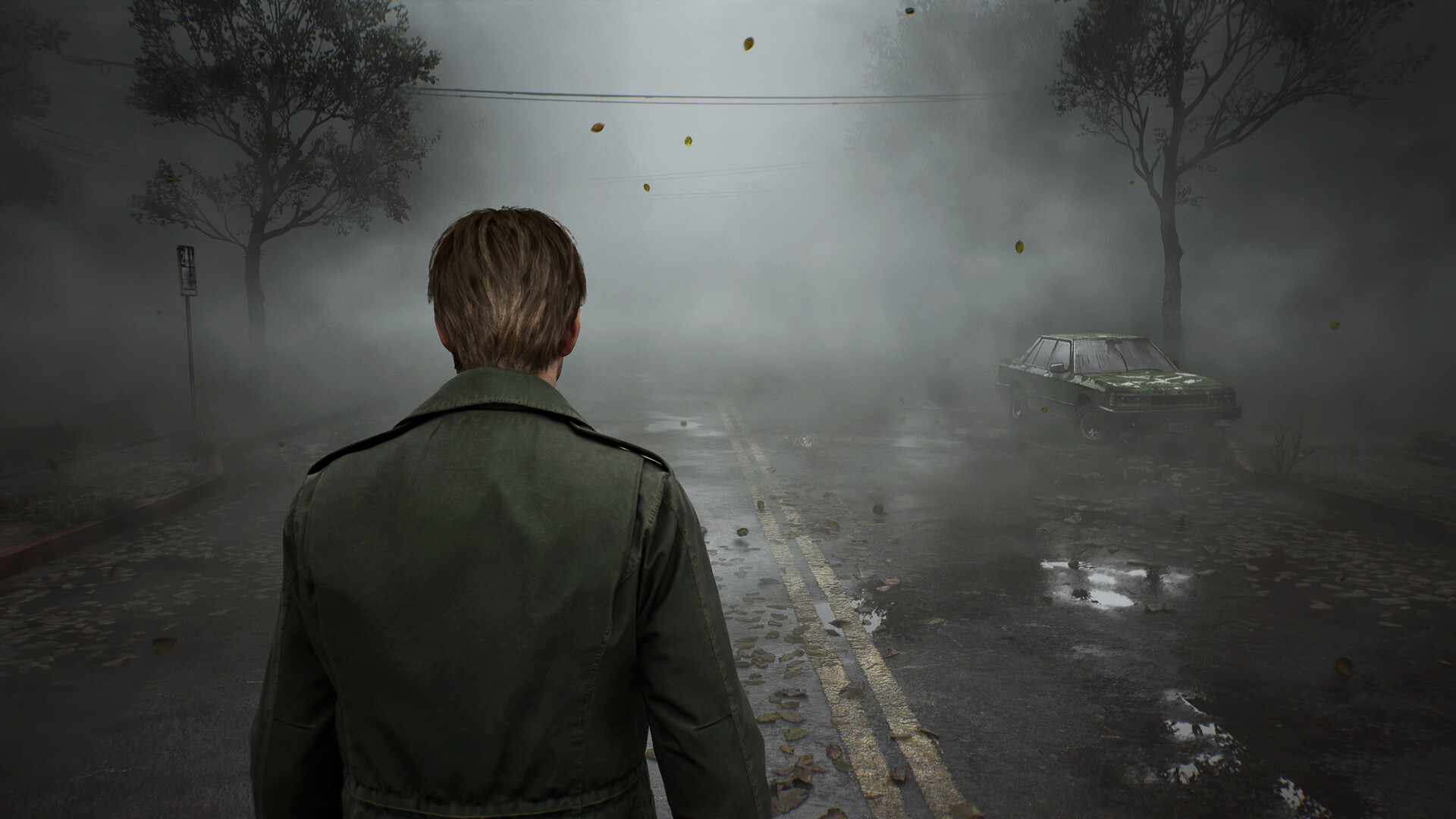
The interesting comparison is what the two versions make the player do. A composed viewpoint can withhold information through framing. A camera behind James gives you more direct responsibility for where you look and aim. More immediate control shifts the source of uncertainty; it does not automatically erase it.
We recommend the remake as a practical modern entry into James's story, while keeping the original as a distinct artistic version worth understanding. Choosing one for a first visit does not require declaring the other obsolete. There is enough fog in this franchise without creating an unnecessary argument over shelf space.
Silent Hill f: the series travels to 1960s Japan
NeoBards' Silent Hill f released in 2025, with a story by Ryukishi07. Its protagonist, Shimizu Hinako, lives in Ebisugaoka in 1960s Japan. Konami's gameplay introduction describes a standalone story, culturally grounded puzzles, and a stronger emphasis on melee combat.

Moving away from the American town tests what the name actually means. If Silent Hill is only a geographical address and a checklist of recognizable creatures, that move is a problem. If its identity also lives in the relationship between people, their surroundings, and disturbing transformations, another setting opens different possibilities.
That is why we would consider f as a separate entry point for someone especially interested in its setting and story. Its physical beauty and grotesque imagery make an uneasy pair. You do not need to finish Harry's story to understand the basic invitation, and you should not expect James's combat or narrative structure simply because both games share a logo.
Townfall: Scotland, first person, and a television you cannot ignore
Silent Hill: Townfall's standard release was September 24, 2026. Developed by Screen Burn, it follows Simon Ordell in St. Amelia, Scotland, in 1996. This is a released, full-length, self-contained game, not an announcement still waiting for a launch year.
Its publisher description emphasizes first-person exploration, stealth, limited weapons, and the CRTV, a portable television used to receive unstable signals. The developers' release-date post explains how its puzzles were written with the story and how some threats require evasion.

The CRTV is an interesting evolution of the series' relationship with unreliable information. A device can help you understand the environment while demanding attention you might prefer to keep on the environment itself. Information becomes something you actively seek, rather than a clean marker floating over the next task.
For us, f and Townfall make the strongest case for discussing Silent Hill as a family of horror ideas. Different places, perspectives, and creative teams can work with related concerns without rebuilding the same American street forever. The results deserve to be assessed individually, rather than accepted or dismissed because the postcode changed.
Where to start, without turning a horror series into homework
For the original story thread: Silent Hill, then Silent Hill 3. Play 2 alongside that route as its own story, followed by The Room if you want to see the early series rearrange its structure.
For a modern first visit: the Silent Hill 2 remake is our broad recommendation. Choose f for its Japanese setting, or Townfall for its first-person Scottish nightmare. Those are different entry points, not three chapters of one campaign that have to be played in order.
For the experiments: try Shattered Memories after the first game, Origins when you want the prequel, and Homecoming or Downpour when you want another team's take. Book of Memories belongs on a separate action-RPG branch of that decision.
Bloober Team also announced a remake of the first Silent Hill in 2025. Keep that project distinct from the 1999 original, Shattered Memories, and the Silent Hill 2 remake. Similar names are already doing enough damage to shopping searches.
For physical copies, match the platform, edition, condition, and included items to your actual setup. A PS3 disc is not a PS5 disc, and an old insert is not proof of a working download entitlement. Check current compatibility separately before buying for newer hardware.
Bring Silent Hill home from Zypher
Want the games in this deep dive on your shelf? Buy them from us at Zypher. Check our listings for Silent Hill on PS1, Silent Hill 2: Restless Dreams on Xbox, Shattered Memories on Wii, Homecoming on PS3, Downpour on PS3, and HD Collection on PS3.
Availability varies, so open the exact listing for current stock, condition, and what is included. You can also browse our Silent Hill catalog. If you are making room for another collection, sell your old games to Zypher through our Buy List.
The town can keep its questionable hospitality. The games deserve a good shelf.