
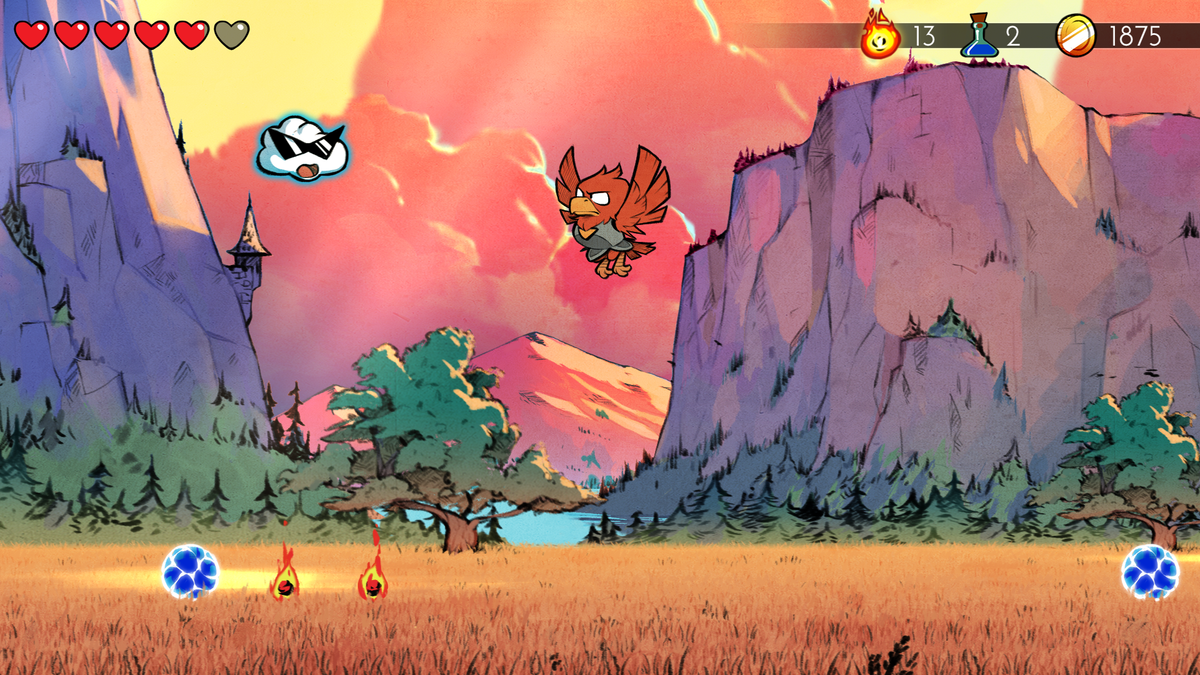
The most revealing button in Wonder Boy: The Dragon's Trap does not swing a sword. It changes how the adventure looks. Lizardcube's remake lets the player replace its hand-drawn world with the older pixel presentation during play, then switch back without abandoning the scene. A remake usually asks you to trust its interpretation of the past. This one puts the comparison within reach.
That makes the 2017 game an unusually useful way to revisit Westone's 1989 adventure. Its six playable forms and interconnected world are the foundation, not material invented to fill a new coat of paint. The interesting question is how much personality a restoration can add while keeping the structure underneath recognizable. This is a design spotlight based on the developers' documentation, not a new hands-on review.
A curse that changes the route
The premise is pleasingly unhelpful to its hero: an encounter with the Meka-Dragon leaves the adventurer transformed into a lizard. The search for a cure runs through further animal forms, including a mouse, piranha, lion and hawk. The developer describes different abilities for each form within one connected world.
That combination matters more than the number of characters. A transformation can change the relationship between the player and a place already encountered. Instead of treating scenery as something to leave behind after finishing a stage, the design gives the player a reason to reconsider it. The curse supplies both the problem to solve and the means of exploring the solution.
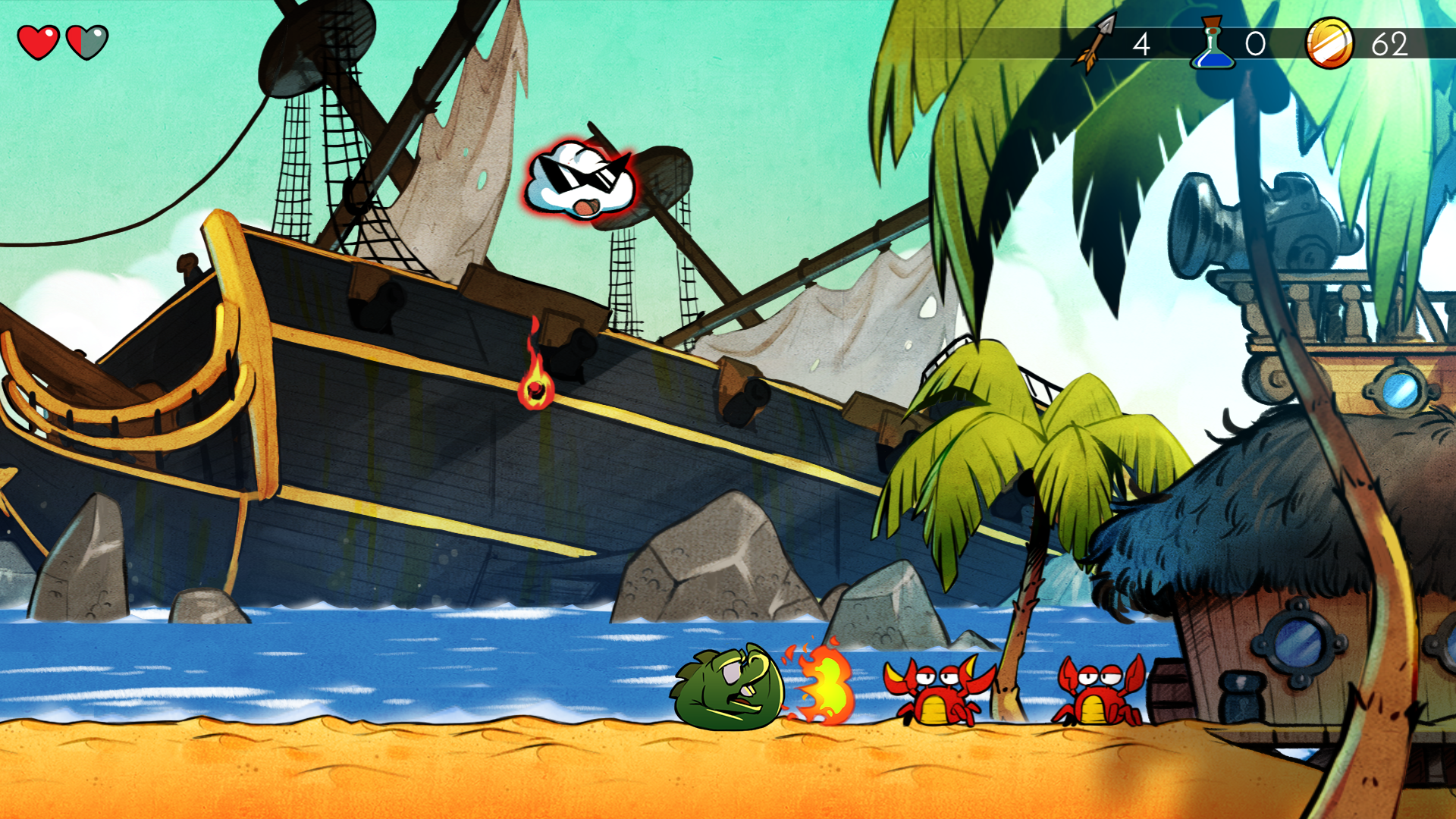
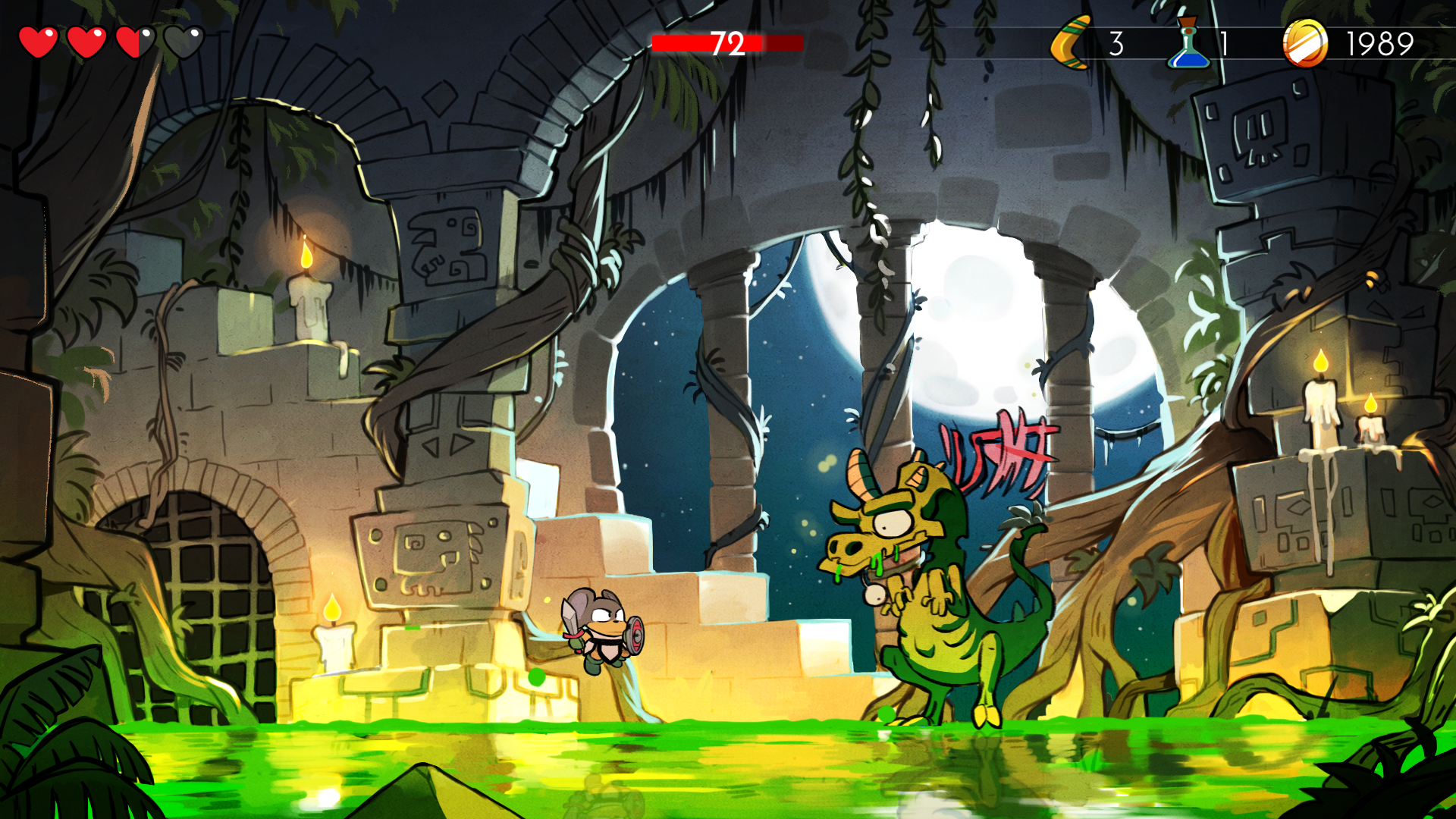
The official screenshots also make the transformations easy to distinguish. Lizard-Man's low fire attack on the beach, Mouse-Man facing a much larger dragon, and Hawk-Man suspended against the mountains give the cast different silhouettes. Those images are not proof of every movement rule, but they show why the transformation idea communicates so quickly: the hero's situation is visible before anyone explains a stat.
The old version is a comparison tool
Lizardcube's February 2017 explanation of the Retro feature describes separate presentation choices. Players can combine older graphics with newer audio, or newer graphics with older audio. Music and sound effects can be mixed between the two styles as well. It is not simply a choice between two inseparable packages.
That offers a useful way to notice what each layer contributes. Changing the music while leaving the picture alone invites attention to mood; changing the picture makes the artist's interpretation easier to spot. There is no need to declare one treatment the correct one. The practical pleasure is being able to make the comparison yourself, in the same adventure.
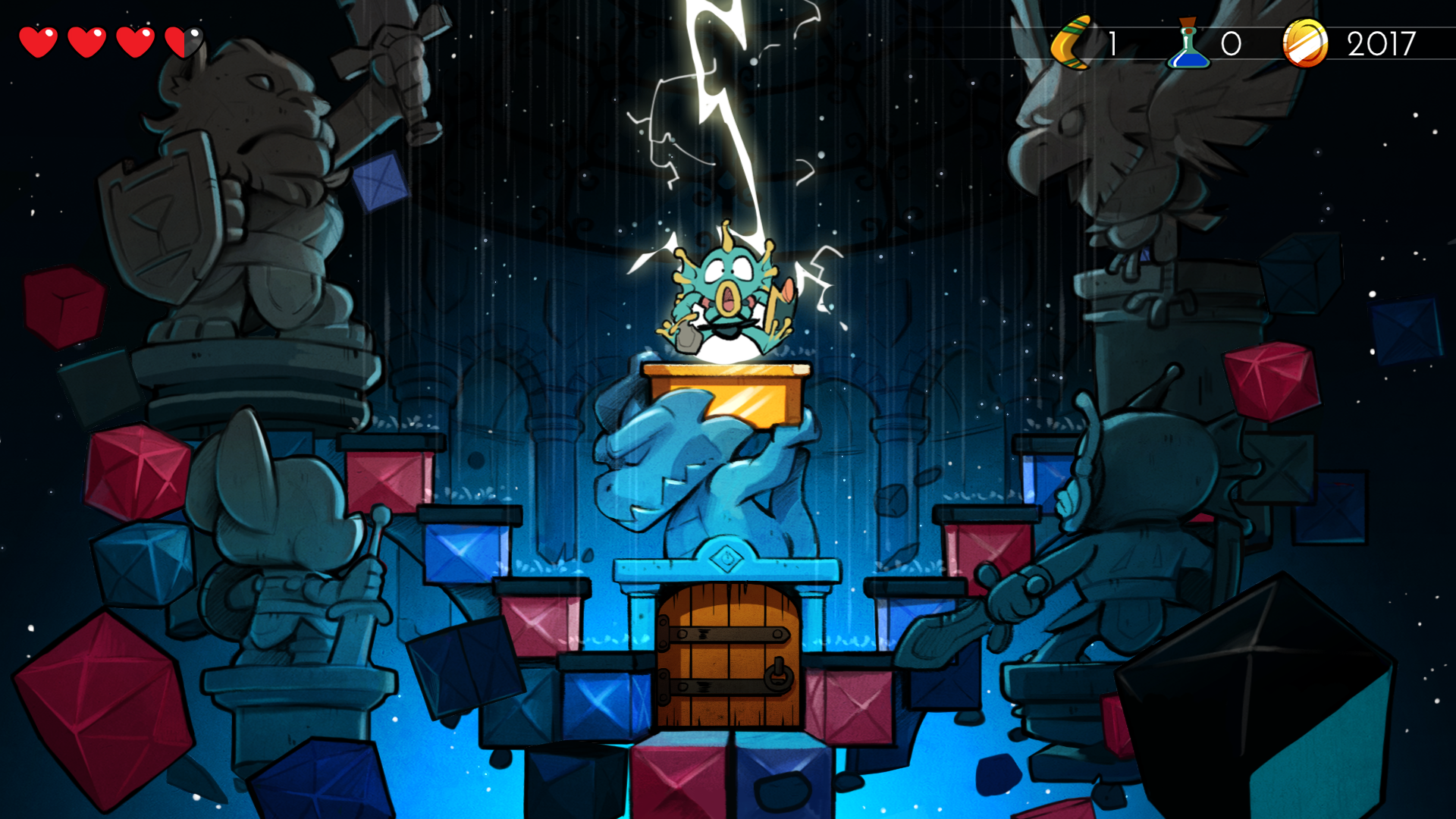
There is an important qualification: the developer describes the retro presentation as widescreen and running at 60 frames per second. It is not an untouched recreation of every display constraint of the original hardware. For someone interested in preservation, that distinction is useful. Keeping old artwork available and reproducing an original console experience are related goals, but they are not identical.
Accuracy required looking beneath the artwork
In his September 2016 development account, programmer Omar Cornut explained why the team studied the original program rather than rebuilding its behavior entirely from memory. Movement, attack timing, item drops and hidden routes all contain rules that a screenshot cannot communicate. His work included examining code and graphing values while the original game ran.
The value of that effort is specific. Two versions can show a character jumping across a familiar room yet disagree about the timing that makes the jump work. Attractive scenery does not settle that difference. Studying the underlying rules gave the team evidence against which to build its interpretation, rather than relying only on how people remembered the game feeling.
This is where The Dragon's Trap differs from simply making another game that looks old. Our Shovel Knight spotlight examines new campaigns built around changing movement. Here, the historical design itself is the object of study. Both approaches can be interesting without making the same promise.
Interpretation still leaves room for an artist
Art director Ben Fiquet's March 2017 account on PlayStation Blog identifies the Master System sprites as his starting point for redesigning the human hero. It also introduces Wonder Girl alongside Wonder Boy. Respect for the original did not require every artistic decision to stop in 1989.
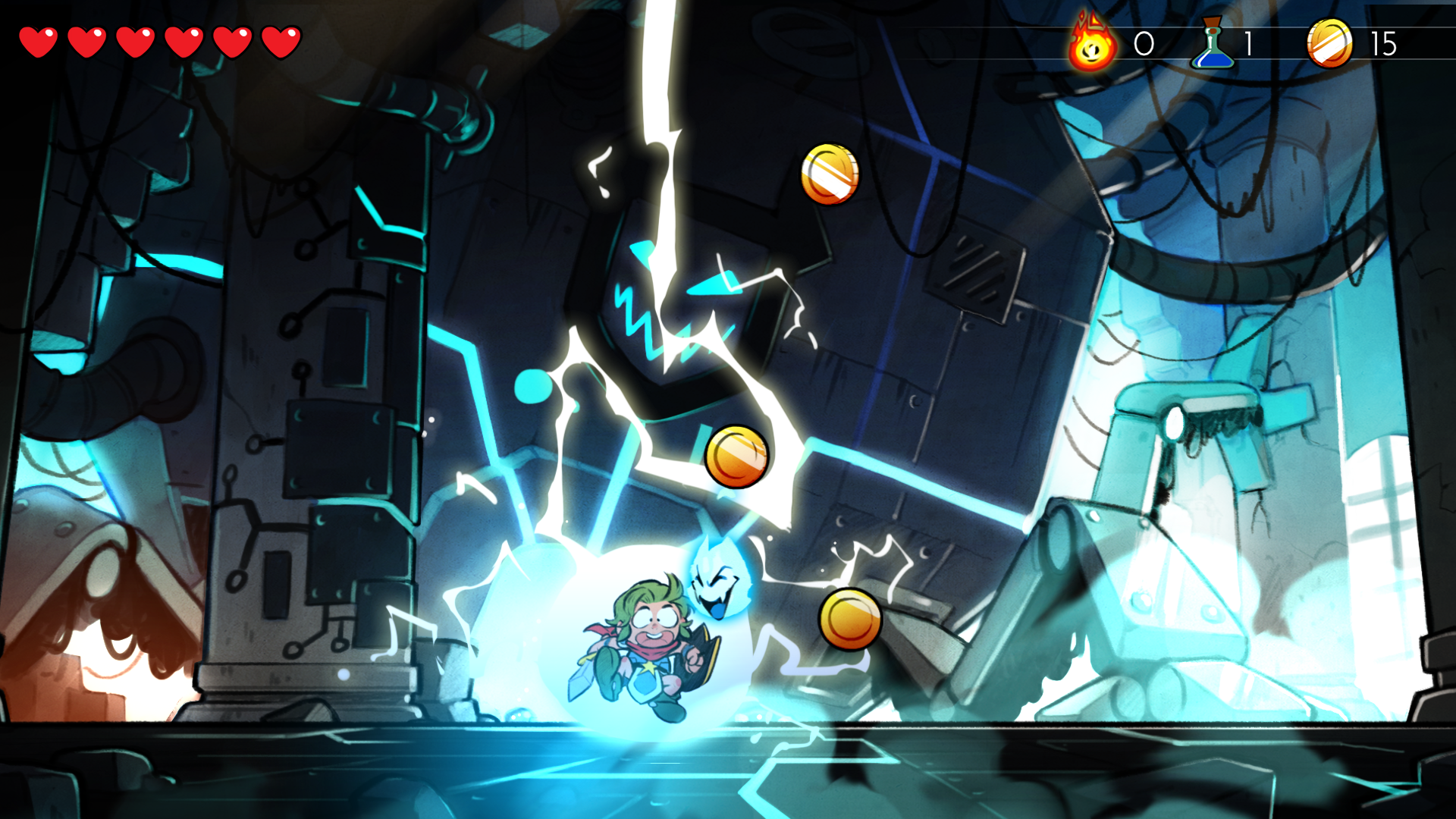
Look at the expressions in the supplied images: the startled human adventurer, the unimpressed flying hawk and the grinning dragon do not depend on a realistic rendering style. Exaggeration carries the scene. The new artwork can elaborate on a small original sprite while the Retro option leaves the player free to examine the distance between the two.
A useful way to approach the adventure
For a first visit, let the transformations and connected world provide the direction, then experiment with the presentation when curiosity strikes. For a return visit, the switchable layers offer something more interesting than a claim that everything is exactly as remembered. They make memory something you can investigate.
That is the lasting reason to discuss this particular remake. Its new art is confident enough to stand beside its starting point. For another Lizardcube-related revival with a different design priority, see our Streets of Rage 4 spotlight. The Dragon's Trap instead makes an old adventure legible in two visual languages, and lets the player decide when to listen to each.
Official Retro feature trailer
Watch the Retro feature trailer linked in Lizardcube's official press kit. YouTube may show advertising. This direct link opens the video on YouTube; playback has not been independently verified here.
Sources and image credits
Developer sources checked October 15, 2026: Lizardcube's game press kit, the Retro feature and reverse-engineering posts linked above, and Ben Fiquet's PlayStation Blog article. Featured image: Hawk-Man in a mountain landscape, press-kit screenshot B003. All five images are unaltered official gameplay press assets for the 2017 remake, not new footage or Zypher captures. © SEGA / LAT / Dotemu; developed by Lizardcube.


