
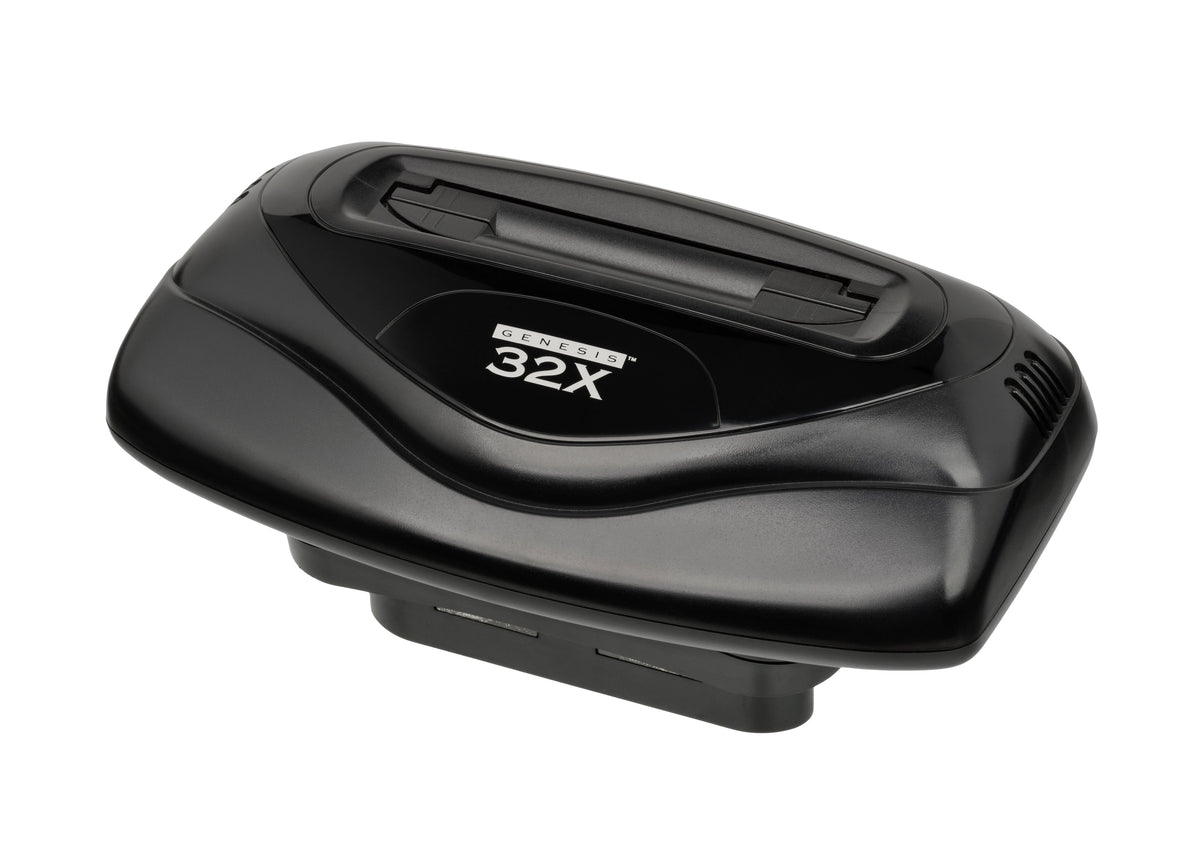
The awkward question about Sega 32X is not whether upgrading a console could be appealing. It is what that upgrade was supposed to buy its owner: more time with an existing machine, or a route into the next generation. Those are different promises, and the 32X is a useful case of why the distinction matters.
This was an add-on, not a Saturn in a different shell. Its remaining appeal is easier to judge once the hardware, its particular games and the timing of Sega's replacement console are considered separately.
More capability did not mean a Saturn library
Sega's official Super 32X history describes an expansion for Mega Drive and Mega Drive 2 with two SH-2 processors, improved sound and polygon-based 3D without a special chip in the cartridge. It explicitly says the hardware was not compatible with Saturn.
That boundary matters more than the shared “32” in the conversation. An upgrade can expand what a machine does without making it interchangeable with a newer system. For a player choosing between them, the useful comparison is the games each purchase permits, not a processor label on its own.

The Japanese launch dates show the problem clearly
In Japan, Saturn launched on November 22, 1994; Super 32X followed on December 3. Sega's retrospective attributes the add-on's short role to that close timing and a move to next-generation machines that went more smoothly than expected despite the price difference. That is Sega's account, not evidence that every buyer made the same decision.
Sega's March 1, 2018 hardware-history column adds the North American sequence: 32X arrived in November 1994, before Saturn's May 1995 arrival there. The company describes divided attention among players and licensees, followed by a decision to concentrate software development on Saturn.
The dates make a better explanation than treating the add-on as an inexplicable mistake. A bridge product needs a reason to remain on the bridge. When a replacement becomes an immediate alternative, the question changes from “Can my old console do more?” to “Which library am I investing in?” That is an interpretation of the overlap, not a claim about individual developers' motives.
Look at the actual editions, not a verdict on the whole machine
The official Japanese Sega-published software list includes Star Wars Arcade, DOOM and Space Harrier on December 3, 1994, followed by Virtua Racing Deluxe on December 16. It also lists Chaotix on April 21, 1995, and Virtua Fighter on October 20, 1995. Those are Japanese dates, not a worldwide release calendar.
For a collector, those names should begin research rather than finish it. “I want a 32X” is a hardware goal; “I want to experience this particular edition” is a playing goal. Write down which one matters before assembling a setup. A familiar game title is not, by itself, a comparison of its different versions.

A cartridge-shaped upgrade still needs a complete setup
Physical format is another boundary. Sega's Japanese cartridge reference explains that Super 32X cartridges are wider than Mega Drive cartridges and cannot be inserted directly into the unexpanded machine. A cartridge purchase should not be mistaken for a self-contained upgrade.
Sega's hardware reference lists separate power and A/V connections, plus model-specific connecting cables among the Japanese package's accessories. Treat that as a reason to identify the actual regional unit, not as a universal shopping list for every Genesis or Mega Drive revision.

When assessing a unit, ask for evidence that connects the listing to your intended use:
- Which exact base console and regional 32X are shown?
- Are the connecting leads and correctly specified power supply included, or merely visible elsewhere in the seller's photographs?
- Can the seller demonstrate the particular cartridge edition you intend to use?
- Is your goal a complete historical package, a display piece or a documented working setup?
These are purchasing questions, not a declaration that an unidentified unit is compatible. For the display side, our model-first retro video-cable guide explains how to organize the next checks. Do not buy a guessed adapter to answer an unanswered model question.
Its useful legacy is the upgrade decision
The 32X is worth understanding without either rehabilitating every decision or dismissing every game. It shows why added capability and a convincing long-term destination are not the same thing. A collector today can choose a specific piece of that history without pretending the original transition was tidy.
Our Dreamcast history covers a different Sega turning point: leaving the console business. Here the question is narrower and more practical. Know which experience you want from the add-on, then establish that the hardware and software in front of you can actually provide it.
Historical sources and exact photo permissions checked October 17, 2026. Featured photo: Evan-Amos, 2017, public domain. All four archival hardware photographs are reproduced without alteration. This is researched history and collecting guidance, not a hands-on review.


