Rocket Arena (Mythic Edition)
Important: Game may not include original DLC, bonus-content, online-pass, season-pass, or other digital redemption codes. Any included codes may have already been redeemed or expired.
Service closed: Mythic Edition is a historical release
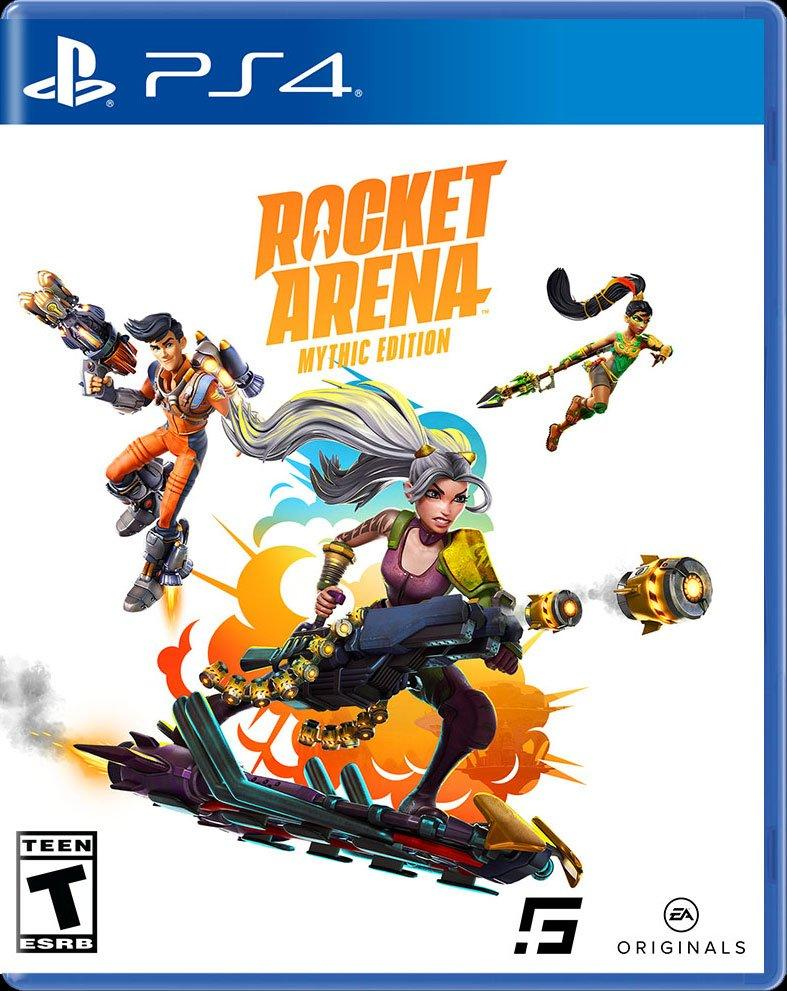
Rocket Arena Mythic Edition is the physical PS4 release of Final Strike Games' rocket-powered online arena shooter published by Electronic Arts. EA and the developer announced that the servers would close on March 21, 2024, and the original online service is discontinued. This copy does not provide a currently playable online game or a separate offline campaign. The mechanics described below are historical context for the original release, with the physical package now most relevant to collectors and people researching the game.
Rocket Arena's distinctive idea was to make rockets responsible for both fighting and movement. Rather than being a conventional shooter in which an opponent simply loses a health bar and disappears, it used a Blast Meter and knockback. Hits increased the danger of being launched out of the arena, so a confrontation involved managing position and momentum as well as aiming. A rocket could be a weapon, but its force could also help a player move through a map. That connection gave the original matches their lively, exaggerated character.
Knockback, recovery and movement
The Blast Meter made positioning increasingly important as a fight continued. Incoming hits raised the meter, so later impacts could send the target farther and leave them stunned for longer. A full meter triggered Megablast Danger: a small additional hit could then launch the character out at tremendous speed. Knocking a rival into the arena boundary was another route to a knockout. This made an opponent's location as relevant as the accumulated damage, especially near an exposed edge.
Rockets also supported movement tricks. Jumping and using the environment could create another route through the arena, while the force of an explosion could make an otherwise ordinary action more dramatic. The original design encouraged players to stay active instead of treating movement as merely the time between shots. A strong position could be temporary, and a useful angle could appear when another player was launched or changed height. Reading those changes was part of the combat challenge.
Recovery involved a specific defensive choice. Being hit could interrupt a character's abilities through hit stun, but using Dodge forced a Stun Break and restored control. A player therefore had something to consider while being knocked around, rather than simply waiting for every impact to finish. After a knockout, the character automatically flew back toward the action. That return created a brief opportunity to watch the arena and decide where to rejoin the team. These systems helped explain the repeated rhythm of disruption, recovery and another attempt.
Heroes and team objectives
The original game used three-player teams and a roster of heroes with different rocket weapons and abilities. Those differences created several ways to participate in a match. A character's tool set could suit pressure, movement or another form of support, and the team benefited from understanding how those capabilities fit together. The hero roster made it possible to explore a preferred style without requiring everyone to use the same weapon and mobility options.
The objectives gave each historical mode a different reason to move. Knockout awarded team progress for launching opponents out of the arena. Rocketball used a ball that could be carried, thrown or blasted into the opposing goal, making control of the ball more important than pursuing every fight. In Mega Rocket, an incoming rocket displaced nearby players before a capture zone appeared around it. Treasure Hunt alternated between holding a treasure chest for points and gathering coins. These rules changed when a squad needed to protect a teammate, control an area or break away toward the next scoring opportunity.
Rocketbot Attack offered a cooperative challenge against AI-controlled opposition during the service period. Although those enemies were computer-controlled, that did not make it a surviving offline campaign after the shutdown. The original game's modes were part of its online ecosystem. This distinction matters because an AI activity can sound like a local fallback even when the software still depends on the discontinued service.
Historical progression and customization
The game supported character progression, cosmetic rewards and Artifacts. Spending time with a hero provided another reason to learn the character's strengths and improve consistency. Artifacts had gameplay effects and could be selected to shape a build, while cosmetic options changed presentation. Those systems offered a longer arc around the repeated matches, giving players targets beyond the score of the next round.
Ranked play handled Artifacts differently from ordinary progression to support its competitive structure. The original FAQ described set gameplay effects rather than letting a higher Artifact level determine that ranked advantage. This was part of the game's attempt to distinguish improvement through play and character knowledge from purchased cosmetics. All heroes were available to players, with the roster intended to offer different styles rather than a hierarchy determined by premium spending.
Mythic Edition identified the premium retail package around that original service. Its advertised benefits were digital presentation and currency items associated with the live game, rather than a second campaign on the physical disc. The shutdown prevents those historical features from functioning as a current service offer. The edition name remains useful for identifying the boxed release, while the discontinued status remains the most important consideration for anyone buying it expecting gameplay today.
Presentation and collecting context
Rocket Arena used a colorful world, expressive heroes and maps designed around the game's exaggerated motion. The presentation helped frame knockouts as over-the-top arena action, with a lively tone rather than realistic warfare. Its short competitive encounters relied on the connection between aiming, momentum and team objectives. That combination explains the game's identity more clearly than the broad label of a hero shooter alone.
The PS4 version historically required online service access, and the game launched with cross-platform support among PS4, Xbox One and PC. Those are features of its original service period, not a claim of present connectivity. A disc cannot replace the missing servers. This listing should therefore be assessed as the physical Mythic Edition of a discontinued game, with the original design documented accurately and its current limitations kept prominent.