


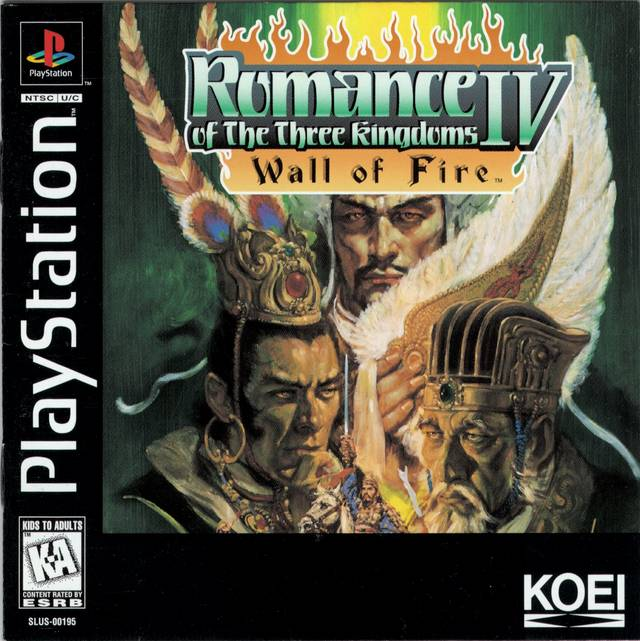


Romance of the Three Kingdoms IV: Wall of Fire
About the Game
Romance of the Three Kingdoms IV: Wall of Fire is a single-player and multiplayer turn-based grand strategy game. The game is set during the collapse of China’s Han dynasty and the rise of rival warlords during the Three Kingdoms era.
Story & Setting
The campaign is divided into historical scenarios set at different points in the conflict. Officers can be appointed to manage cities, lead armies, train troops, carry out plots, negotiate with other rulers, or take part in battle. Diplomacy and internal policy provide alternatives to immediate conquest.
Gameplay & Core Systems
players chooses a ruler and attempts to bring China under one government through administration, diplomacy, and war. Each scenario begins with a different political map, roster of rulers, city ownership, and officer distribution. Depending on the starting year and chosen ruler, players may begin as a large established power, a regional lord with a few cities, or a weaker faction surrounded by stronger enemies. The ultimate objective remains the same: expand control across China until all rival rulers have been defeated or absorbed. Play is organized around a strategic map of cities and territories.
Standout Features
- Each scenario begins with a different political map, roster of rulers, city ownership, and officer distribution.
- Depending on the starting year and chosen ruler, players may begin as a large established power, a regional lord with a few cities, or a weaker faction surrounded by stronger enemies.
- Play is organized around a strategic map of cities and territories.
- Officers can be appointed to manage cities, lead armies, train troops, carry out plots, negotiate with other rulers, or take part in battle.
- Strong officers can make a small state dangerous, while poor loyalty or weak assignments can leave a large kingdom vulnerable.
- players can form alliances, exchange gifts, negotiate with other rulers, and attempt to influence officers or factions.
- Managing tax income, food, troop numbers, officer loyalty, and public order is also important, since an army that expands too quickly can become difficult to support.
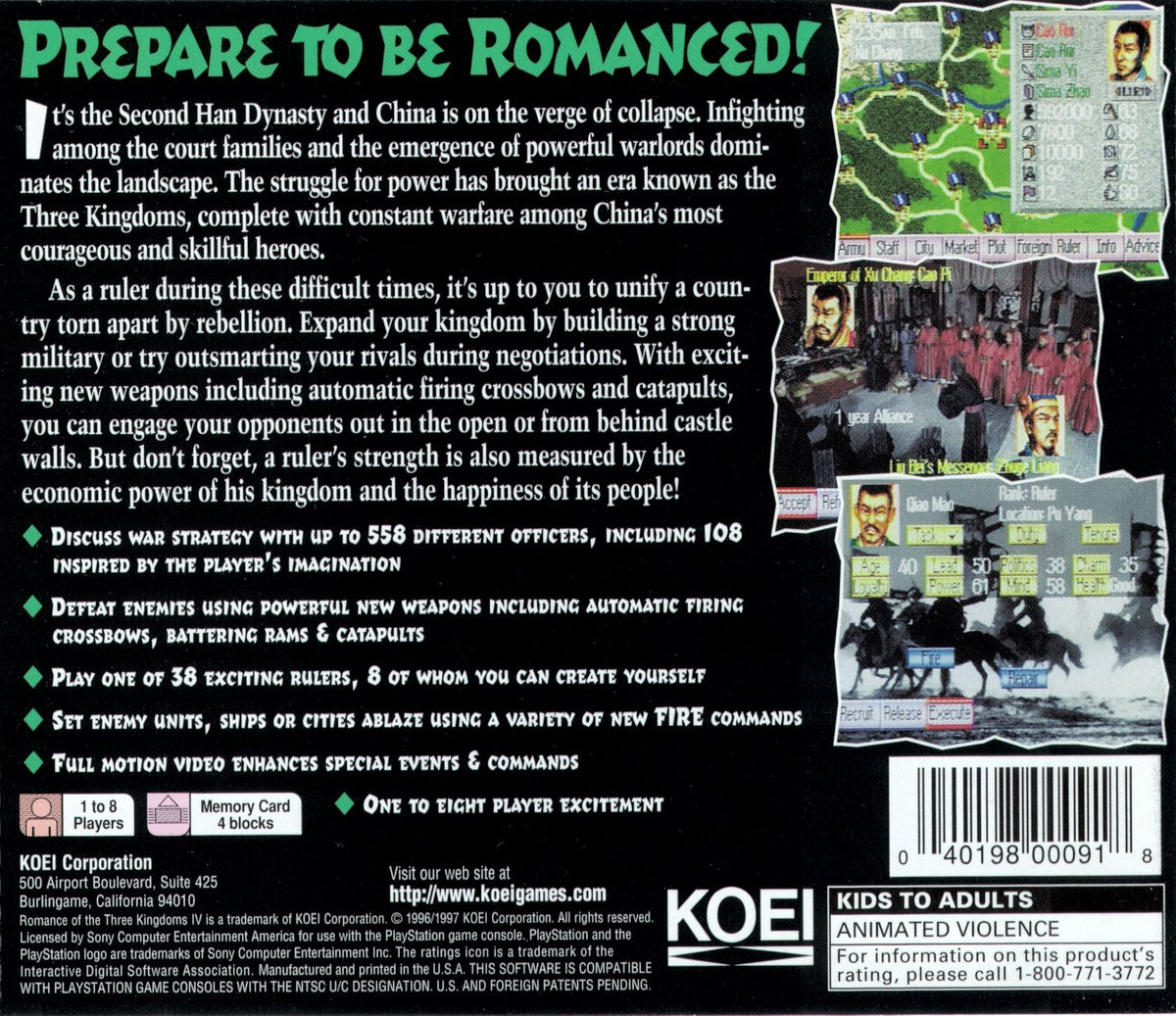
- Armies can make use of weapons and devices such as catapults and repeating crossbows, while naval and fire-based tactics appear in suitable situations.
Modes & Ways to Play
The campaign is divided into historical scenarios set at different points in the conflict. Each scenario begins with a different political map, roster of rulers, city ownership, and officer distribution.
Player support includes Hot Seat, Free-for-all / One-on-one (VS), and 1-8 Players.


