
Google Stadia promised a version of gaming that skipped the console, the download and much of the waiting. A player could open a supported screen, reach Google's servers and start playing. The pitch sounded less like a new box and more like the box finally disappearing.
The service itself disappeared instead. Google shut Stadia down on January 18, 2023, a little over three years after its consumer launch. That makes Stadia an unusually useful case for players and collectors: the cloud platform is gone, yet its controller can still be a real piece of hardware rather than a shelf ornament.
For this installment of WTF Happened To…?, the documented answer is not that streaming games was impossible. Google said the technology worked. The consumer service did not attract the usage Google expected, and the company's own decisions gradually separated the underlying technology from Stadia as a place where people bought and kept games.
The original promise was bigger than avoiding a download
Google's March 19, 2019 Stadia announcement described instant access across TVs, laptops, desktops, tablets and phones. It set goals of up to 4K, 60 frames per second, HDR and surround sound, while presenting Google's data centers as a way to move beyond the limitations of local console and PC hardware.
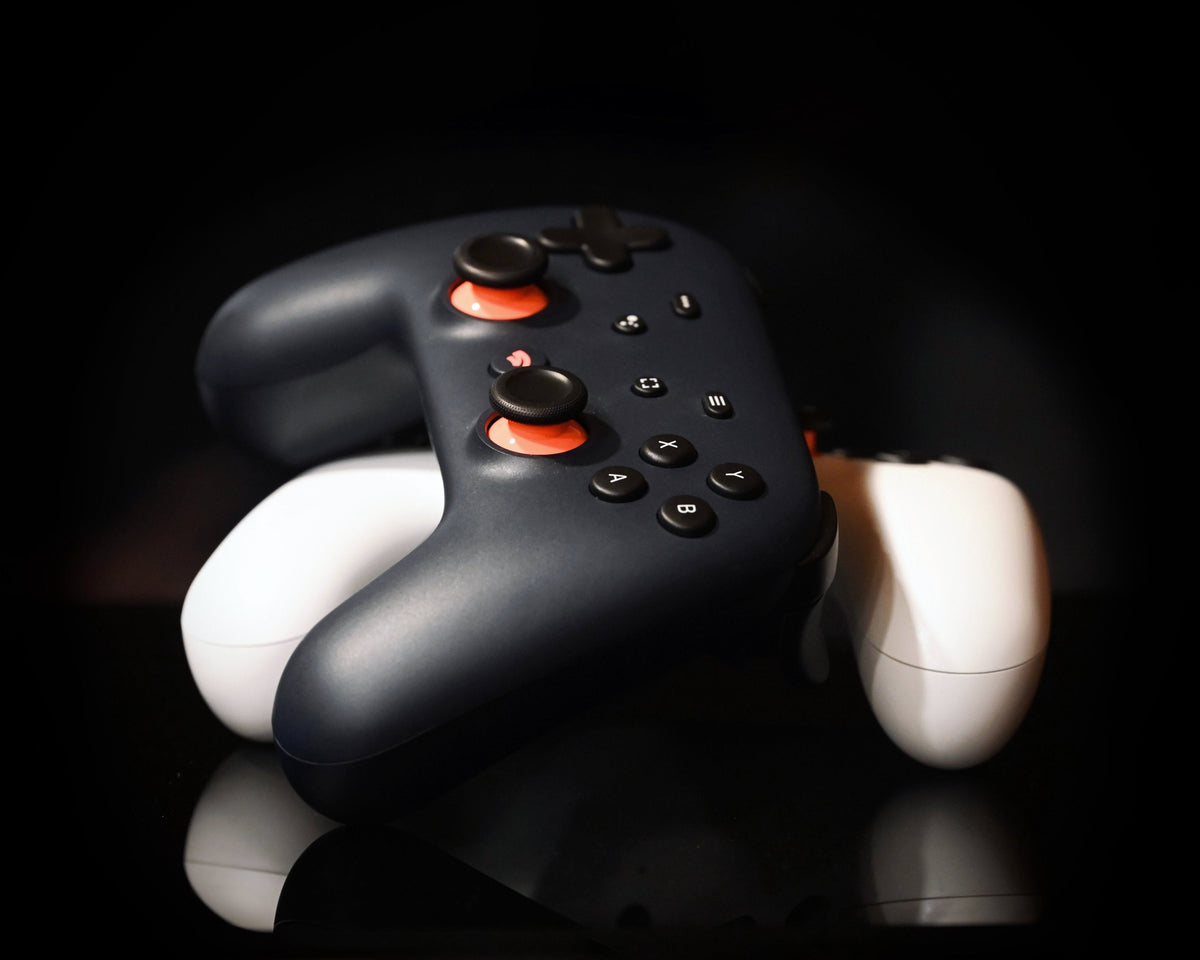
The controller was part of that network-first idea. Instead of talking only to a console under the television, it could connect over Wi-Fi to Google's data center. Dedicated Capture and Assistant buttons reinforced the promise that Stadia would connect playing, watching and sharing through Google's wider services.
That is why Stadia was more ambitious than a remote-play accessory. Google wanted the service, store, servers and social connections to behave like one gaming platform. The convenience was real when the whole chain worked, but ownership also depended on the whole chain continuing to exist.

Google narrowed the plan before it closed the platform
On February 1, 2021, Google announced that it would stop investing in exclusive games from its internal Stadia Games and Entertainment teams beyond near-term planned work. The company said making original games required many years and increasing investment, while it wanted to focus more on its technology and partnerships.
Stadia did not shut down that day. Google explicitly said players could continue using the service and that more third-party games were coming. Still, the decision removed one route to giving Stadia software that belonged to its platform rather than merely appearing on it.
Zypher's reading is that this mattered because convenience alone had to compete with libraries, friends, saves and habits already established on other platforms. A streaming service could remove installation friction, but it still needed durable reasons for players to build a gaming life inside its store. Closing the internal studios did not prove shutdown was inevitable. It did show Google was already reducing the consumer platform's ambitions before the final decision.

The official reason was traction, not failed streaming technology
Google's September 29, 2022 shutdown announcement drew a clear distinction. It said Stadia had been built on a strong technical foundation, but the consumer service had not gained the user traction Google expected. The company planned to apply the underlying technology elsewhere and make it available to industry partners.
That wording matters. Google did not say the servers could not stream games or that one launch title caused the collapse. It also did not publish a complete list of sales figures, budgets or ranked reasons people stayed away. Claims that one price, one executive or one missing feature single-handedly killed Stadia go beyond the official record.
What Google did confirm was decisive. Hardware bought through the Google Store and game or add-on purchases through the Stadia store were covered by refunds, and players could use their libraries until January 18, 2023. The current Stadia availability page says the app, website and games are no longer available in any region.
For players, the ownership lesson is hard to miss. A refund softened the financial loss, but it did not turn a cloud purchase into a preserved playable copy. When the service ended, access ended with it. There was no disc to install offline and no local executable that could replace Google's servers.
The controller got an afterlife, but its rescue window closed
Google gave the Stadia Controller a path away from the discontinued platform. Its support documentation says a firmware change could disable the controller's proprietary Wi-Fi connection and enable Bluetooth Low Energy. Once converted, the change could not be reversed.
The deadline is the detail collectors should not miss. Google's controller support page says the web update tool was available through December 31, 2024. That date has passed. A used listing in 2026 should not casually promise that an unconverted controller can still be made wireless today.
Wired use is the safer confirmed fallback. Google says the controller can still connect with a USB-C cable, while Bluetooth compatibility varies by device and was not comprehensively tested. The Assistant and Capture buttons also lost their original service functions after shutdown.

What Stadia owners and collectors retain
The physical controller survives as an artifact of Google's consumer cloud-gaming experiment and, in some configurations, as a usable standard controller. Before buying one, ask whether Bluetooth mode was enabled before the deadline. If the seller cannot verify that, value it according to demonstrated wired use and condition, not a hopeful wireless claim.
Check the USB-C port, sticks, triggers, shoulder buttons and battery behavior. A controller that powers on is not the same as one that pairs, holds a charge and registers every input. The original box or a Chromecast bundle can add historical interest, but neither restores the Stadia game library.
Stadia also belongs beside other platform endings without being identical to them. Our Wii U postmortem covers a discontinued console whose offline software still works. The Concord story concerns a single online game withdrawn within weeks. Stadia was an entire consumer platform whose purchased game access depended on servers Google chose to close.
The most interesting part is that the basic idea did not disappear with the brand. Cloud gaming continued elsewhere, and Google itself said Stadia's technology had been proven at scale. What failed was the complete consumer proposition built around that technology.
That leaves a very Stadia ending: the invisible console is gone, while the controller you could actually hold is the part that remains.
Research and current support status checked October 9, 2026. This is a researched historical feature, not a hands-on review. Featured photo: Simon Waldherr, “Stadia Controller,” CC BY-SA 2.0, used uncropped.


.jpg)

.jpg)