
The original Fable for Xbox puts a boy above the reflection of a much darker adult on its front cover. Fable II repeats the idea with a different hero and a threatening reflection in the water. Before either game begins, the packaging asks you to imagine the person your character might become.
That is a useful way into Lionhead's original trilogy. Its interest in choice reaches beyond the next quest reward: the hero's appearance, other people's reactions and, eventually, the responsibilities of a ruler all become ways to express a life in Albion. Looking across the three games reveals how that idea changes scale.
A future self on the box
Microsoft's contemporary account of Lionhead's work places the original Fable in 2004 and Fable II in 2008. Its later series retrospective describes a hero whose abilities and appearance respond to the player's decisions, with virtuous and wicked behavior pushing that appearance in different directions.

The reflection is an effective promise because it makes character development visible. You can picture a changed person before you know any of the rules. Our reading is that this gives the series a particularly direct connection between the character on screen and the decisions that produced them.
It also gives the fantasy a local audience. Albion matters as a place where people see the hero, form opinions and respond. Saving a world is a large, distant ambition; returning to a town where your presence means something is a smaller, more immediate reward.
Fable II gives the town an opinion
Fable II for Xbox 360 makes the distinction between different kinds of reputation especially useful. Its official manual separates good and evil from purity and corruption. It also separates renown, earned through quests and other public displays, from combat experience.

Those distinctions keep fame from doing every job at once. A person can be well known without being well liked. For a player, that creates several different ambitions: become stronger, become recognizable, or become the sort of neighbor people want around.
The manual connects rent and shop-price decisions to purity or corruption. Villagers' opinions also consider clothing, tattoos, renown and behavior. Expressions and gifts let the hero work on individual relationships, while showing trophies can increase renown. These systems bring character building into ordinary encounters.
That is the revealing comparison: a rent decision and a public gesture both belong to the same character. The game invites you to think about the life between adventures, where money, presentation and relationships can carry their own consequences.
Fable III puts the hero in charge
With Fable III for Xbox 360, Lionhead widened the responsibility. Microsoft described the 2010 game as a journey from revolutionary to ruler, with promises made on the way to power becoming part of the decisions that follow.

The official Fable III manual still describes changes to the hero's physical appearance and villagers' reactions. It also explains relationship quests: carrying out a villager's request can move that relationship forward. The larger political story keeps company with these personal interactions.
For us, the interesting progression is from being judged to being responsible for decisions that reach beyond your immediate company. A town can be an audience, a home and a responsibility. Putting the hero in power changes the weight of the question the earlier covers asked.
Three chapters, three useful starting questions
This is a franchise comparison, so the most useful starting point depends on your interest. Look at the original Fable for its direct connection between choices and a changing hero. Choose Fable II to examine the relationship between personal habits, property and reputation. Fable III carries the comparison into leadership and the obligations that accompany it.
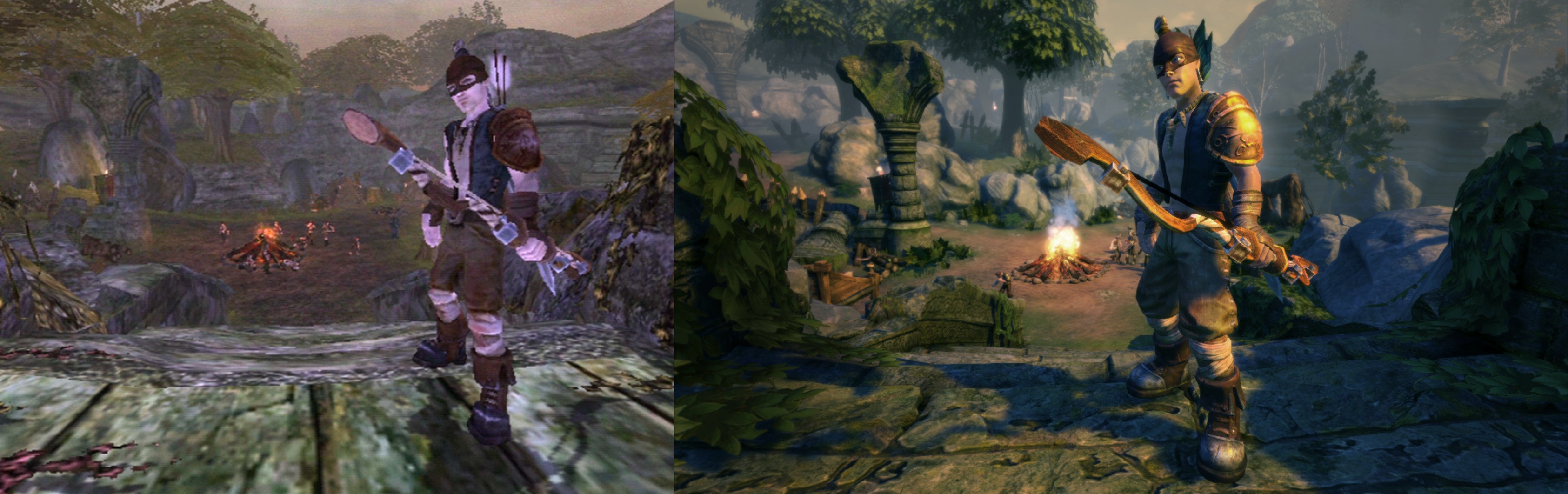
Edition names deserve attention too. Microsoft identifies Fable Anniversary as a remaster of the first game that includes The Lost Chapters. It is a different product from the original Xbox Fable copy pictured here. Check the exact title, platform and condition selector when building a physical set; an old box's network branding does not establish the present status of every online feature.
Our Xbox One backward-compatibility guide covers the wider hardware question, while the used-game condition guide explains what comes with each kind of copy. The reason to revisit this trilogy is the comparison it makes possible: how a game lets you build a character, and how it makes the surrounding world acknowledge that character.
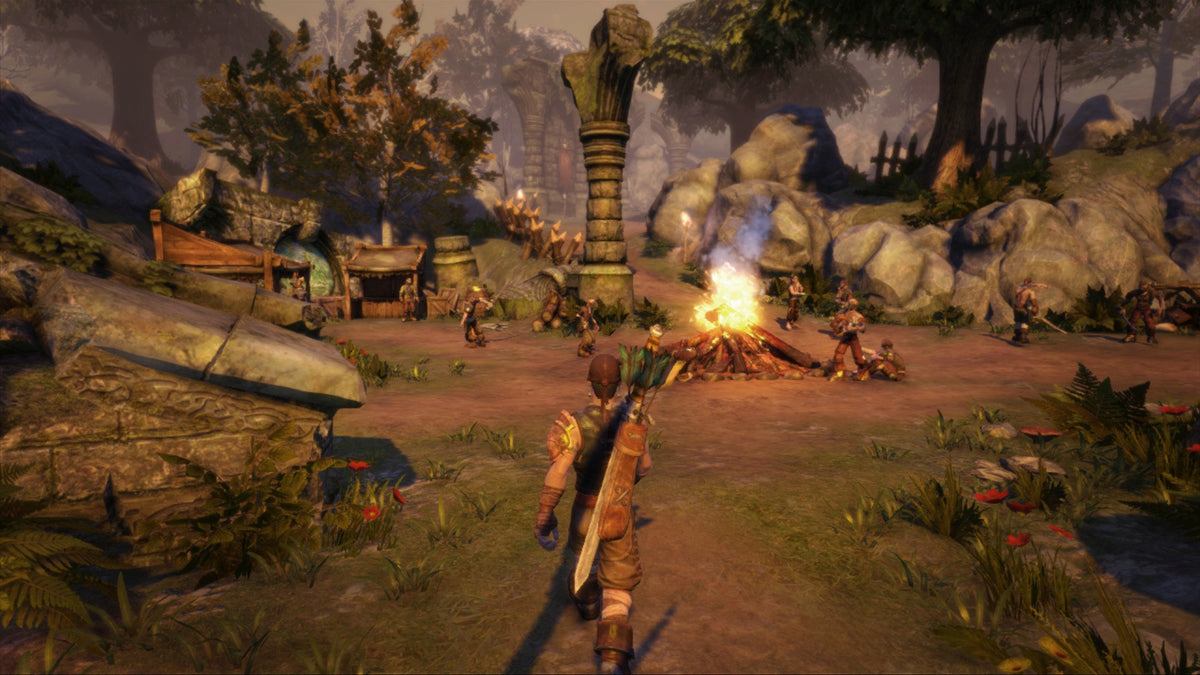
Research checked October 9, 2026. This is a researched franchise feature, with no claim of a new hands-on playtest. Featured image: the Hero approaching a camp in Fable Anniversary, the remaster of the first game. The gameplay image and original-versus-remaster comparison are Microsoft / Lionhead Studios press images supplied through Microsoft's Fable Anniversary reveal. The three covers are shown complete to illustrate the reflection imagery discussed in the text. Images used under Microsoft's press and box-shot permissions. Used with permission from Microsoft.


