
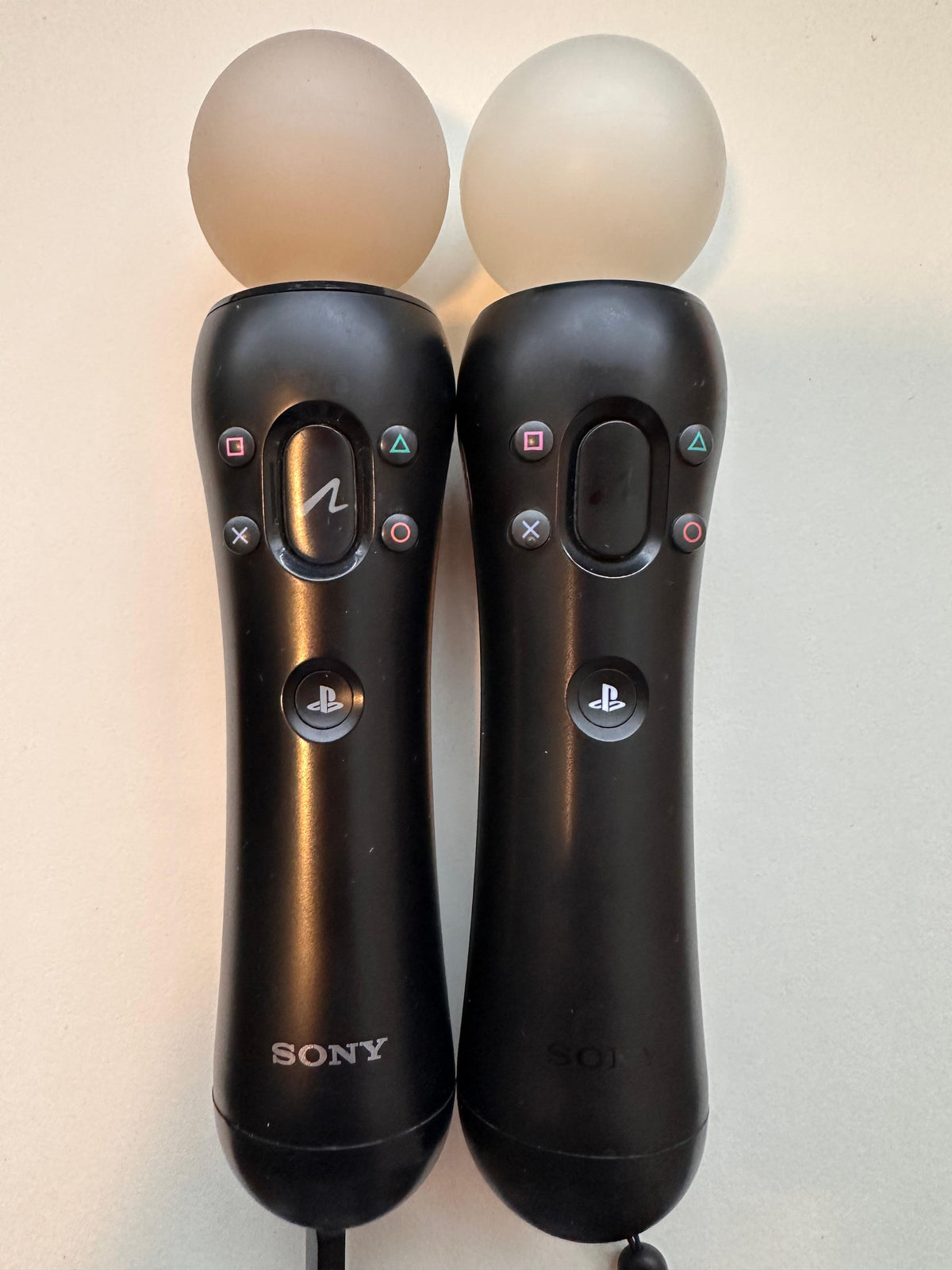
PlayStation Move has an odd distinction: a controller introduced for playing in front of a television later found a job inside a virtual world. The glowing ball stayed recognizable while the equipment around it changed. Calling it simply a failed PS3 accessory misses that second career. Calling it a current PlayStation VR controller misses an equally important boundary.
Its history is better understood as three assignments: motion-controlled PS3 games, hand input for supported original PS VR games, and then a place outside PS VR2's supported controller family. That last change is documented compatibility, not evidence that every older wand suddenly stopped working.
In 2010, the ball was part of the pitch
Sony's launch FAQ dated the US arrival to September 19, 2010. Its lineup included Sports Champions and Start the Party!, alongside other games and updates. Move offered a different invitation from learning another combination of sticks and buttons: hold something the camera could locate, then make movement part of the input.
The sphere was functional, not just a cheerful lamp. Sony explained that PlayStation Eye used it to locate the controller in three-dimensional space, with its color able to change for tracking conditions and game feedback. The appeal was legible before anyone read a manual. The conspicuous ball helped explain why this object belonged in your hand.
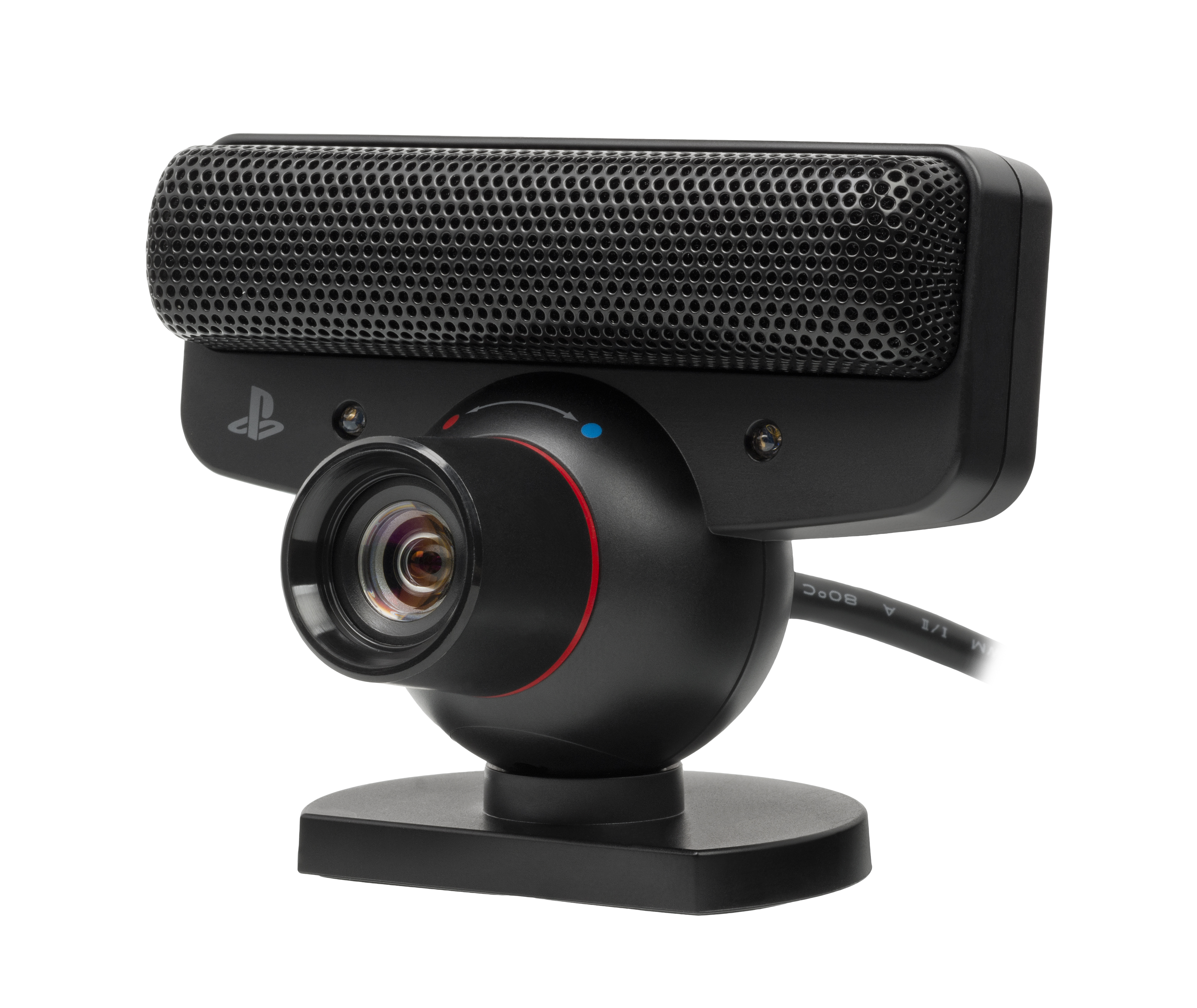
The original CECH-ZCM1U manual makes the arrangement concrete: PS3, PlayStation Eye and the motion controller. It instructs owners to pair the wand over USB and configure the camera. A loose wand was one component of a deliberate way to play, rather than a universal replacement for the pad already beside the console.
VR gave the wand a different reason to exist
By June 2016, Sony was announcing original PS VR's October 13 North American launch and a two-controller Move pack. Its VR requirement also specified a PlayStation Camera. The wand had become relevant to a new platform experience, years after its PS3 introduction.
That is the interesting turn in the story. Gestures in front of a conventional screen and hand movements within a headset's view offer different reasons to want motion input. The physical object could be familiar while its purpose felt different. That is our reading of the transition, not a claim that we have tested every game or that Move was required by every PS VR title.

Sony's current Move support still distinguishes original PS VR from PS VR2. It also specifies a PlayStation Camera adapter for using that camera on PS5 and excludes the PS5 HD Camera from Move compatibility. A newer console or newer camera does not, by itself, settle what an older VR setup needs.
The familiar shell hides a revision trap
Two black wands with pale spheres can look interchangeable in a sale photograph. The model number deserves a second photograph. Sony's North American CECH-ZCM1U instructions describe PS3 use and a Type-A-to-Mini-B USB cable. The CECH-ZCM2U manual instead describes PS4 pairing, use of the PS4's supplied USB cable and an explicit exclusion: that revision is not compatible with PS3.
This is where a broad support page can mislead a hurried buyer. Sony's generic page lists several console generations and mentions Mini Type-B, but that should not erase the narrower model-specific instructions. Match the label, socket and manual before buying a replacement or promising that a particular controller will serve a PS3 collection.

PS VR2 drew a clear boundary
Sony's February 2023 PS VR2 FAQ describes tracking cameras built into the headset and its Sense controller system. The current PS VR2 games FAQ is equally direct about the old wands: PS Move is not compatible. Supported games use PS VR2 Sense controllers or, in some cases, DualSense.
That establishes what changed without inventing a sales disaster or a secret reason for it. Move had crossed from flat-screen motion games into original PS VR, but Sony did not carry it into PS VR2's controller support. Motion control continued; this particular controller was no longer the supported answer for the newer headset.
Keep the job attached to the wand
For a collector, the worthwhile purchase starts with a specific ambition: revisit a supported PS3 motion game, or complete an original PS VR arrangement. Ask for the controller's model label and the intended game's requirements before treating a box of similarly branded accessories as a ready-made setup. Keep the two goals separate when comparing listings.
Condition matters too. Both linked controller manuals describe rechargeable batteries with finite lives. An old launch-era battery estimate is not a promise about a used example today. Request a real charging and in-game demonstration, and use our controller-cleaning guide for conservative care. Our controller history places Move's unusual career beside other changes in how games accept input.
Move's lasting interest is that its second role was not the one printed on its original launch pitch. The same recognizable wand belongs to two distinct chapters of PlayStation history. Preserve whichever chapter you actually want to play, with the right revision identified, rather than expecting the glowing ball to explain everything.
Primary documents and image permissions checked October 16, 2026. Hardware photographs are archival illustrations, not gameplay captures. Featured photograph: European CECH-ZCM1E and CECH-ZCM2E controllers by ArlindoPereira, CC BY 4.0, unchanged. No firsthand testing is claimed.


