


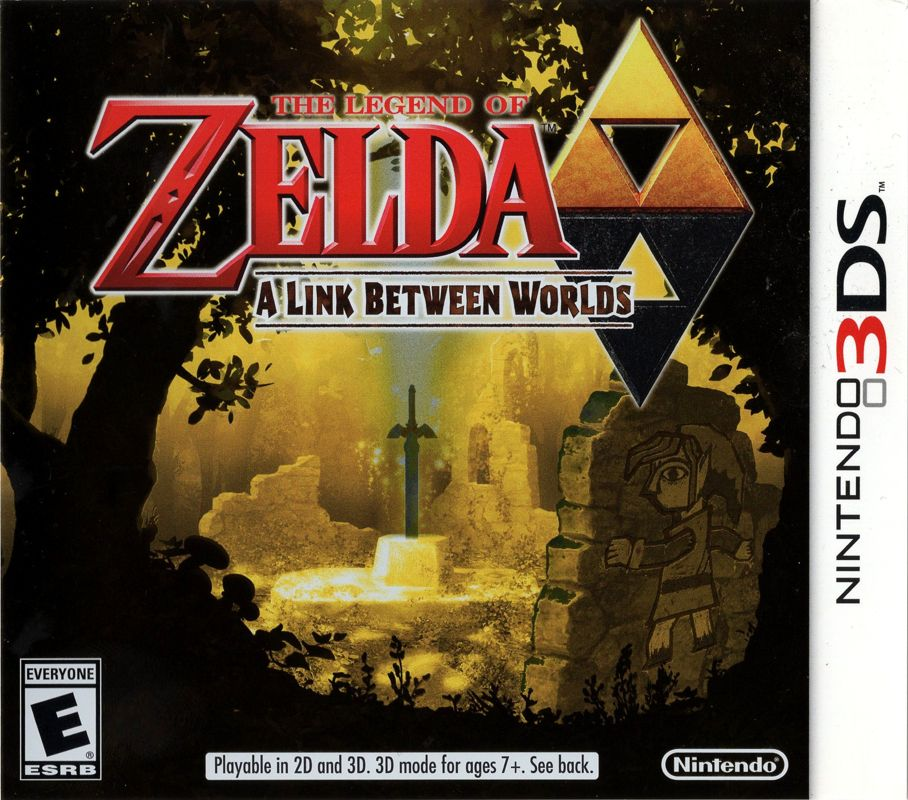


The Legend of Zelda: A Link Between Worlds
About the Game
The Legend of Zelda: A Link Between Worlds is the sequel to 1991's The Legend of Zelda: A Link to the Past (while in the West the titles of the two games differ, the Japanese version adds but a «2»). players is in control of Link, who has to explore a world (or two) and overcome many dungeons to rescue Princess Zelda and free the world from the forces of evil. Action is displayed from a top-down view. Unlike in some of the previous Zelda installments, Link can venture into most dungeons in any order.
Gameplay & Core Systems
An energy bar, which decreases when Links uses any depletable object and replenishes over time, replaces the series' ammunition system; this time Link does not carry bomb or arrow stocks with himself. However, this adventure is much less linear than most installments in the series, with a relatively open world providing many reachable areas from the early stages in addition to its nonlinear dungeon order. Puzzles are encountered not only in dungeons, but also in the open world, a part of them revolving around the game's 3D visual effects. Because of this, while A Link Between Worlds is playable on 2DS, solving some puzzles can get less intuitive. Among his new abilities, Link has now the power to flatten himself: as a bidimensional being he can for instance slide along surfaces, make his way through narrow passages, and perform several other moves required to overcome puzzles.
Standout Features
- Traditional tight relation between each of the dungeons and one of Link's items — which the solution of the dungeon hinges upon — is maintained, but for the first time in the series, items aren't hidden in their corresponding dungeon.
- The 3DS touchscreen displays the world's or current dungeon's map; notes can be taken on it by placing pins.
Presentation & Atmosphere
The game world, Hyrule, closely reprises that of A Link to the Past , including its two-sided structure.


