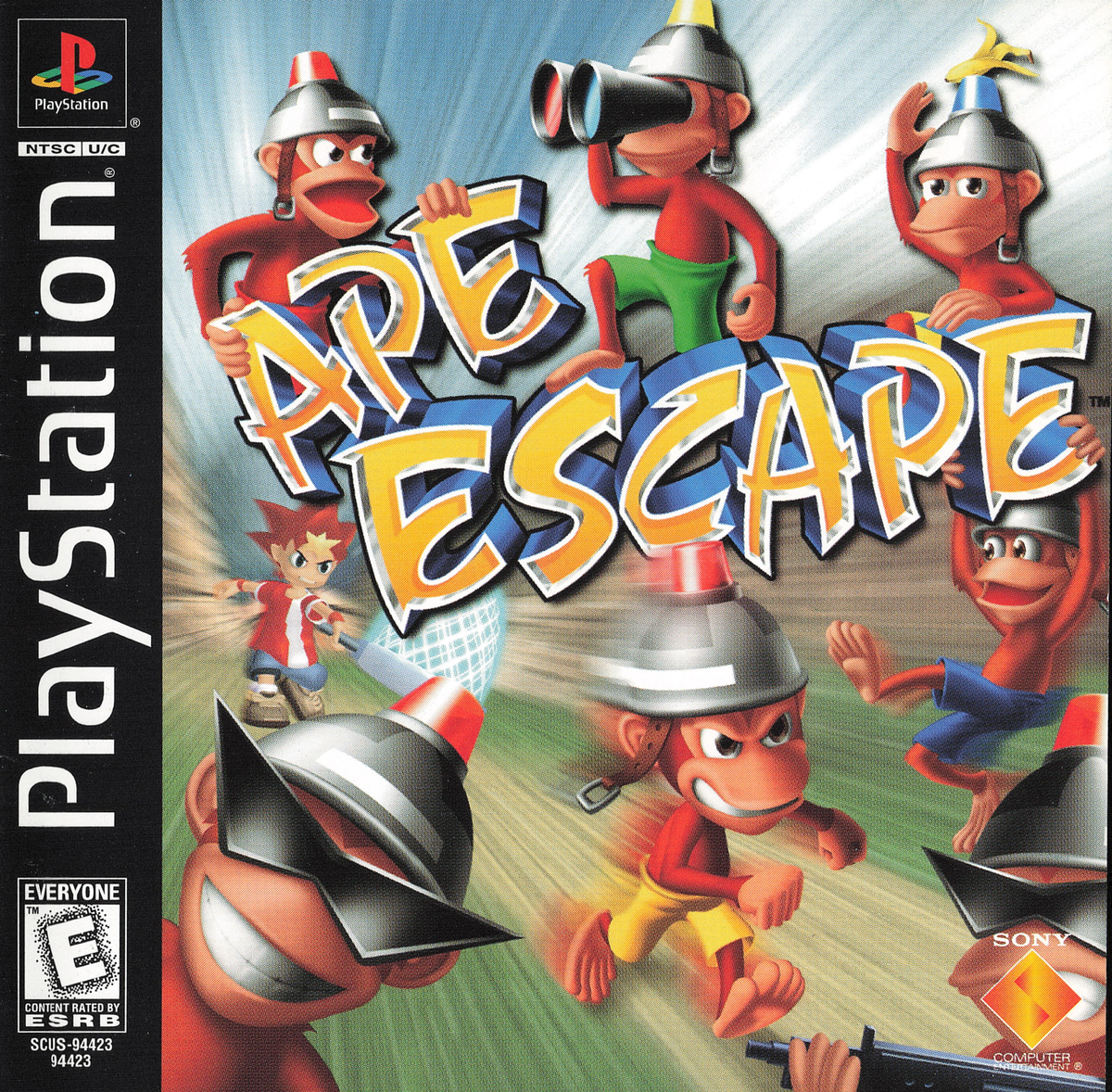
Ape Escape looked at the original PlayStation controller and saw a second analog stick that most games still treated like optional furniture. Then it built the entire adventure around that stick. Movement stayed on the left. Gadgets lived on the right. Catching a monkey meant learning how each tool moved instead of tapping the same attack button until the problem became somebody else's problem.
That choice made the 1999 platformer one of the clearest early demonstrations of dual-analog design. PlayStation now describes the series as one of the first to use the DualShock controller's two sticks to their full potential. The compliment fits because the controls were not a technical flex pasted onto an ordinary collectathon. They were the game's personality.
The right stick became a set of verbs
In a conventional platformer, the second stick usually manages the camera. Ape Escape gave it jobs. A quick swing moved the Stun Club. Rotating the stick spun other gadgets. The Time Net needed its own deliberate sweep. The controls asked the player's thumb to imitate the tool on screen, which made equipment feel less like a slot on a menu and more like a toy in Spike's hand.

That sounds obvious now because modern controllers have spent decades turning two sticks into a standard language. In 1999, it was a statement. Ape Escape required players to stop thinking of the right stick as a camera knob and start treating it as an action surface. The stick did not merely point at a gadget. It was the gadget.
The monkeys made the controls worth learning
A control experiment needs a reason to exist. Ape Escape supplied hundreds of reasons wearing flashing helmets. The escaped apes are targets, but they are not identical collectibles waiting politely in corners. Some run, some hide, some attack and some behave like they have union protection. Their different routines turn each capture into a small chase.
The loop is readable: locate an ape, approach it, stun it when necessary, then catch it with the net. The challenge comes from switching tools and using them correctly while the target reacts. A simple pickup could have reduced the right-stick idea to a novelty. A moving, unpredictable target makes control precision matter.

Gadgets kept changing the meaning of the same stick
The official PlayStation Store description lists the slingshot, Time Net, propeller, remote-controlled car and monkey radar among Spike's equipment. That spread is important. The right stick is not locked to one weapon animation for the whole game. Its meaning changes with the selected gadget.
That is where the design gets clever. The player learns one broad rule, use the stick to operate the tool, then discovers several physical interpretations of it. Swinging a club, steering a car and spinning a propeller feel related without feeling identical. The game keeps teaching new actions while preserving the same controller logic. It is a tutorial that quietly lasts for the whole adventure.
The gadgets also support exploration. The propeller helps Spike reach or survive spaces that ordinary jumping cannot handle. The radar points toward hidden targets. The car can travel where Spike cannot. Ape Escape is remembered for monkeys causing trouble across time, but the better joke is that a toy box of gadgets became a serious lesson in interface design.

The PSP remake proves the controller mattered
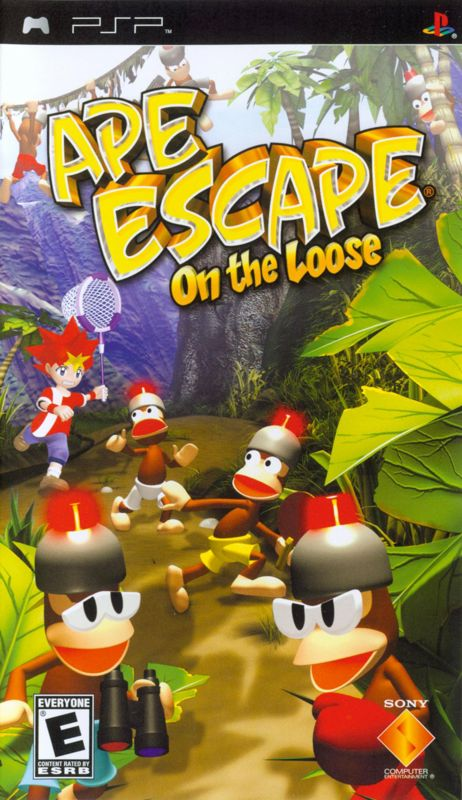
Ape Escape: On the Loose rebuilt the adventure for PSP, a system without a second analog stick. It remains a useful portable version, and Zypher's current listing has a complete-in-box copy available as of October 24. It also cannot reproduce the original control arrangement one for one. That is not a failure of the remake. It is evidence that the first game's identity was tied to its controller.
If your main interest is the dual-stick experiment, the original PlayStation release is the version to seek. If portability, rewind-friendly modern emulation or a current physical PSP option matters more, On the Loose is easier to fit into that plan. Same monkeys, different thumbs. Hardware has consequences, even when the helmets are ridiculous.
How to play it now
Sony currently sells a converted version of the original Ape Escape for PS4 and PS5. The PlayStation Store says it adds up-rendering, rewind, quick save and custom video filters, and supports both DualSense and DualShock 4 controllers. It remains a one-player game. That version is the practical route for modern hardware while preserving the original game's broad structure.
Collectors should inspect physical PS1 copies carefully. Ape Escape requires an analog-capable controller, so a basic digital-pad-only setup misses the point and may not satisfy the game's controller requirement. Confirm the disc, case and manual condition separately. Zypher's active PS1 catalog page is currently out of stock, while the PSP version is available. Inventory changes, so read the live listing instead of treating an old screenshot like a legally binding monkey contract.

Why the design still matters
Ape Escape did more than prove that the DualShock had two sticks. It gave the second one a grammar. Different motions produced different actions, and those actions served a capture game built around movement, timing and tool choice. Later games standardized dual-stick camera control. Ape Escape took the stranger road and made the controller feel like a box of gadgets.
That is why it still deserves a spot in PlayStation history. The graphics are unmistakably from 1999, the monkeys remain professional nuisances, and the right stick still explains the game faster than a marketing paragraph ever could.
Shop and sell with Zypher
Check Zypher's live listings for Ape Escape on PlayStation and the currently available Ape Escape: On the Loose on PSP. Condition and stock can change, so the product page is the final word. Clearing shelf space? Sell your old games to Zypher and give somebody else's backlog a fresh problem.
Sources
- PlayStation Blog: 10 must-play platformers available with PlayStation Plus, checked October 24, 2026.
- PlayStation Store: Ape Escape, checked October 24, 2026.
- PlayStation Store: Ape Escape: On the Loose, checked October 24, 2026.