
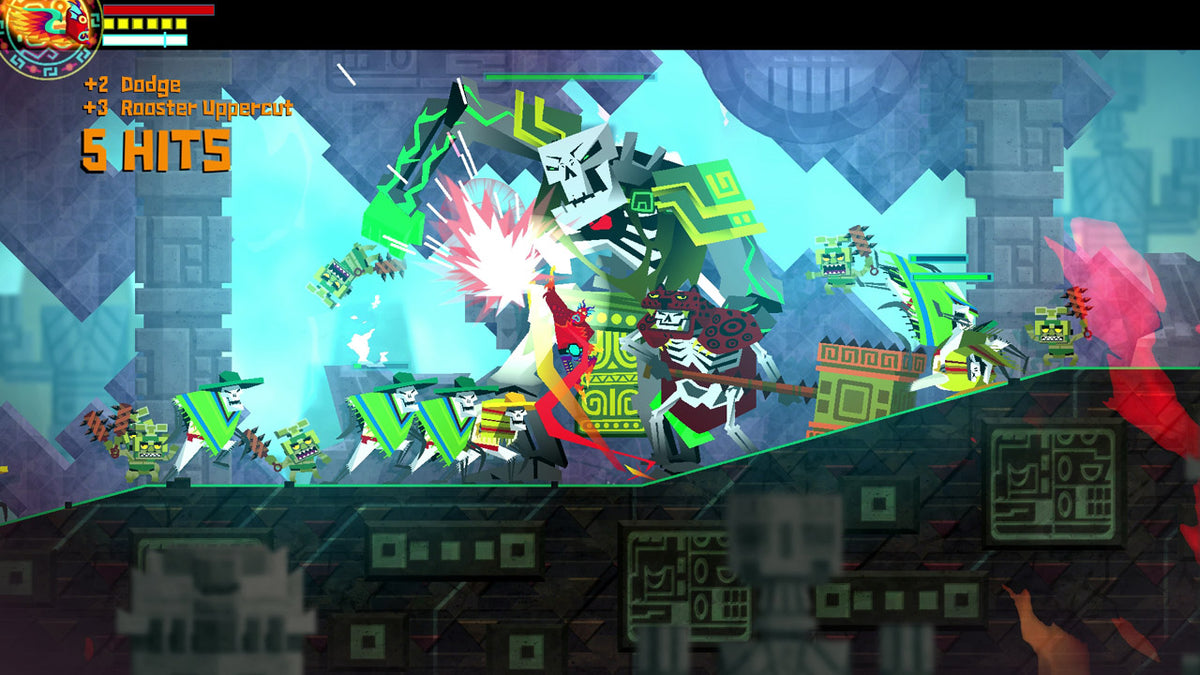
Guacamelee! Super Turbo Championship Edition gives an uppercut two jobs. It can send a fight upward, and it belongs to the same movement vocabulary that gets you around the world. That is the hook worth paying attention to. A useful new attack can change how you think about a room, even when nothing in that room needs punching. Finally, a reasonable explanation for uppercutting on the commute.
Drinkbox Studios' action-platformer puts fighting, traversal and a world split across two dimensions into the same adventure. If you enjoy learning a character's abilities until separate actions start feeling like one continuous plan, put this one on your radar.
Featured image: an uppercut amid a crowd of skeletal enemies. Official Guacamelee! STCE gameplay image, © Drinkbox Studios. Capture platform and build unspecified.
A farmer, a mask and a very bad plan
Drinkbox's official description introduces Juan Aguacate, an agave farmer who finds a legendary luchador mask. Carlos Calaca has kidnapped El Presidente's Daughter and intends to merge the worlds of the living and the dead through her sacrifice. Juan has rather more pressing work than checking on the crops.
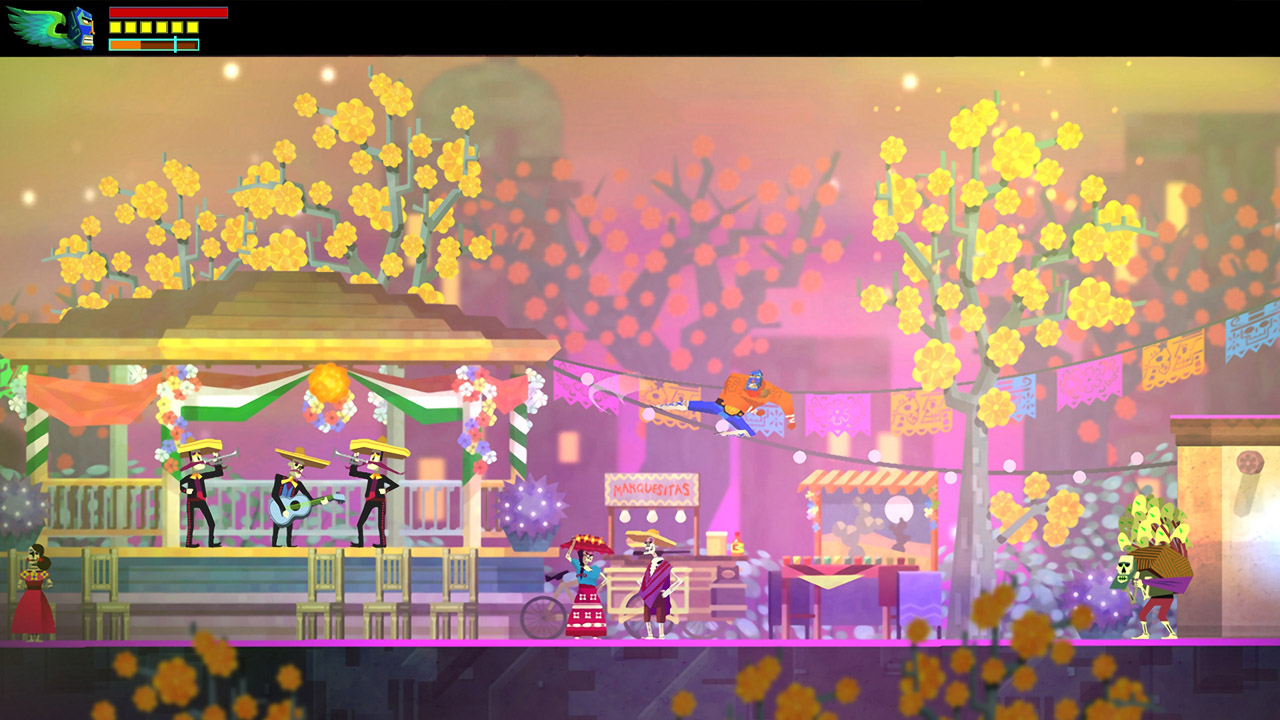
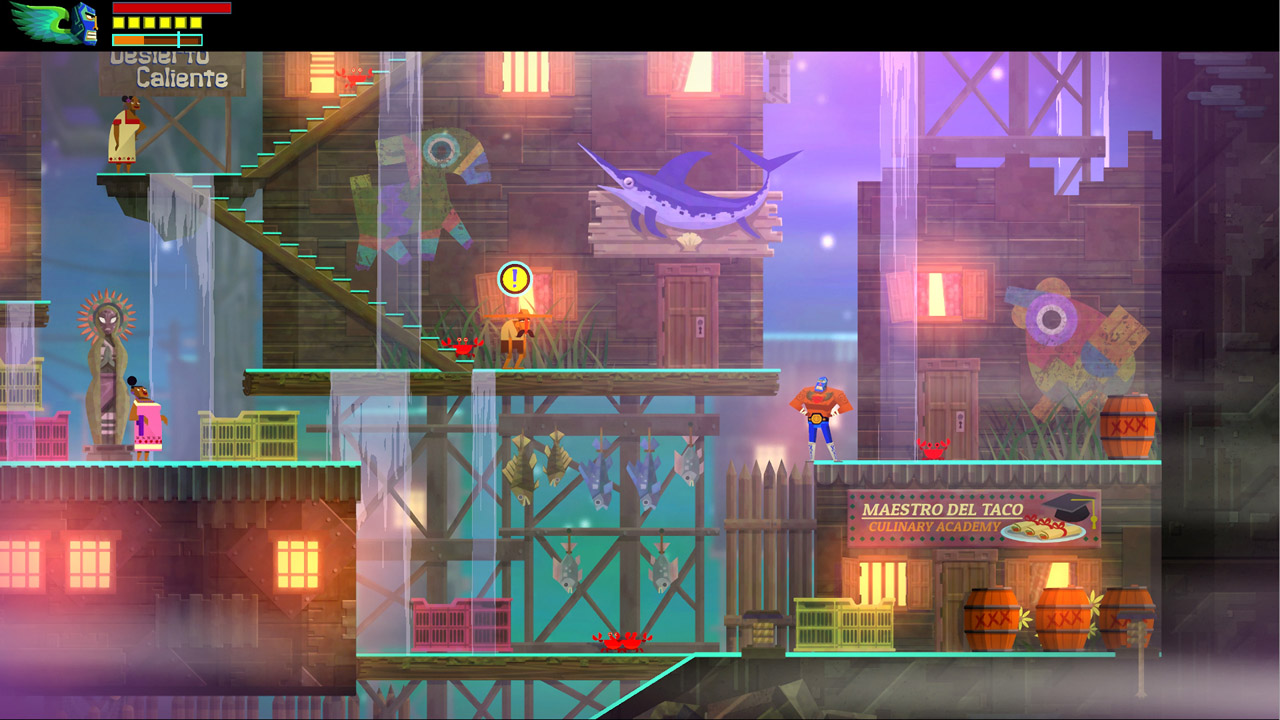
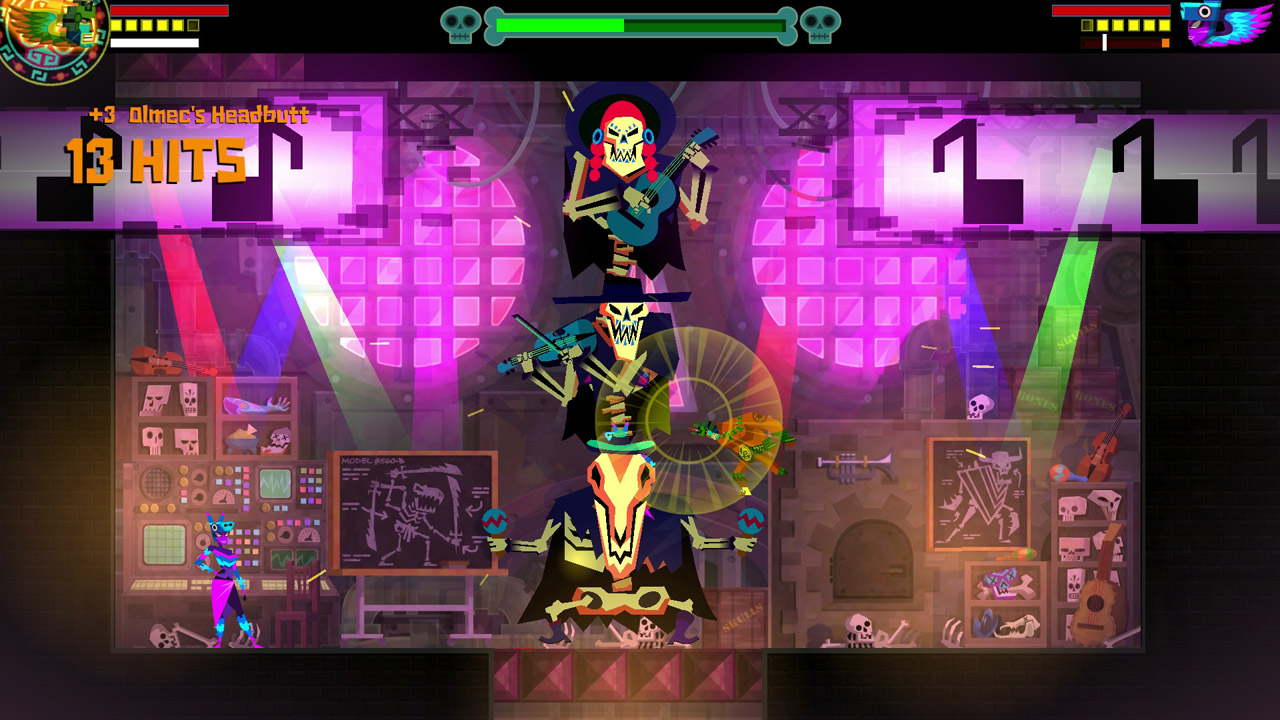
The setting draws on Mexican culture and folklore. Look at the supplied gameplay images: angular buildings, flowering trees, hanging decorations and skeletal musicians give the spaces distinct shapes and personalities. The town scene below would still be recognizable without a character name floating above it. That matters in an adventure built around moving through places, because the scenery can give you something specific to remember.
The move list is also a way through
The developer's Steam listing explicitly connects combat abilities with movement. It names the Rooster Uppercut, Frog Slam and Intenso combat mode among the available powers. The interesting design choice is that learning a fighting move can also expand your understanding of navigation.
Our reading: that gives practice a second payoff. In a game where attacks only deal damage, getting comfortable with an input mainly helps you win the next fight. Here, the same growing familiarity has a reason to follow you between encounters. The character's toolkit becomes a way of reading space. Height, direction and the next landing spot deserve attention alongside the enemy in front of you.
Give each new ability a little space to be understood. Try separating the input from the outcome: the input is what your fingers do, while the outcome includes Juan's direction and position. Remembering the command is the beginning. Recognizing an opportunity to use it is the part that makes a move feel like yours.
Two worlds complicate the route
STCE also lets you swap instantly between the worlds of the living and the dead to traverse terrain. That adds another question to a room: are you looking at it in the useful dimension? It is an appealing partner for the movement idea. One system changes what Juan can do; the other changes the version of the space you are considering.
That combination is the reason this spotlight is about the relationship between systems. A longer move list alone is not automatically interesting. An additional world state alone can become another switch to remember. Put movement, attacks and dimension changes into the same mental picture, though, and there is a clear invitation to think about transitions. What happens after this action? What will be available when you arrive?
Keep that curiosity manageable. Learn what one action does before trying to make every room an elaborate demonstration. The impressive-looking route is not especially impressive if you cannot explain where you intended to land.
Bring friends, but check the mode
Drinkbox specifies drop-in, drop-out local co-op for up to four players, including independent dimension swapping. That is a couch-group feature to plan around. It is not a reason to assume the game supplies a native online lobby for distant friends.
Our take: shared-screen cooperation changes what is useful to communicate. Instead of announcing every punch, tell the group where you are trying to go and when you intend to change dimensions. The feature list can promise independent swapping; it cannot promise that your friend will explain the plan before acting on it. That part remains a living-room negotiation.
Read the whole championship-sized title
Super Turbo Championship Edition is the version discussed here. Steam describes it as adding levels, powers, challenges and refinements to the earlier Gold Edition. Guacamelee! 2 is a separate sequel. When comparing a listing, match the actual title and platform rather than treating every entry with Guacamelee! on the label as the same purchase.
The buying appeal is straightforward: choose this kind of adventure when you want fighting and platforming to exercise the same growing skill set. If the main goal is a remote multiplayer session, verify the specific platform's supported options first. If the main goal is learning a character whose attacks also help define a route, STCE has a particularly clear pitch.
Keep your next platforming adventure on the Zypher shelf. For other games to consider, browse Zypher's listings for Rayman Legends on PS4 and Rayman Origins on Wii. These are separate games, not editions of Guacamelee! Check each listing's platform, condition and included contents before choosing. Shop Zypher's games, or sell your old games to Zypher when it is time to make room.
Sources, store listings and official media checked October 27, 2026. Images are unaltered gameplay captures from Drinkbox's official STCE media gallery; the developer supplies an editorial press kit through the same game page.


