




Guitar Hero II
About the Game
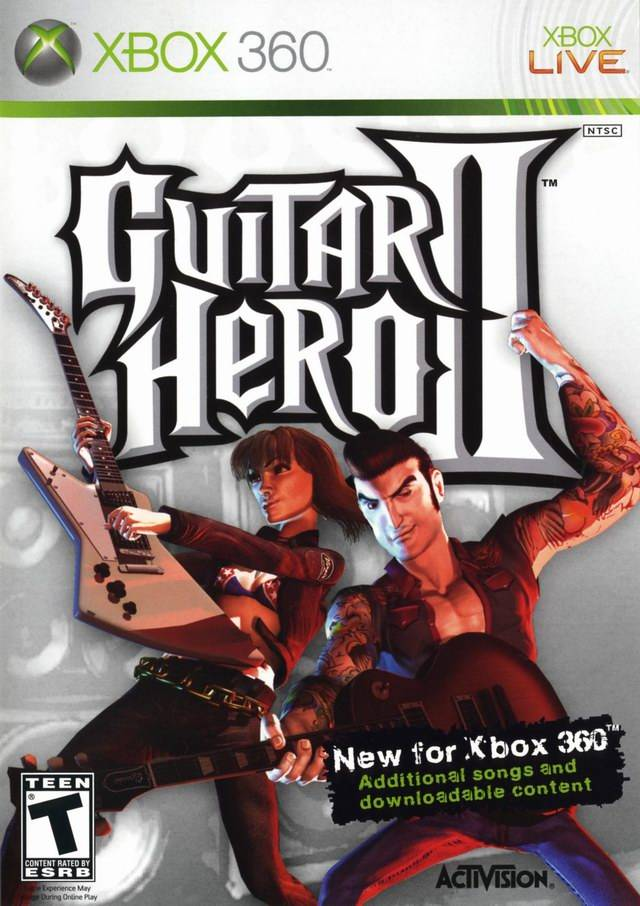
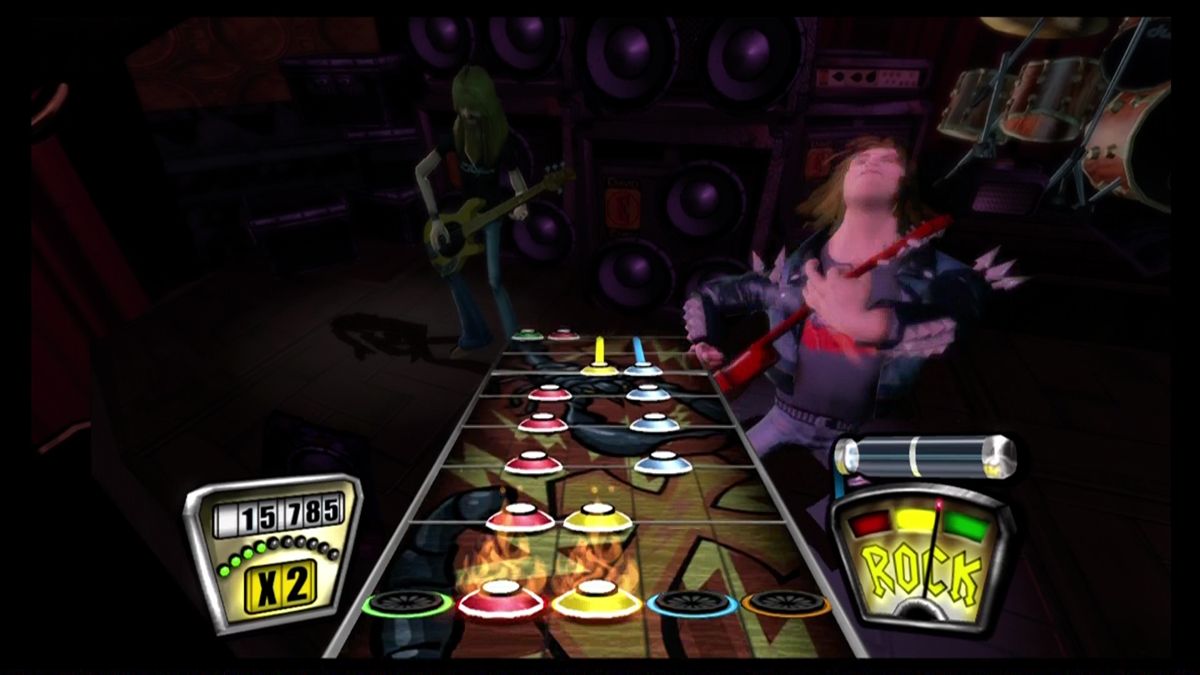
Guitar Hero II , the follow-up to the PS2-only game Guitar Hero , expands upon the gameplay and features of the original game. As a wannabe rockstar, you need to play songs by pressing combinations of five fret buttons on a guitar-shaped controller, while working the strum bar, along with an optional whammy bar for distortion. The sequel contains 64 songs, of which 40 have been licensed. One of the tracks was discovered through a contest at beaguitarhero.com, where unlicensed bands could send in a demo to be included in the game.
Gameplay & Core Systems
In the multiplayer mode, you can still play the traditional mode from the first game, where sections are traded off between players. The co-op mode is new: both players play the same song at the same time, but one is given the lead guitar, while the other handles the bass or rhythm guitar. Unlike the traditional mode, you can fail and both player share the score, rock meter and multiplier. To activate star power (a short power-up mode where the score multiplier is doubled, built up in a meter by playing a number of star-shaped notes without flaws and best saved for difficult sections) both players need to raise the guitar at the same time. You cannot practice together in this mode, but the different sections are available in the singleplayer practice mode.
Standout Features
- There are also encore performances, and unlockables can still be bought in the shop.
- Shred School: A completely new addition is the practice mode (Shred School).
- When you keep getting stumped by a single track, you can train in this mode.
- The background music is dropped, you can choose a certain section to practice, and there four types of speeds available, to slowly get the hang of difficult passages.
- In the multiplayer mode, each player can now choose an individual difficulty level.
- Here, both players play every single note at the same time.
- Upon completing Face-Off, Pro Face-Off becomes available, where both players need to use the same difficulty level.
- Other additions are the introduction of three-button chords, the use of hammer-ons and pull-offs (holding one note while playing another and vice versa) is smoother, and the screen now shakes if you break a note streak (only of the side of players who makes the mistake in the multiplayer mode).
Modes & Ways to Play
The career mode has been revamped as a high school battle where you need to make your way to the top. The final mode is called Face-Off.
Player support includes Co-Op and Free-for-all / One-on-one (VS).
Presentation & Atmosphere
Display support includes Progressive Scan (480p), HDTV 720p, HDTV 1080i, HDTV 1080p, and Widescreen (16 x 9). Audio support includes Dolby Digital.


