


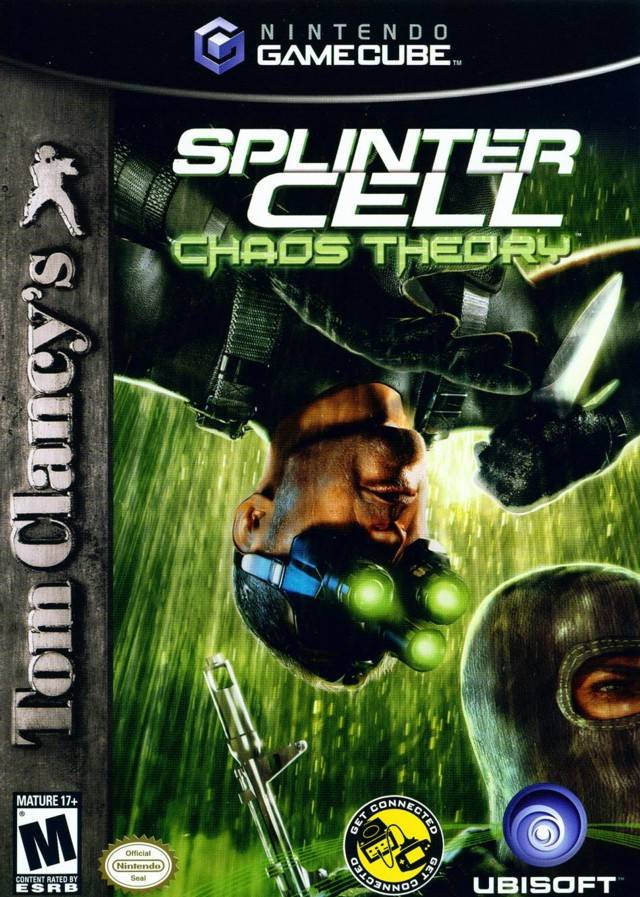

Tom Clancy's Splinter Cell: Chaos Theory
About the Game
Set in the not too distant future, Japan creates the Information Self-Defense Force (I-SDF). The creation of this force is seen as a violation of international law and Japan's constitution, and it causes tensions to rise between Japan, China, and North Korea. In time, North Korea and China set up shipping blockades around Japan, and Japan calls on the United States for help, citing article nine of the Postwar Constitution. Throughout this time, Japan uncovers more and more information that the infamous Black Gold Day was caused by intentional information warfare attacks.
Gameplay & Core Systems
Fisher has some new moves this time around, and he also has a new weapon always at his disposal; a combat knife. At the end of each mission, the player is given an overview of how they did. The more people that the player spares, the better the success score. The single-player game is more open-ended than the past two Splinter Cell games. While players are still forced through some areas in a "tunnel" like fashion, with no choice of where to go, there are many instances where they can decide how they'd like to get there.
Standout Features
- Utilizing the knife, Sam can either kill his enemies, or simply knock them out.
- For example, in the caverns, one can either kill two enemies and cross the bridge, or leave them alone, sneak along the side path, and climb a ladder at the end, bypassing the fight entirely, but still winding up in the same location.
- Across the adventure many different locations are visited, such as a lighthouse, a Japanese tea house, Seoul, New York City during an East Coast blackout, and other such exotic locales.
Modes & Ways to Play
The Spies-vs-Mercs multiplayer mode that appeared in the previous game has returned, with some new features. The PC, PlayStation 2, and Xbox versions feature this mode.


