Crazy Taxi looks like a driving game that forgot every traffic law on the way to the arcade. Under the shouting, jumps and yellow paint, though, it is a sharp score game about choosing work. Every passenger is a contract. Every shortcut is a gamble. Every delivery asks whether the next fare is worth the time it will take to reach, collect and complete.
That is why the game still works after the shock value of driving across a park has worn off. The city is not just a place to wreck a cab. It is a network of decisions, and the meter never stops running while you make them. A green arrow points toward the destination, but it does not write a route plan for you. Helpful? Yes. A substitute for judgment? Absolutely not.
The passenger icon is already a strategy call
The original Dreamcast manual explains that the color of a passenger's dollar-sign marker shows the relative distance to the destination. The size of the pickup zone signals the trip's relative difficulty. That means route planning begins before anyone gets into the cab. A nearby customer may offer a quick turnover. A longer fare can pay more, but it can also drag the taxi away from a productive part of the map.
The game does not pause while the customer climbs in or gets out. That tiny rule matters. A sloppy stop wastes time before the trip starts, and a bad drop-off burns seconds after the hard driving is finished. Even the curb is part of the score system. Crazy Taxi has no patience for the driver who arrives sideways, clips a wall and then wonders why the passenger is taking so long.

Fares reward speed and controlled chaos
Once a customer is aboard, two clocks matter. The overall game timer decides when the shift ends. The customer timer decides whether the current ride gets paid. Miss the destination deadline and the passenger jumps out without paying. Arrive early under Arcade Rules and the unused customer time becomes bonus game time. A clean delivery does more than finish one job. It buys room for another.
The fare system also pays tips for what the manual calls crazy maneuvers. Jumps, close passes and sustained drifts can build a combo, while a collision resets that combo. This is the clever part: the most dangerous-looking route can be the most profitable, but only if the driver keeps it together. A reckless line and a high-scoring line may begin in the same place. One of them ends with a bonus. The other ends with a bus occupying the taxi's front bumper.

Crazy Dash changes what counts as a road
The manual gives the game a small vocabulary of advanced moves. Crazy Dash launches the cab forward with a burst of speed. Crazy Drift turns a corner into a sliding arc. The reverse versions help recover when the route choice becomes, in technical terms, a disaster. These moves are inputs to learn, but their real value is how they change the map.
With a strong dash, a long straight becomes more valuable. With a controlled drift, a sharp turn stops being a full reset of momentum. The city begins to separate into fast surfaces, awkward transitions, useful ramps and traffic traps. The destination arrow tells you where to go in general. The advanced moves decide whether your chosen path is actually fast.

Traffic keeps the best route from staying perfect
Director Kenji Kanno told The Guardian in 2025 that the game was built around split-second decisions in changing situations. He said traffic exists as an obstacle and that the design is about navigating a changing path instead of memorizing one ideal racing line. That distinction explains why Crazy Taxi feels different from a lap racer even when experienced players know the city.
Map knowledge still matters. Shortcuts, landmarks and street connections make better runs possible. Traffic prevents that knowledge from becoming autopilot. A familiar turn can be blocked. A risky gap can open. The city asks for a plan, then sends a delivery truck to review it.
Kanno also said the hills were chosen to capture the dynamism of movie car chases. They do more than supply postcard scenery. Crests hide traffic, slopes create speed and jumps connect streets in ways a normal driver would sensibly decline. The geography makes a trip feel like a chase even though the customer is merely trying to reach a store.

Why the loop survives
Crazy Taxi has the clarity of a great arcade game. Pick up a passenger, reach the destination, earn money and repeat before time expires. The depth comes from how those steps overlap. Passenger choice affects route choice. Route choice affects tip chances. Driving technique affects both travel time and survival. A faster delivery can add time, and that extra time can become another fare.
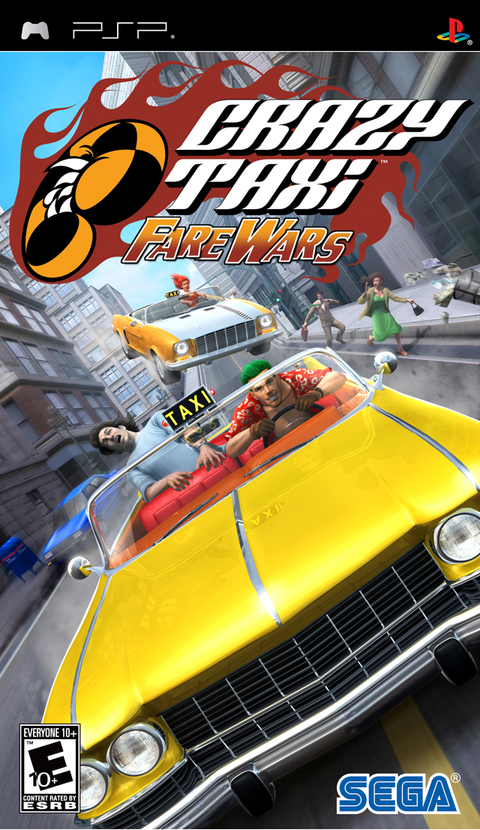
The console versions widen the idea without smothering it. The Dreamcast manual lists the arcade course, an Original course, timed work modes and Crazy Box challenges for practicing specific skills. The PlayStation 2 and GameCube releases keep the core game available on physical media, while Crazy Taxi: Fare Wars on PSP packages the first two games for portable play. Check the exact condition before buying because a complete copy, a custom case and a loose disc or UMD are different listings.
SEGA has also announced Crazy Taxi: World Tour for 2027. Its official Steam page says Arcade Mode will return with the familiar race against the clock to earn cash. The new game may add cities, missions and multiplayer, but that description still circles the original machine: choose a job, beat the clock and make the route pay.
The meter is still running
Crazy Taxi turns navigation into economics with a punk-rock volume knob. The game wants speed, but speed alone is not enough. The strong run comes from stacking small decisions: the right customer, the clean pickup, the useful shortcut, the controlled drift and the stop that lands inside the destination zone instead of the next ZIP code.
Ready to start a shift? Shop Zypher's in-stock copies of Crazy Taxi for PlayStation 2, Crazy Taxi for Nintendo GameCube and Crazy Taxi: Fare Wars for PSP. Compare the listed condition and included items on each product page, or sell your old games to Zypher.
Sources
- SEGA of America: Crazy Taxi Dreamcast instruction manual, checked October 25, 2026.
- The Guardian: interview with Crazy Taxi director Kenji Kanno, published February 24, 2025 and corrected February 26, 2026; checked October 25, 2026.
- SEGA: Crazy Taxi: World Tour on Steam, checked October 25, 2026.