
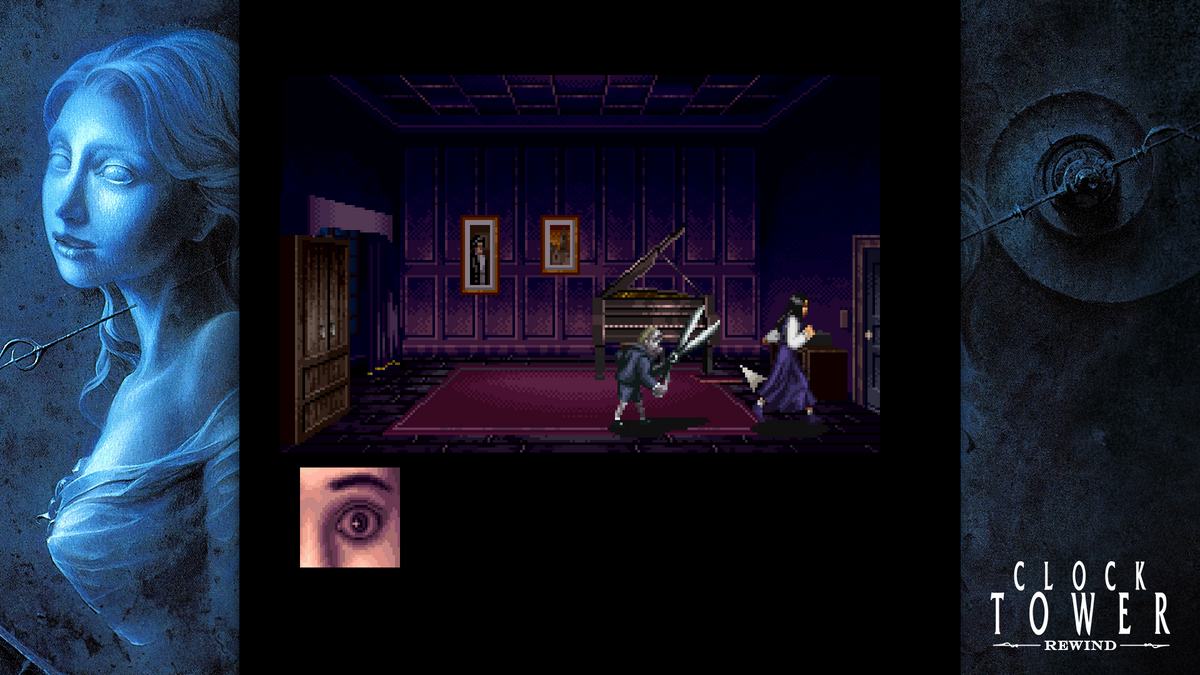
Clock Tower has a wonderfully unpleasant understanding of scissors. In most games, they belong in a crafting menu. Here, hearing a pair open behind you is enough to make an entire mansion feel too small.
Human Entertainment's horror series built its reputation around being pursued, making decisions under pressure, and surviving encounters that a normal action hero would solve with ammunition. Then it started changing its own rules. The original's lonely 2D rooms became a branching 3D investigation. One spin-off put two personalities inside the protagonist. Clock Tower 3 on PlayStation 2 added time travel, supernatural murderers, and boss battles with a magical bow. The series did not stay in the same corridor for long.
This is a guide to the games, their confusing names, what each one actually does, and where a newcomer or collector should start. Premise details follow, but the major identity reveals and endings stay sealed.
Featured image: Jennifer faces Scissorman in Clock Tower: Rewind. Official publisher screenshot supplied in WayForward's media gallery. © CAPCOM, SUNSOFT, WayForward and Limited Run Games.
First, untangle the names before buying anything
The first Clock Tower was a Japanese Super Famicom game in 1995. The first Clock Tower released in North America was a different game: the PlayStation sequel, called Clock Tower 2 in Japan. The North American Clock Tower II is another different game, known in Japan as Ghost Head. Reading the spines in numerical order is apparently a puzzle the franchise decided to take outside the disc.
| Game | Original release context | What it is |
|---|---|---|
| Clock Tower | 1995, Super Famicom, Japan | The original Jennifer and Barrows mansion adventure. |
| Clock Tower: The First Fear | 1997, Japanese PlayStation release | An expanded version of the original, not the 3D sequel. |
| Clock Tower / Clock Tower 2 | 1996 Japan; 1997 North America, PlayStation | The 3D sequel, sold without the number in North America. |
| Clock Tower II: The Struggle Within / Ghost Head | 1998 Japan; 1999 North America, PlayStation | A separate branch built around Alyssa and Mr. Bates. |
| Clock Tower 3 | 2002 Japan; 2003 North America, PlayStation 2 | Alyssa Hamilton's supernatural adventure, with direct movement and boss combat. |
| Clock Tower: Rewind | 2024, modern consoles and PC | A modern release of the original 16-bit adventure, with an enhanced mode and extras. It is not a collection of the sequels. |
The useful distinction is the game underneath the label. A Japanese Clock Tower 2 and a North American Clock Tower II do not contain the same campaign. Rewind does not replace every old Clock Tower disc. Check the subtitle, platform, region, and screenshots together.
1995: a horror movie becomes a set of rules
Creator Hifumi Kono's original follows Jennifer Simpson, an orphan arriving at the Barrows mansion with three friends and their escort. The promised new home becomes a place to investigate and escape while Scissorman pursues her with oversized shears.
In John Szczepaniak's interview feature, Kono explains that the intention was to apply horror cinema to the game system itself. His affection for Dario Argento, particularly Phenomena, informed the project. Jennifer's exhausted movement was part of that thinking: a film heroine cannot sprint forever, so the game should not let its heroine do so either.
That is more interesting than borrowing a creepy house. The point-and-click interface puts a small delay between seeing a possibility and carrying it out. You choose a destination or object, then Jennifer has to get there. Running spends strength. Recovering requires an opportunity. A place that looked convenient during a quiet search may become hopeless when a killer blocks the route back.
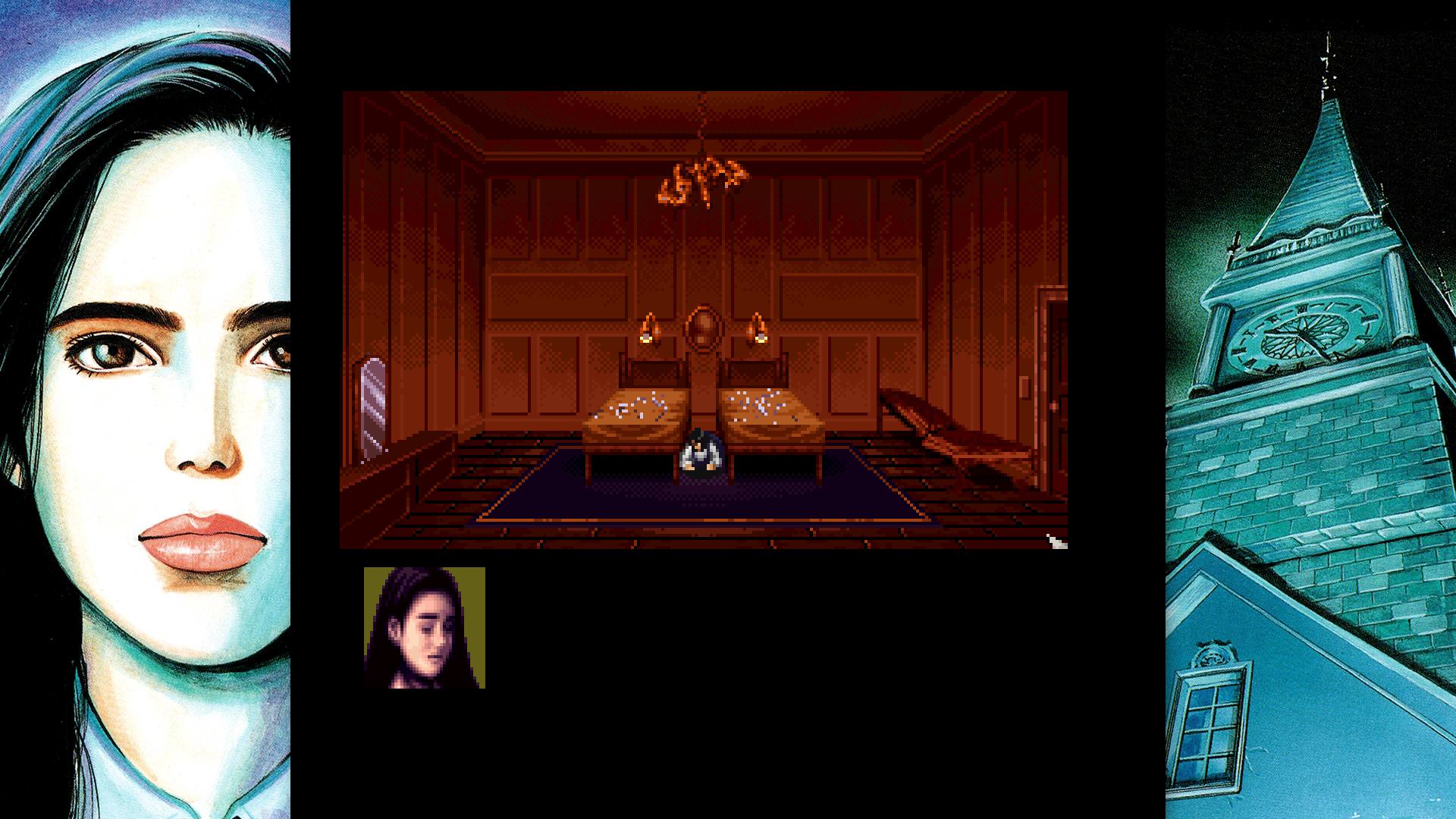
Our reading is that the most effective part is the broken rhythm. Searching a room encourages careful attention. A pursuit demands an immediate answer. Clock Tower makes those habits collide. The thing you were calmly examining a moment ago is suddenly less interesting than the exit.
Multiple endings and randomized elements give repeat visits a purpose beyond replaying the same scare. The mansion is something to learn, but learning it does not make every visit identical. That uncertainty is the foundation of the series, even when later games change nearly everything around it.
The First Fear is an expanded original, not another sequel
The 1997 PlayStation version, The First Fear, revisited the original adventure with added content. WayForward's creative lead Mariel Kinuko Cartwright describes additions including another accessible bedroom, extra scares, and a scene that helps connect later events in the series.
That history matters because Rewind borrows those additions for its enhanced mode. It also explains why footage of two games both called Clock Tower can look completely different. The First Fear still belongs to the 2D mansion adventure. Japan's Clock Tower 2 is the polygonal follow-up.
For most newcomers, tracking down every old version is a collecting project, not a prerequisite for meeting Scissorman. The essential distinction is between revisiting the original adventure and moving into its sequel.
The PlayStation sequel turns escape into an investigation
The 3D PlayStation Clock Tower returns to Jennifer after the mansion incident. Helen Maxwell, an assistant professor of criminal psychology, is another central figure. Sony's archived Japanese catalog explicitly presents the sequel through Helen and Jennifer's perspectives.
The original North American manual explains how the structure works. Actions in the prologue determine the central heroine. The game progresses through scenarios and intermissions, with choices affecting the route. It lists five endings per heroine, ten overall. That is a broader investigation than simply getting through one house.
Intermissions are especially important. The manual describes them as generally daytime scenes where Scissorman poses no danger. You visit locations, talk to people, and satisfy conditions that move the story into the next scenario. The game deliberately gives the player room to think between attacks.
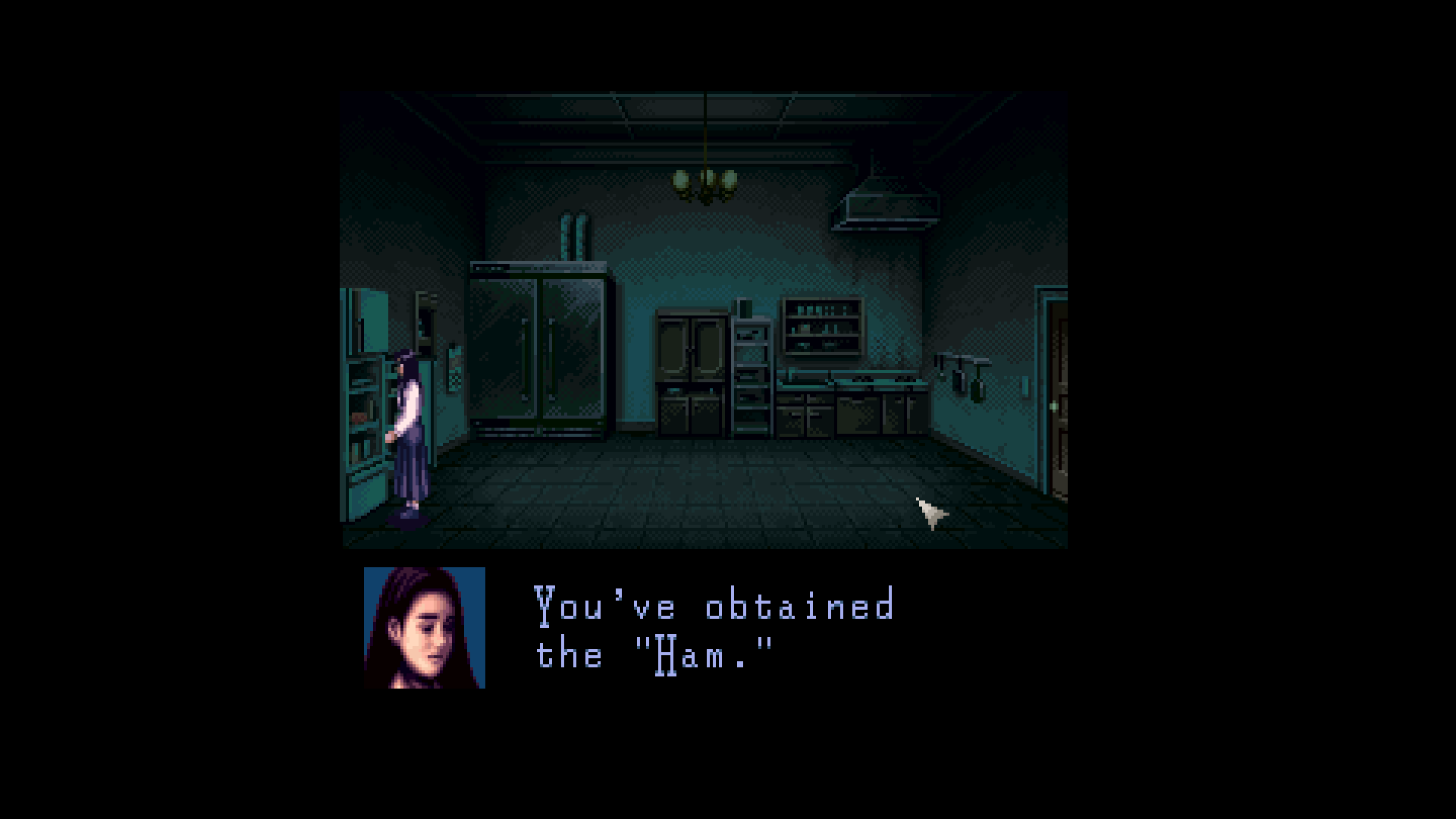
Then the pursuit rules take over. During escape mode, usable click points are restricted to objects that can help repel Scissorman. Strength has three levels, communicated by cursor color. The panic button is an emergency response, but it does not make an exhausted character immortal. According to the manual, strength at its lowest level cannot survive another such encounter just because the player presses faster.
This gives the sequel a distinct appeal. It is a horror adventure about gathering information, following branches, and then dealing with a threat that interrupts the investigation. The 3D presentation changes the spaces, but the pointer remains part of the tension. You are directing a vulnerable person through a scene, not steering an armored exterminator.
Our recommendation: play the original adventure first if you care about Jennifer's story, then approach the PS1 sequel as the next chapter. Let its pauses and intermissions establish the mystery. Expecting Resident Evil's combat loop will send you shopping for a gun the game has no intention of handing over.
Ghost Head: the threat moves inside the protagonist
Clock Tower II: The Struggle Within changes the central problem. Its North American protagonist is Alyssa Hale, whose supernatural alter ego, Mr. Bates, shares her body. The Japanese Ghost Head uses the names Yu and Sho and a Japanese setting; Sony's archived description emphasizes progressing by controlling the two personalities.
The North American manual makes the amulet the key to that system. While Alyssa carries it, Bates cannot emerge. Leave it in a container, and fear can bring him forward. Retrieving it restores Alyssa. Some events require one personality, while others require the other. This is not merely a different voice performing the same interactions.
Their options in danger differ too. Alyssa uses environmental objects and hiding places. Bates can use acquired weapons, turning the pointer into a crosshair. The manual lists thirteen endings shaped by choices and scenario progress. It also changes the stamina rhythm: first-aid kits restore stamina rather than simply waiting for it to recover.
This is the game's supernatural premise, not a clinical account of dissociative identity. As a design experiment, the premise has teeth. The version of the protagonist capable of dealing with one problem may be the wrong version for the next. Safety, identity, and progress become connected. The awkward part is the extra layer of management: remembering where the amulet is, what state the character is in, and which interaction the game expects.
That is why we would save Ghost Head for after the first two adventures. It is worth studying as the franchise's stranger side path, but its title makes it sound like a straightforward continuation of Jennifer's story. It is not. Also, Alyssa Hale is not Alyssa Hamilton from Clock Tower 3. Similar first names are doing an unreasonable amount of unpaid work here.
Clock Tower 3 trades the cursor for supernatural theater
Clock Tower 3 came from the Capcom and Sunsoft collaboration announced in 2001. Contemporary Game Watch reporting from the presentation documents filmmaker Kinji Fukasaku's involvement and the production's focus on performance and cinematic direction.
The new heroine, Alyssa Hamilton, receives an alarming letter from her mother telling her to hide until her birthday. She returns home instead. The adventure moves through London and different periods, confronting supernatural killers and the victims they left behind. This is its own story, not Jennifer's next semester of extremely justified therapy.

The controls make the break immediately clear. You move Alyssa directly with the analog stick. During exploration, holy water can temporarily stun a pursuer and open certain magical barriers. It is limited, so a splash buys an opportunity rather than permanently clearing the neighborhood.
Panic becomes a visible meter. The manual says that reaching maximum panic restricts Alyssa's sight, triggers distressed behavior, and prevents hiding. Being attacked in that state ends the game. Safe surroundings let the meter fall. Boss encounters use separate vitality gauges, so the exploration rule should not be mistaken for the entire game's damage system.
Hiding places and safe points also have different jobs. Most hiding places can be reused; designated safe points provide a one-use evasive action. The choice is between a repeatable refuge and spending a special escape opportunity. Knowing that distinction is more useful than assuming every flashing object is another locker.

Returning sentimental items to restless spirits connects investigation to the people harmed by the killers. Then the game changes gears again: Alyssa receives a bow for boss battles. Charged shots and special arrows turn the pursued heroine into somebody who can finally fight back.
Our reading is that this is both the attraction and the fracture. The earlier games make escape feel like the main achievement. Clock Tower 3 builds toward confrontation and release. Its melodrama, historical tragedies, and spectacular villains give it an identity, but players seeking another quiet Scissorman investigation should understand the change before buying.
Our recommendation: choose it for the PS2 era's theatrical horror and that alternating rhythm of flight and combat. Do not treat it as the fourth version of the original formula. Its willingness to become something else is the reason it remains interesting.

The long gap has two important neighbors
Haunting Ground, Capcom's 2005 PS2 game, belongs beside Clock Tower rather than inside its numbered list. Fiona Belli explores a hostile castle with the help of Hewie, a dog whose cooperation becomes central to survival and puzzles. GameSpot's contemporary hands-on report describes a relationship built through commands, trust, and responses.
The comparison is useful because it shows another answer to vulnerability. Fiona is not simply alone with a monster; she has a partner who must be understood and cared for. Calling it Clock Tower 4 would erase the very thing that makes it distinct.
NightCry is a more explicit spiritual successor. In GameSpot's interview about Project Scissors, Kono specifically distinguishes the project from an official Clock Tower sequel. It became NightCry, developed by Nude Maker and published by PLAYISM in 2016.
The publisher's current Steam listing describes a 3D point-and-click adventure aboard a cruise liner, with investigation interrupted by pursuit from the Scissor Walker. It carries the family resemblance openly while using its own setting and identity. It is a branch for players interested in Kono's later return to the idea, not a missing numbered chapter.
There was also a small mobile offshoot, Clock Tower: Ready for the Next. A detailed 2024 play report by Ephemeral Enigmas documents a brief hiding-choice game using Jennifer and Scissorman. It is a peripheral experiment, not a substitute for the full adventures. It belongs to the margins of the franchise history rather than the central play order.
Rewind finally puts the first game in easier reach
Clock Tower: Rewind launched in the Americas and Europe on October 29, 2024. WayForward's release announcement lists Switch, PS4, PS5, Xbox Series X|S, and PC. Sunsoft's Japanese release followed on October 31. Region matters even when the gap is only two days.
The essential achievement is an official translation and release outside Japan for the original adventure. Rewind is not a ground-up 3D remake, and it does not bundle the PlayStation sequel, Ghost Head, or Clock Tower 3.
Original Mode preserves the 1995 design. Rewind Mode incorporates content from The First Fear and adds changes of its own. Cartwright's official development explanation describes an expanded chase system, more places Scissorman can follow or hide, improved movement including running on stairs, and additional hiding options.
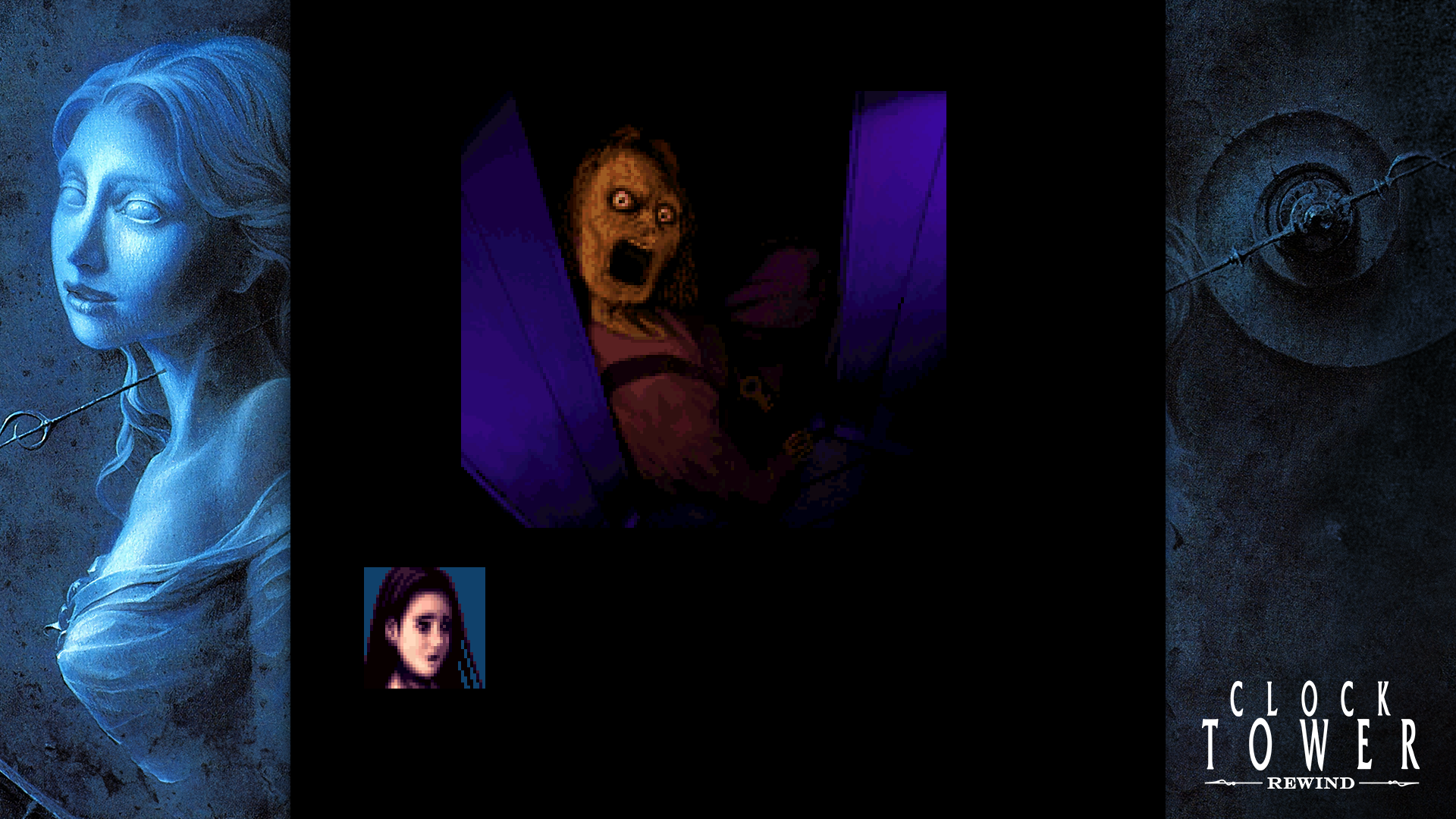
Save states and the rewind function are available in both modes. Those tools reduce the cost of a mistake, while the separate modes let players compare the older rules with the expanded version. The package also includes archival and presentation extras such as a creator interview, art, music, and a playable Japanese commercial demo.
Our recommendation: Rewind is the practical first stop. Choose Original Mode if you want to understand the starting design; choose Rewind Mode if the added content and refinements appeal more. Using a save state does not revoke your horror credentials. Scissorman has not established a licensing board.
Why a small series still has such a recognizable shadow
Clock Tower does not have to give the player a new monster every five minutes. Its defining image is a pursuer returning to a space the player was beginning to understand. Familiarity becomes useful because you remember a route or hiding place, then dangerous because you start trusting that knowledge too much.
That is a useful comparison with the hide-and-investigate horror discussed in our Amnesia feature and Alien: Isolation motion-tracker article. It is a comparison of design, not a claim that every later developer copied Clock Tower. The shared appeal is having enough agency to make a plan without enough power to make that plan comfortable.
The changes within Clock Tower itself also explain why one blanket recommendation would be misleading. The first two adventures emphasize a connected mystery and escape. Ghost Head makes the protagonist's state another puzzle. Three builds toward supernatural confrontation. Rewind makes the original accessible again. A small release list contains several very different reasons to play.
A play order that respects your time
- For the central Jennifer story: the original adventure through Rewind, followed by the PS1 Clock Tower known in Japan as Clock Tower 2.
- For the complete core-series tour: add Ghost Head / The Struggle Within, then Clock Tower 3. Expect major changes in character, structure, and combat.
- For a direct-control PS2 starting point: Clock Tower 3 stands apart enough to begin there, provided its theatrical supernatural style is what you want.
- For related ideas afterward: Haunting Ground explores partnership and pursuit; NightCry returns to Kono's point-and-click chase concept.
These are editorial recommendations, not a requirement to finish every ending. Clock Tower benefits from patience and curiosity, but it does not need to become a homework assignment with shears.
Collect the right game, not just the right-looking spine
For original releases, verify the disc title and region before concentrating on completeness. A Japanese The First Fear is not the English PS1 sequel. Ghost Head and The Struggle Within also have localization differences, so matching a cover thumbnail alone is not enough.
Then compare the actual condition: Complete in Box, Game & Case, Custom Case with Game, or disc only. Original artwork and manuals matter to a collector; replacement presentation should be identified honestly. Read Zypher's condition guide before assuming every photographed box means the same thing.
Check hardware compatibility for the exact disc and system you intend to use. A modern PS4 or PS5 release of Rewind does not make an old PS1 or PS2 disc interchangeable with it. Likewise, old Japanese digital catalog pages are historical evidence here, not a promise that every download can still be purchased today.
Most importantly, decide whether you want to play the original design or own an original artifact. Rewind answers the first question efficiently. The older cartridges and discs answer a different collecting question. You can appreciate the history without paying for every version before discovering whether cursor-driven escape horror is your thing.
Put Clock Tower on the shelf with Zypher
Want the PS2 chapter? Buy Clock Tower 3 from Zypher. Our Clock Tower 3 PlayStation 2 listing shows the current stock, condition options, and included items. It is the original PS2 game discussed above, not Rewind or a franchise compilation.
You can also check Zypher's Clock Tower catalog as copies arrive. Making room for the next horror shelf? Sell your old games to Zypher through the Buy List.
The series keeps changing what the player can do, but its best question stays wonderfully simple: the door is over there, the killer is in here, and how good was that plan you just made?
Sources and image credits
Researched and checked October 25, 2026. Historical gameplay details were checked against the original publisher manuals for Clock Tower on PlayStation, The Struggle Within, and Clock Tower 3. These are archival scans, not current support pages.
Additional sources: Time Extension's Kono interview feature; the archived Sony catalogs linked above; WayForward's Rewind launch announcement; Sunsoft's Japanese Rewind page; Cartwright's PlayStation Blog development article; the linked GameSpot reporting; and PLAYISM's NightCry listing.
Rewind images are unaltered official screenshots from WayForward's press and media material. Clock Tower 3 images come from Zypher's existing product gallery, with screenshot credit to MobyGames under its published screenshot reuse guidance. Each caption identifies the pictured game. This is researched franchise commentary, not a claim of a new Zypher playthrough.


