uDraw GameTablet looked like the rare plastic peripheral with a job beyond making the living room look like an electronics yard sale. THQ built a drawing tablet for the Wii, bundled it with uDraw Studio and invited families to paint, play Pictionary and try games designed around a pressure-sensitive stylus.
The first version worked well enough to become a real hit. Then THQ expanded uDraw to PlayStation 3 and Xbox 360, manufactured for a much larger audience and discovered that success on one console does not automatically copy and paste to two others. The tablet did not vanish because the original idea was worthless. It vanished because the sequel to that idea was scaled like the demand had already signed a contract.
The promise: turn the television into a sketchbook
The Wii model used a simple pitch. Slide a Wii Remote into the tablet, draw with the attached stylus and watch the work appear on the TV. A contemporary Wired review documented that setup, the pressure-sensitive stylus, familiar paint tools and SD-card image export. That is attributed hands-on reporting from the launch period, not a claim that Zypher tested the hardware today.
That was a sensible match for the Wii. The console had already trained a broad audience to accept controllers shaped like sports equipment, steering wheels and fitness boards. A drawing tablet aimed at families did not seem like an alien object. It seemed like Tuesday.

THQ's early numbers justified the confidence. In its fiscal 2011 third-quarter filing, the company said it had shipped 1.2 million Wii uDraw units during the 2010 holiday quarter. This was not a peripheral nobody wanted. The Wii launch found an audience, and THQ treated that audience as proof of a bigger platform.
The actual outcome: the expansion missed the canvas
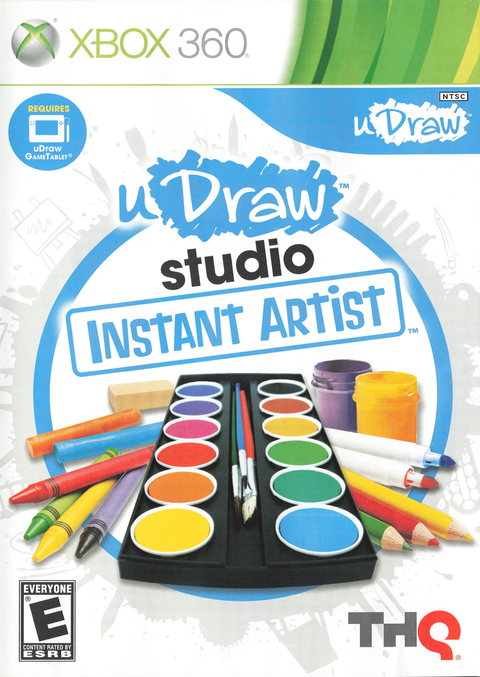
THQ announced a wider uDraw rollout for the 2011 holiday market, bringing redesigned hardware and uDraw Studio: Instant Artist to PlayStation 3 and Xbox 360. The new versions could present the concept in HD, but the larger bet still needed a new audience.
What they could not do was transfer the Wii audience by force. THQ's 2012 annual report is blunt: uDraw performed significantly below expectations and generated significant losses. The company also reported fewer units sold, lower average selling prices, higher product costs per unit and heavier marketing support relative to sales. That is the corporate filing version of a warehouse full of confidence becoming a warehouse full of boxes.

The damage did not end with one bad quarter. In a September 2012 filing, THQ said its inventory reserve included a large amount tied to uDraw. Its 2012 10-K also placed uDraw among products that drove a strategic retreat from traditional kids' and movie-based console games. The tablet was not the only problem at THQ, and it would be sloppy to blame one accessory for the company's entire collapse. It was still a very expensive warning that a hit can become a liability when production outruns demand.
Why the Wii win did not travel
The strongest explanation is not that players suddenly hated drawing. The expansion changed the market while assuming the appeal would stay the same.
On Wii, uDraw fit the console's family identity and used hardware millions of homes already understood. On PlayStation 3 and Xbox 360, THQ had to persuade different audiences to buy another dedicated controller for a small software library. A gamepad can support hundreds of games. A uDraw tablet only matters when compatible software gives it something specific to do.

The software problem was structural. uDraw Studio, Pictionary and a collection of licensed games demonstrated the tablet, but they did not create an endless pipeline. Buyers were being asked to reserve shelf space, batteries and attention for a device with a narrow compatibility list. Plastic peripherals can survive that bargain when the experience feels essential. They struggle when the best answer to “what else works with it?” is a short stack of cases.
Timing made the bet rougher. By late 2011, touch-screen phones and tablets had made direct drawing and simple art apps familiar. That comparison is editorial interpretation, not a claim from THQ's filings, but it helps explain the value problem: a console accessory had to justify itself beside devices that could draw, browse, play and do several other jobs without a console attached.
What collectors should know now
uDraw is still playable, and its strange rise and fall gives it real hardware-history appeal. The important buying rule is compatibility. The Wii, PlayStation 3 and Xbox 360 tablets are platform-specific. A loose uDraw game disc is not secretly a complete setup, and a listing for software should not be assumed to include the tablet unless the listing explicitly says so.
Before buying hardware, check that the stylus is present, the cable is intact and the battery compartment is clean. For the Wii model, remember that operation depends on a Wii Remote inserted into the tablet. For any model, match the logo and platform to the games you plan to use. A cheap wrong-platform tablet is still the wrong tablet. Bargain math remains undefeated.

The surviving value is not a hidden masterpiece claim. uDraw is interesting because the original Wii version proved the concept could work, while the wider rollout showed how quickly a specialized accessory can become inventory instead of a platform. It is a playable artifact from the era when every publisher wanted a new object under the television. Some were instruments. Some were exercise gear. This one brought a pen and discovered the business plan needed an eraser.
Sources
- THQ fiscal 2011 third-quarter results, filed February 2011
- THQ fiscal 2012 annual report, filed June 2012
- THQ fiscal 2013 second-quarter filing, filed November 2012
- Wired launch-period uDraw review, November 30, 2010
- Associated Press expansion report, June 2, 2011