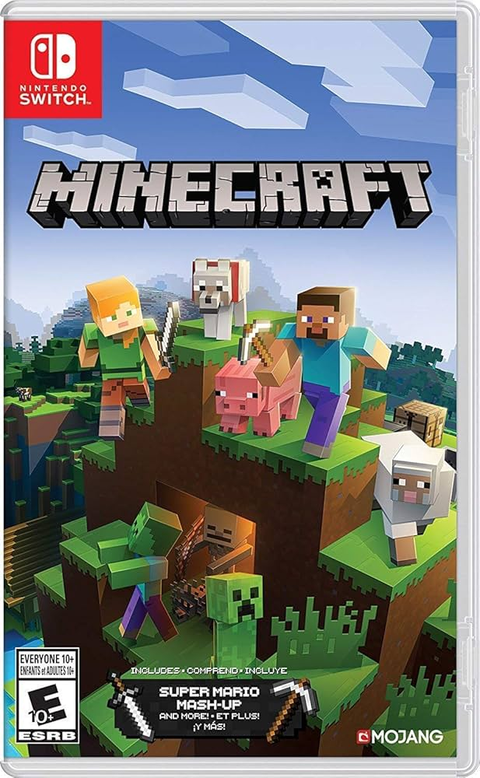
Independent Zypher editorial feature. Not an official Minecraft publication. Not approved by or associated with Mojang or Microsoft. Featured packaging: Minecraft for Nintendo Switch. Used with permission from Microsoft.
A dirt shelter can be an achievement. Put it in the right place, close the entrance before the night gets interesting, and the ugliest building on the map suddenly becomes the most important property you own. Minecraft makes that transformation work because the world is material, obstacle and project at the same time.
This is a deep dive into the core Minecraft game: why gathering and building fit together, how Survival and Creative change the meaning of the same blocks, and why the edition on a physical copy matters. Zypher carries versions including Minecraft: Xbox 360 Edition and Minecraft for Nintendo Switch. They share an identity, but they should not be mistaken for identical purchases.
A world that became a building material
Microsoft's September 2014 announcement of its agreement to acquire Mojang described Minecraft as having launched in 2009. That early beginning matters more to understanding the game than a modern screenshot's particular collection of blocks. Minecraft's central invitation is to make something of the world, rather than only move through scenery somebody else arranged.
The block language supports that invitation. The terrain is something to investigate, collect from and alter. A landscape can become a resource supply; those resources can become tools or a structure; that structure can become the starting point for a longer expedition. The player keeps finding another use for the place they already occupy.
Our interpretation is that Minecraft's strongest trick is making a small plan expand naturally. A shelter needs materials. A better shelter suggests more materials, more space and perhaps a more convenient route between the places you visit. The game does not need to deliver a dramatic briefing to make a path worth building. Sometimes you are simply tired of taking the long way around.
Survival gives your construction a reason to exist
In Survival, gathering resources and staying alive belong to the same task. Hostile mobs, health and food make the environment consequential. Building is not a separate creative exercise added after the adventure. Preparing somewhere to return to is part of the adventure.
The first shelter is a good example because its value is practical before it is visual. It solves a problem. Later, the question can change from “will this protect me?” to “how do I want this place to work?” That is a useful progression: the player moves from immediate need toward an individual project without abandoning the same basic activity.
This is why describing Minecraft as merely a building game undersells the Survival experience. Having to obtain the blocks changes what it means to place them. A large build represents decisions about time, travel and priorities as well as a finished shape. Looking at someone else's completed settlement does not reveal all the smaller jobs that made it possible.
There is a tradeoff. Someone who wants a tightly directed sequence of objectives may find the freedom tiring. The next meaningful task is often one you choose. That is a reason to start with a manageable goal, not a reason to decide the entire game must be played like somebody's enormous online showcase.
Creative changes the question, not the importance of building
Creative mode provides flight and access to building materials without Survival's resource, hunger and health pressures. That is not just an easier route through the same assignment. It changes the assignment itself: instead of asking whether you can gather enough for an idea, it lets you concentrate on what the idea should be.
A person interested in shape, layout or experimenting with a mechanism has a different reason to choose Creative from someone who enjoys earning every block in Survival. Both are coherent ways to play. Treating one as the only respectable version is an excellent way to turn a friendly building session into a homeowners' association meeting.
For a new player, decide which problem sounds more enjoyable tonight. If you want resource gathering and danger to give a project its weight, choose Survival. If you already have a design you want to try, Creative removes much of the preparation. You do not need to apologize to a creeper for having other plans.
Redstone turns a building into something that does a job
Redstone adds another layer because it can power devices and connect components into circuits. Mojang's creator introduction describes uses including automatic doors, harvesters and lighting controlled by light levels. A structure can therefore be a system, not just a finished exterior.
The appeal is the relationship between an idea and a working result. You identify a repetitive job, build a mechanism, and find out whether the mechanism actually performs it. A door is easy to understand; a door that responds the way you intended becomes a small engineering problem. The reward is concrete: the world now does something it did not do before.
There is no need to begin with an enormous contraption. One useful improvement can teach more than copying a machine whose components you cannot explain. Understand one working door before putting the same circuit in every room. A failed experiment should cost you one entrance, not the whole house.
Exploration supplies the next idea
Minecraft's official introduction connects resource gathering, building, hostile mobs and travel through different environments. Those activities reinforce one another. A journey can supply materials for a project, while finishing a project can make the next journey more appealing.
What keeps that relationship interesting is the chance to revise your own plan. You can head out for one reason and come back with an idea for something else. The world does not need to become a checklist of mandatory destinations to matter. It can be the reason you want a different kind of home, route or tool.
That freedom also makes comparison with another player's world less useful than it first appears. Their priorities may be completely different. A modest functional base can be exactly right for a person who wants to explore. A carefully decorated room can be the whole point for somebody else. The game has room for both without requiring either to become a competition.
Beyond the Overworld: a destination can supply another project
Minecraft has the Overworld, the Nether and the End. The Ender Dragon gives the End a major confrontation, while Endermen appear across the three dimensions. These places give exploration a direction without making every session about the same destination.
Our reading is that this gives the sandbox useful milestones. You can prepare for a dangerous journey, or let the journey suggest a new project. A player who wants an expedition and a player who wants a permanent home can find reasons to care about the same world.
That does not mean every edition has every modern environment, creature or feature. Check the version behind a guide before using it as a shopping checklist. An older console release is a particular version of that world.
Java and Bedrock: choose the community as well as the platform
Minecraft: Java Edition runs on Windows, macOS and Linux. Minecraft: Bedrock Edition covers supported Windows devices, consoles and mobile devices. Mojang's edition comparison is clear on the central multiplayer boundary: ordinary Java and Bedrock players do not join each other simply because both games say Minecraft.
Java has a long-running modding and server culture. Bedrock supports cross-device play within its supported ecosystem, along with Marketplace content and add-ons. These are different routes to extending the game. A particular mod, server or purchased content pack needs its own compatibility check.
The Windows PC Java & Bedrock package offers both editions, but that does not turn them into one shared multiplayer client. Ask friends which edition they use before buying specifically to join them. “The one with blocks” is an accurate description and an impressively unhelpful answer.
Also check the current online subscription requirements on your console. Realms is an optional hosted-world service with its own plans, rather than proof that every kind of multiplayer requires that subscription. Avoid buying a service until you know which way you intend to play.

Older console editions are part of the history, not current Bedrock in a different case
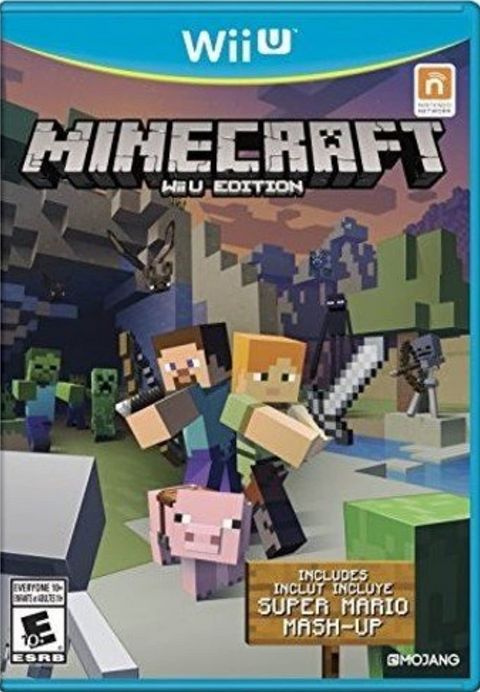
The PS3 version, Xbox 360 version and Wii U version belong to the older console era. In its May 2018 announcement, Mojang identified Update Aquatic as the last major updating effort for those editions, along with PS Vita. That is historical support information, not a claim that these releases contain today's features.
This distinction gives them a valid collecting purpose. A person may want the version connected with a particular console or period. That is different from buying a copy to follow a current Bedrock tutorial or join friends on modern devices. One purchase goal does not answer the other.
The title on an Xbox One package deserves attention too. Minecraft: Xbox One Edition is an older named edition, distinct from later Bedrock releases carrying the simpler Minecraft name. Mojang's 2018 post described an upgrade offer at that time; this article does not promise that a used disc bought now qualifies for any historical free offer. Check the current product and platform rules.

The handheld with an unusually important word on its cover
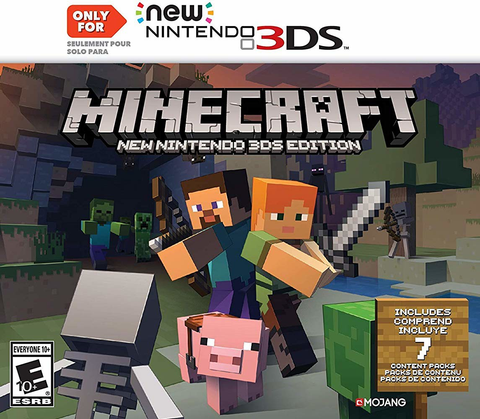
Minecraft: New Nintendo 3DS Edition has an important hardware distinction right in its name. Its packaging identifies it for the New Nintendo 3DS family, and Mojang's final-update post addresses New Nintendo 3DS and New Nintendo 2DS players. Do not treat it as a cartridge for every original 3DS or 2DS model.
Mojang announced that version's final update in January 2019. It is another specific branch of Minecraft's history, rather than the portable equivalent of today's Bedrock release. If collecting unusual versions is the attraction, that specificity is the point. If current feature parity is your priority, it is a warning to choose a different version.

A physical copy is one part of preserving the experience
For collectors, the game item and the world you create are separate things to think about. Read the platform's current save and backup options before moving, replacing or resetting hardware. A replacement game case does not preserve a world you have not backed up.
Java's selectable older release versions provide another kind of historical access, but Mojang warns that development snapshots and experiments can damage worlds. Keep backups and use a separate test world for unstable versions. Do not turn your main build into the place where you discover what “experimental” means.
When buying a physical release, check the exact edition, region, platform, condition and included contents. Do not infer unused codes, every advertised content pack or current cross-play from the cover photograph alone. The Nintendo Switch listing and an older console-edition listing should be compared as specific products, not interchangeable pieces of Minecraft branding.
Why this particular sandbox keeps producing another evening
Our view is that Minecraft lasts because creation does not require one fixed motive. Survival can make a build feel earned. Creative can make a design easier to pursue. Redstone can give it a practical function. Exploration can give you the idea for it in the first place.
The useful question is not whether you have made something as impressive as a video you watched. It is whether the world now contains a place, route or mechanism you wanted enough to build. That could be a huge project. It could also be a shelter that finally has a proper entrance. There is room for progress that would look deeply unimpressive on a thumbnail.
Find your version of Minecraft at Zypher. Compare the verified platform listings linked throughout this feature, or shop Zypher's video-game collection. Choose the edition that fits your hardware and the people you want to play with. If another stack of games is funding the project, sell your old games to Zypher.
Sources and edition references
Primary developer, publisher and platform material checked October 28, 2026. Design assessments are Zypher editorial interpretation. Historical announcements are identified by date.