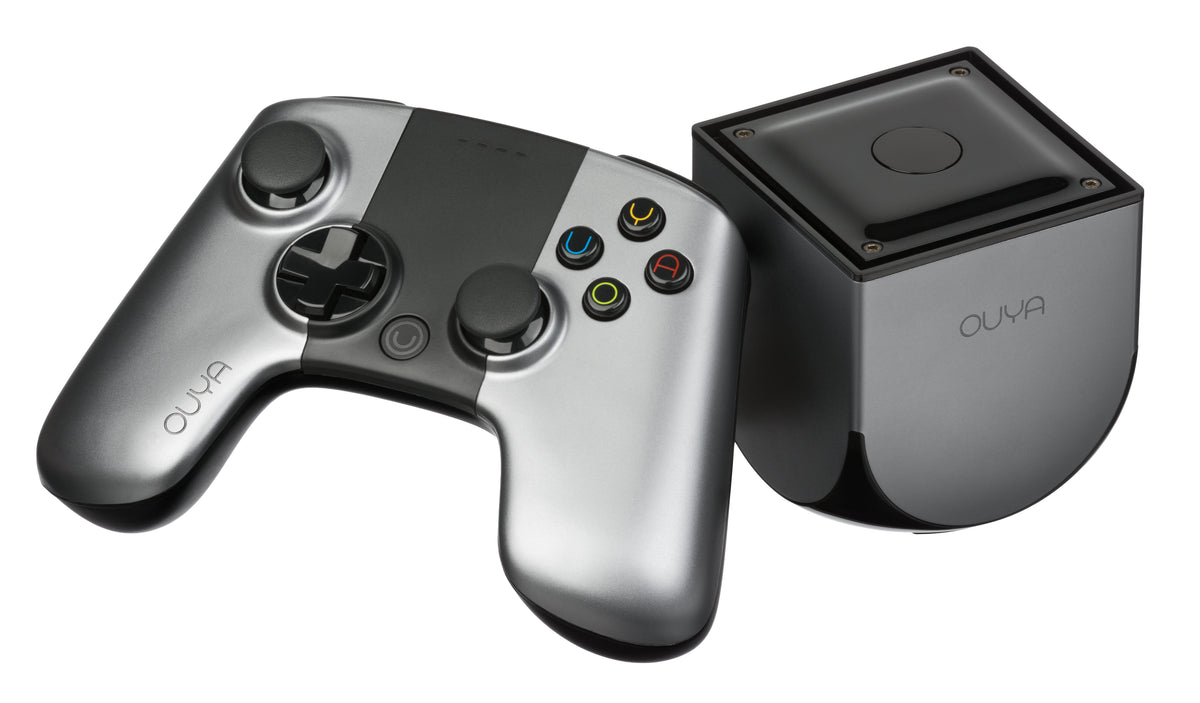
OUYA put a big ambition inside a very small silver box: give developers an easier route onto the television and give players another reason to pick up a controller. The crowdfunding campaign got plenty of attention. Keeping that controller in somebody’s hands was the harder assignment.
For WTF Happened To...?, OUYA is worth revisiting without pretending its entire life was one long punchline. The developer-friendly pitch had an audience. The product faced documented complaints, its software business changed hands, and the store eventually closed. Those events explain more than simply pointing at the cube and laughing.
Featured photograph: OUYA console and controller by Evan-Amos, public domain, unchanged by Zypher. Image source and rights.
The pitch gave people something to back
GameSpot’s August 2012 campaign coverage recorded $8,596,475 pledged by 63,416 supporters. Its contemporary account described an Android-powered television console, a custom controller and an approach that welcomed developers and hardware tinkering.
That is a crowdfunding result, not a lifetime console-sales total. It establishes enthusiasm for the proposal. It does not tell us how often those supporters subsequently played, how many games they bought or how many additional households joined them.
Our reading: OUYA’s appealing question was whether making console development easier could produce a different kind of living-room library. That is a worthwhile idea to investigate. It also leaves a second question: which game makes somebody choose your box tonight?
The controller and the store had to do the daily work
In his 2013 TechRadar review, Alex Roth reported intermittent controller lag, awkward game discovery and inconsistent performance. Those are observations from that review’s equipment and circumstances, not a claim that Zypher tested every OUYA or that every unit behaved identically.

Roth also found games he enjoyed, while questioning the overall reason to buy the machine. That distinction matters. A platform can have worthwhile software and still struggle to make its particular hardware the place people want to use.
Zypher’s take is that the complaints landed on essential parts of the experience. Developers needed their games to be found. Players needed their inputs to feel dependable. An inviting development policy cannot press the jump button for you, although that would at least be an ambitious stretch goal.
The evidence does not let us assign percentages of blame to the controller, catalog or interface. It does show why the original promise was not sufficient evidence that the finished platform would become a lasting habit.
Razer bought the software business, not a hardware comeback
Razer’s July 27, 2015 announcement confirmed the purchase of OUYA’s software assets, including its catalog and online retail platform. The deal had closed on June 12. Technical and developer-relations staff joined Razer’s software team; the financial terms were not disclosed.
Razer explicitly said it was not retaining an interest in OUYA hardware. It described plans around Android TV, its Forge TV system and a migration route for existing OUYA users. Those were announced intentions at that point, not proof that every proposed transfer happened exactly as described.

This is the turning point to keep separate from the shutdown. A company acquiring the catalog and team is an afterlife for part of the project. It is not the same thing as continuing the original console strategy.
The store’s ending changed what ownership meant
In May 2019, Game Developer reported Razer’s June 25 shutdown date for the OUYA, Forge TV and MadCatz Mojo stores. Its report explained that OUYA’s Discover section would become inaccessible and games requiring purchase validation at launch would no longer be playable.
9to5Google’s contemporaneous coverage of Razer’s notice likewise distinguished downloaded games from titles dependent on launch-time validation. Those contemporaneous reports preserve the distinction between local software and its store-dependent checks.
Do not flatten that into “every downloaded game instantly vanished,” or into the equally careless “everything installed still works.” The dependency varied. A collection of icons is not enough information for a buyer to assess a particular unit.
Collect the experiment with clear expectations
OUYA’s physical appeal is easy to understand: the compact console, matching controller and distinctive lettering represent a very specific attempt to change who could make television games. A collector can appreciate that ambition without buying the original sales pitch again.

Ask what the seller is actually offering: original hardware, packaging, controller, power supply and any modifications. If playable software is part of the appeal, request a demonstration of the exact game and setup. Treat community modifications as a separate claim to investigate, not a guarantee carried by the OUYA logo.
For a history shelf, decide which physical pieces matter to your collection and check their condition. For an evening with friends, start with a game you want to play and equipment demonstrated to run it. These are different shopping lists.
Put the next game on your Zypher shelf
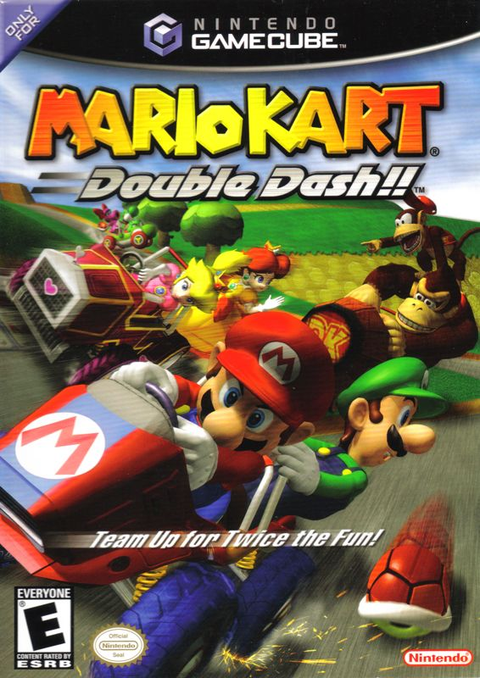
Looking for a different living-room multiplayer purchase? Check Mario Kart: Double Dash!! for Nintendo GameCube at Zypher. It is GameCube software, not an OUYA release or a replacement entitlement. Read the listing’s condition and included contents before choosing your copy.
Shop Zypher for your next game: browse our games, or sell your old games to Zypher. Keep exploring failed-platform history with our OnLive retrospective, which follows a separate streaming service rather than OUYA’s local console and store.
Historical sources, image rights and the native Zypher listing checked October 28, 2026. This is researched history and buying guidance, not firsthand testing or a current price appraisal.