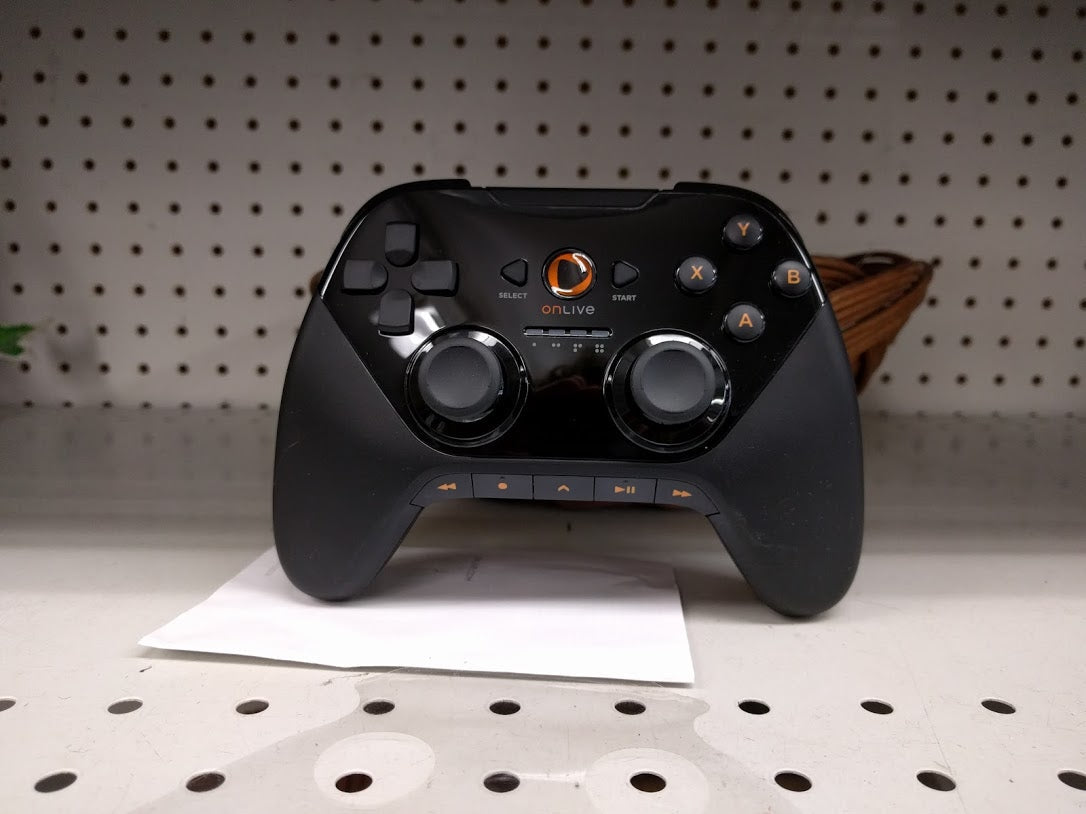
The OnLive MicroConsole looks like something you could tuck behind a television and forget about. That was almost the point. Your expensive gaming machine would live in a data center; this little box would bring its pictures home.
Today, the hardware is easier to find a place for than the service. OnLive ended its consumer game service on April 30, 2015. A used MicroConsole is a piece of gaming history, not a shortcut back into its old library.
OnLive deserves more than a quick “cloud gaming failed” shrug. It launched, survived a corporate rescue, tried a different relationship with players' existing games, then sold technology while the playable service disappeared. Those are different events with different consequences.
The attraction was playing big games on a modest computer
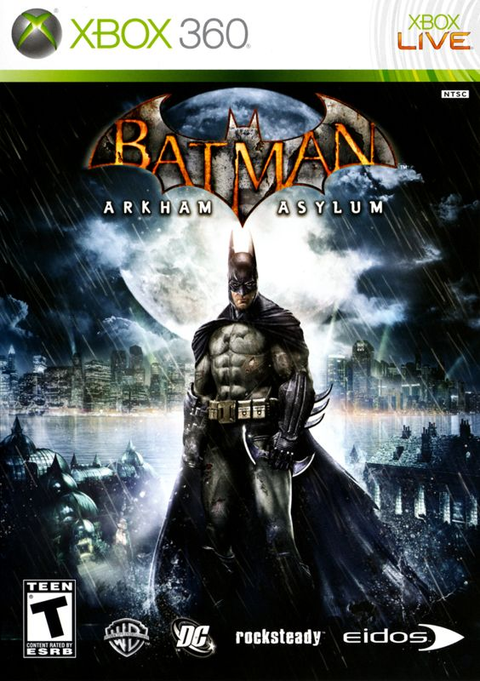
OnLive's June 2010 launch announcement, preserved by eCoustics, described PC and Mac account activations beginning June 17. Its pitch was immediate access to games through broadband, with a MicroConsole TV adapter to follow. The launch list included Batman: Arkham Asylum, Borderlands and other recognizable releases. The linked Zypher listing is the Xbox 360 edition of Batman, not an OnLive entitlement.
The division of labor was the trick: remote hardware ran the game, the player received video, and inputs traveled back. OnLive was selling access to computing power somewhere else. A less powerful local device could therefore be useful without becoming a powerful gaming PC itself.
That made the business proposition more complicated than “tiny console.” In GameSpot's March 2010 launch coverage, the announced service fee and individual game purchases were separate. Promotions subsequently changed the entry offer. Treating one early price as the explanation for the platform's entire life skips the changes that followed.

2012 was a rescue, not the final shutdown
On August 17, 2012, OnLive confirmed that its assets had moved to a newly formed company. The company statement published by The Verge said the services would continue without an expected interruption. Corporate survival and continued player access briefly traveled together.
The funding problem has documentary support, but deserves careful attribution. The background account in a September 2015 Delaware court opinion describes OnLive being unable to raise enough capital to cover operating overhead before its 2012 assignment for the benefit of creditors. That account drew on allegations assumed true for a motion to dismiss; it was not a trial finding assigning blame for OnLive's failure.
Zypher's reading is that the rescue exposes the difference between making a convincing streaming system and sustaining the company behind it. The player can see whether a game starts. The funding needed to keep that experience running is less visible until it becomes everybody's problem.
CloudLift tried working with an existing library
In March 2014, OnLive introduced CloudLift. In PCGamesN's interview with UK general manager Bruce Grove, the company explained how supported Steam games could use Steam cloud saves for streamed play. This did not mean every Steam purchase suddenly worked. Publisher support and the supported-game list still mattered.
The company was also looking beyond its original storefront. Gaijin's March 6, 2014 announcement described OnLive Go as a way to offer instant access to large online games and named War Thunder as an early showcase. Reducing the wait before somebody could start a game remained the selling point.
By 2014, part of the plan involved complementing an existing download library instead of asking players to start from scratch. That made supported games and save transfers central to the offer. The revised plan still needed enough support to keep operating.
Sony bought technology; players did not get a replacement service
In April 2015, the endpoint changed. GamesBeat's original reporting recorded the sale of selected assets, including patents, to Sony and the planned wind-down. Sony's own 2019 investor presentation subsequently placed its acquisition of OnLive intellectual property in 2015 on a cloud-gaming timeline.
That is an afterlife for technology, not a transfer of customers' playable libraries. The shutdown notice and FAQ reproduced by GamesBeat said OnLive PlayPass games would become unavailable after April 30, 2015. It also distinguished Steam games purchased through OnLive: those remained available on Steam. CloudLift save data on Steam was a separate case from data held only by OnLive.

What should a collector actually buy it for?
OnLive's shutdown FAQ stated that its hardware did not work with other platforms. That is the supported baseline. Do not buy an unverified unit expecting it to become a universal streaming box or assume that a familiar-looking controller guarantees modern PC compatibility.
Its surviving value is historical and physical. Look for clear photographs of the exact adapter, controller, packaging and included cables. Ask which accessories are actually present, inspect ports and battery compartments where accessible, and distinguish “powers on” from “can play games.” A glowing light is not a resurrected data center.
For a display collection, completeness and condition can matter. For somebody who wants to play tonight, choose a supported game and platform instead. Our Stadia history covers a different controller afterlife; do not carry its connection options over to OnLive hardware.
Play the games, or collect the experiment
Shop Zypher for games you can put on your shelf. Start with Batman: Arkham Asylum for Xbox 360, or browse Zypher's game collection for your actual system. Check each listing's edition, condition and included items. A console copy does not restore an OnLive purchase or its saves.
Making room for the next collection? Sell your old games to Zypher. Keep the little OnLive box if it belongs in your history display. Buy your next game for the machine that can run it.
Historical feature researched October 26, 2026. Featured controller photograph: John Cummings, CC BY-SA 4.0, unchanged. Hardware photographs are not hands-on testing by Zypher.