Atari Jaguar wanted to be the next leap. The part worth revisiting is how quickly that leap became a warehouse problem. You do not need to settle an argument about bits to understand it. Atari left a fairly blunt account of what went wrong in its own paperwork.
That makes Jaguar an interesting console to investigate today: a machine whose commercial ambition failed, but whose physical design and surviving software still give curious players something specific to explore. The trick is deciding whether you want to play the games, collect the equipment, or do both before your shopping cart makes that decision for you.
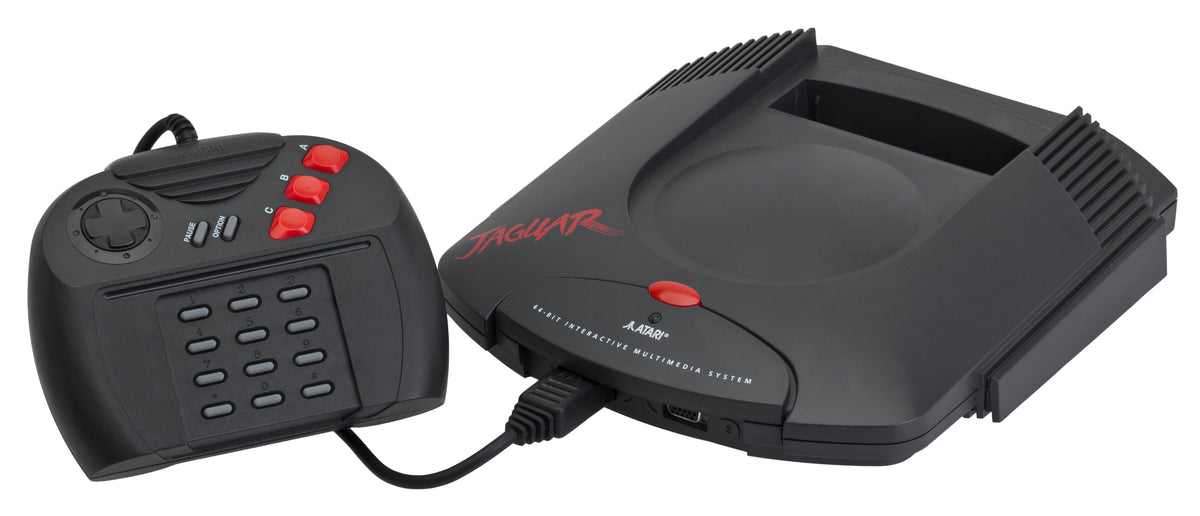
Featured photo: Atari Jaguar with its standard controller, by Evan-Amos, CC BY-SA 3.0. Reproduced without alteration. Photographs illustrate historical hardware, not Zypher inventory.
Atari was aiming past the 16-bit fight
In its 1992 annual report, Atari described a deliberate choice to avoid another 16-bit competitor and pursue its 64-bit Jaguar project. The shareholder message promoted real-time 3D, rich colour and stereo sound, while connecting the forthcoming system to a hoped-for return to profitability.
Read that as a company describing its ambition, rather than a guarantee about every game it would eventually ship. For a prospective player, the appeal was straightforward: skip the ordinary upgrade and buy into something that looked further ahead. That is an exciting pitch. It also leaves a very practical question hanging in the air: what will I actually play on it?

The company named software delays and competition
Atari's 1995 Form 10-K, filed April 12, 1996, says Jaguar reached selected markets in late 1993. It attributes poor performance to delayed software, buyers' uncertainty about future games, and competing Sega and Sony products arriving in 1995.
The same filing reports approximately 125,000 Jaguars sold from introduction through the end of 1995, with roughly 100,000 units still in inventory on December 31. Those are dated company figures, not a final worldwide lifetime total. By late 1995, Atari had decided broad acceptance was unlikely and sharply reduced Jaguar development and marketing. It also said it had placed no console manufacturing orders since mid-1995 and did not intend further manufacturing.
The problem described there is brutally unglamorous: convincing someone to buy the hardware while leaving them uncertain about what comes next. Our reading is that a platform needs confidence as well as capability. A dramatic specification cannot personally deliver next month's games to your house. Very inconsiderate of it.
Start with a game you can name
Tempest 2000 is a concrete starting point: the official Atari 50 listing names it among the playable classics. Cybermorph is another title to investigate, and the cartridge pictured below shows what a physical example looks like. Those give your research an actual destination instead of a vague obligation to appreciate the console.
Watch an ordinary stretch of footage of the exact game and version you are considering. Look at what the player spends time doing. Would you want another half hour of that? For Tempest 2000, compare the available reissue route with the appeal of using original equipment. For a physical Cybermorph purchase, establish the label and contents of the particular copy for sale. The unlabeled archival example below is not a model for a complete collector's copy.

You can investigate the history before buying the hardware
Digital Eclipse describes Atari 50: The Anniversary Celebration as an interactive documentary combining playable games, interviews and archival material. Its official Steam listing identifies Jaguar among the represented platforms. That offers a current research route without requiring an original console purchase first.
Check the actual game list and the edition you are buying. A compilation is a selected collection, not a promise to reproduce every title or every original accessory. Likewise, playing a reissue and assembling a period setup satisfy different interests. Neither needs to impersonate the other to be worthwhile.
For collectors, ask what the sale actually includes
If the original equipment is the attraction, make your questions concrete. Request clear photographs of the console's identification label, the controller, the connections and everything included in the sale. Ask for a demonstration of the intended game on that specific unit. A glamorous console photograph is very good at showing a glamorous console. It is considerably less helpful at proving an unidentified power supply belongs with it.
Separate the condition of the machine from the completeness of the package. Record missing paperwork, packaging and accessories as missing, rather than allowing a familiar console name to stand in for a contents list. For electrical requirements and display connections, consult documentation for the exact unit before purchasing replacement equipment. Do not convert a guess into a compatibility claim.
Jaguar's surviving value is as a playable historical object and a focused collecting interest. That does not require a prediction that its price will rise. Decide which experience you want, establish what you are actually buying, and leave the investment prophecy to somebody else's crystal ball.
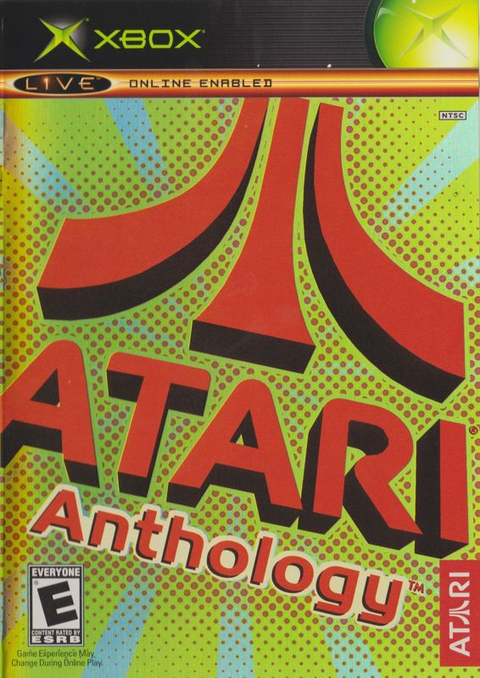
Buy your next retro game from Zypher Trading Video Games. For a different slice of Atari history, browse our listings for Atari: Anthology on Xbox and Atari: Anniversary Edition on PlayStation. These are separate compilations, not Jaguar cartridges or substitutes for Atari 50. Check each listing's platform, condition and included contents.
Making room for another system? Sell your old games to Zypher, or shop our games for something you want to play next.