Hide behind a rock in Halo: Combat Evolved for the original Xbox and part of the damage can go away. Part of it cannot. The shield recharges; the health underneath needs a pickup. Your armor has a recovery plan. The person inside it still has a problem.
That distinction is a useful way back into Bungie's 2001 shooter. Before discussing remasters, remake names or the apparently endless number of products containing Master Chief's helmet, look at what the original game asks you to manage: exposure, equipment and the next opportunity to recover.
This Classic Game Deep Dive focuses on the original Xbox game. Later editions belong in the buying discussion, but their features should not quietly migrate backward into a 2001 disc.
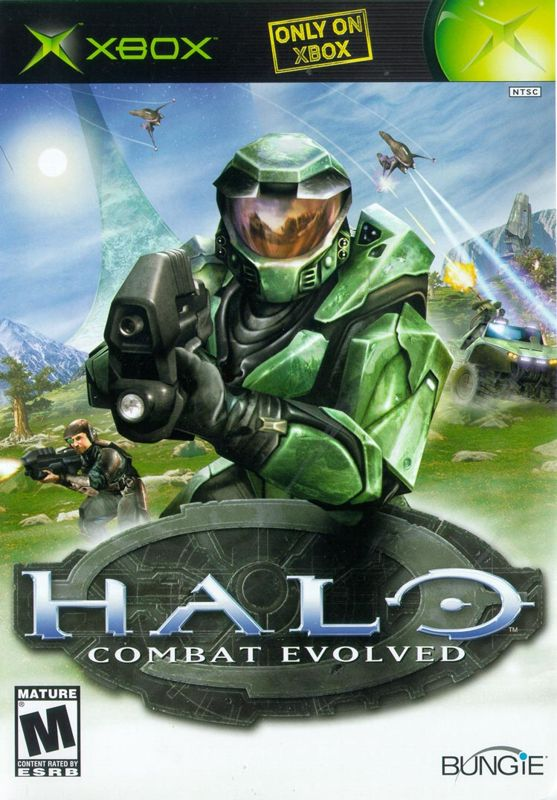
Featured image: complete North American Xbox front cover, displayed without cropping or alteration. Used with permission from Microsoft.
A launch game that made escape feel like arrival
The opening situation puts Master Chief and Cortana aboard the fleeing Pillar of Autumn, then strands the adventure on an alien ringworld. The human military equipment gives you something recognizable to hold while the setting makes the larger situation feel unfamiliar.
That combination is central to the game's appeal. You can understand a rifle, a vehicle and the need for cover without already understanding the civilization behind the landscape. The player has an immediate job inside a much larger mystery. A science-fiction setting becomes more inviting when it gives you a practical question before asking you to memorize its proper nouns.
For a return visit, pay attention to that contrast. The military vocabulary supplies a way to act; the alien setting supplies reasons to keep looking. The first Halo's identity includes both. Reducing it to its most famous gun leaves a remarkable place outside the frame.
The important part of the suit is the gap between two meters
The original Xbox instruction manual describes shield recovery when you are no longer taking damage and health that does not refill automatically. Those rules create two different consequences for a mistake. Losing shield strength can be a temporary setback. Losing health leaves a problem to carry forward.
Zypher's reading is that this makes retreat more interesting than simply interrupting the shooting. A useful piece of cover buys time, but it does not erase everything that happened before you reached it. Returning with a charged shield and little health is a different decision from returning in good condition.
Think about the exit before starting the exchange. Where can you break the enemy's view? What happens if another opponent reaches that spot? Is the next push worth the health it might cost? These questions give a patch of terrain meaning beyond its appearance. A rock can be the most valuable piece of equipment you did not have to pick up.
This is also why the original deserves attention on its own terms. Calling Halo simply a game with regenerating protection misses the persistent damage underneath. The difference is small enough to explain in a sentence and large enough to change how an encounter is approached.
Two weapons make the discarded one matter
The manual limits the player to two carried weapons, with grenades separate. That restriction makes a replacement a choice about what to give up. You are selecting a pair of answers, rather than collecting every answer and scrolling through them later.
Consider the difference between keeping a tool for distance and leaving room for something useful nearby. A second weapon can cover a weakness, extend a strength or become dead weight when its ammunition runs out. The interesting question is what your current pair lets you attempt next.
The M6D pistol's scope is documented in that same manual. Its presence makes the familiar “pistol means emergency backup” assumption worth dropping immediately. Read a weapon's actual job before deciding what its silhouette is allowed to do. This particular sidearm did not attend the meeting where pistols agreed to be modest.
The limitation also gives the ground around a fight a second purpose. A dropped weapon is a possible change of plan. You do not need to label every swap an inspired tactical masterstroke. Sometimes the useful plan is simply to stop carrying the thing that has nothing left in it.

Grenades and vehicles make the space part of the decision
The original instructions distinguish a fragmentation grenade that can be bounced into awkward places from a plasma grenade that attaches to a soldier or vehicle. Those are different ways to influence where a threat can safely remain. A clear shot is useful; a route for a grenade can be useful for another reason.
Our interpretation is that Halo's combat becomes more satisfying when those tools are considered together. A weapon, a grenade and a retreat route are parts of one decision. Focusing exclusively on the crosshair can make the rest of the available information seem decorative.
The Warthog introduces another separation of jobs. Its driver and rear gunner occupy different positions, and the manual specifically warns about rollovers during hard cornering. Driving gives somebody control over where the fight travels. It also gives them custody of everyone else's confidence. Try to deserve it.
A vehicle is therefore more than a bigger damage number. It changes the player's relationship with distance and with another occupant. The terrain now has to be read as a route, with enough attention left for the people trying to interrupt it. That is a different kind of responsibility from walking toward the next target.
The original multiplayer promise was local
For the Xbox release, the manual describes two-player campaign cooperation on one console, split-screen competition and a separate System Link option. Do not turn that into a promise of original Xbox Live matchmaking or networked campaign co-op. The mode and the connection are separate checks.
That makes the original game an appealing physical object for a specific kind of session: get the software, hardware and people together, then use the modes the disc actually provides. It also creates some practical shopping questions. One game for a shared console and a collection of networked consoles are different equipment lists.
Microsoft's North American Xbox launch announcement included Halo on November 15, 2001. Returning to that release means returning to a game designed for that machine and its local arrangements. The historical appeal and the setup requirements come in the same green case.

Buying the first Halo: read the rest of the title
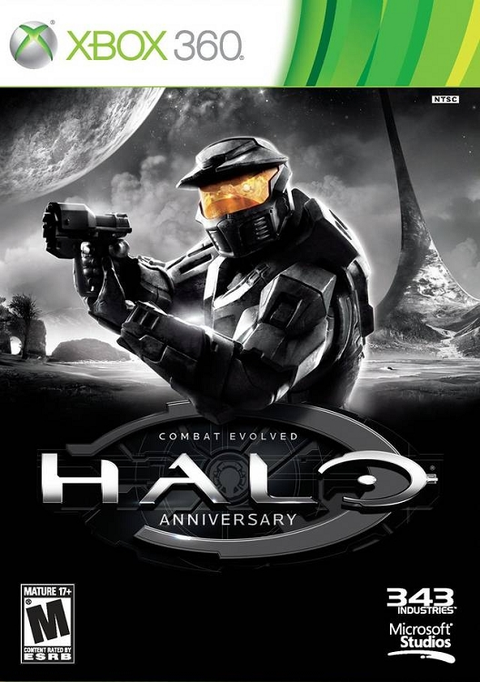
Zypher lists the original Xbox Halo: Combat Evolved, Halo: Combat Evolved Anniversary for Xbox 360 and Halo: The Master Chief Collection for Xbox One. These are different products. Match the platform and release to the experience you want before comparing condition options.
The 2011 Anniversary manual describes a remastered campaign and identifies the competitive multiplayer maps as Halo: Reach maps. That multiplayer component is not a reproduction of the original Xbox competitive game. Anniversary is worth considering, but the subtitle carries actual differences.

Current service information matters more than an old Xbox Live logo. Halo Support's legacy-service notice lists campaign, split-screen and LAN as surviving features for the Xbox 360 Anniversary release after the January 13, 2022 changes. It separately says MCC uses different services that were not affected by that shutdown.
MCC includes Combat Evolved Anniversary, but it should not be described as an exact copy of original Xbox behavior. Halo Support acknowledges differences involving graphics and the LAN networking model. If period-specific behavior is the point of your collection, that distinction is relevant.
One more name belongs in this comparison: Halo: Campaign Evolved was introduced as a ground-up remake, with expanded gameplay. Its name should not be treated as another label for either the original Xbox disc or the 2011 Anniversary release. Check its own product information separately.
Put the right Halo on your Zypher shelf
Buy your next Halo from Zypher. Choose the original Xbox release for that edition of the game, or compare the Anniversary and MCC listings above for their respective platforms. Check the selected condition and included contents. A case photo explains which product is being discussed; it does not promise that every available condition option includes a case or manual.
Before committing to an older copy, ask for the checks that matter to your plan: disc reading, the intended console, the desired local mode and any additional controllers or connections. Collecting a specific release and arranging a multiplayer evening are both good reasons to buy. They simply reward different questions.
Ready for the next campaign? Browse the games at Zypher. You can also sell your old games to Zypher before choosing another copy. For a different set of Spartan tools, read our Halo 3 feature.
Sources, edition distinctions and native Zypher listings checked October 28, 2026. This is researched design analysis and ownership guidance, with no claim of a new hands-on playtest. Complete Microsoft box images are used under the Microsoft box-shot guidelines; no endorsement is implied. Hardware photographs are credited individually. No game screenshots from another release are presented as original Xbox captures.