The interesting trick in Gears of War co-op is how often the series changes your assignment. In Gears of War 2, Horde asks a squad to survive. Gears of War 3 expands the defensive toolkit, then Beast hands you the enemy's job. Gears 5 adds Escape, where finding a nice position to hold is no longer the whole answer.
That is a better way to understand these modes than treating them as interchangeable piles of enemies. They create different arguments about where to stand, what to protect and when to move. This is a look at selected co-op designs across those three games, rather than an exhaustive franchise history or a promise about today's online lobbies.
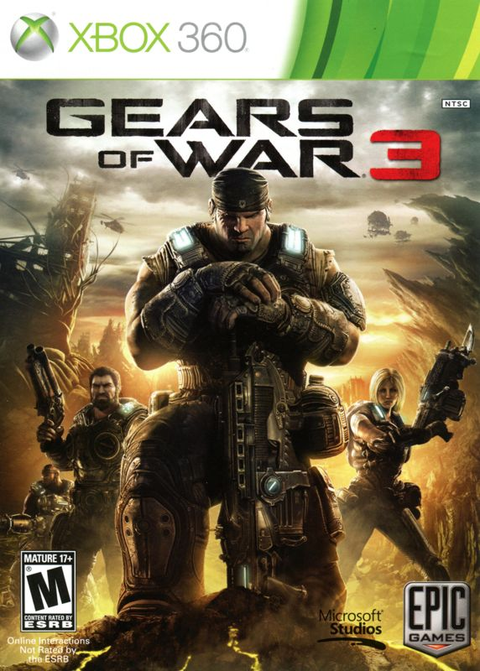
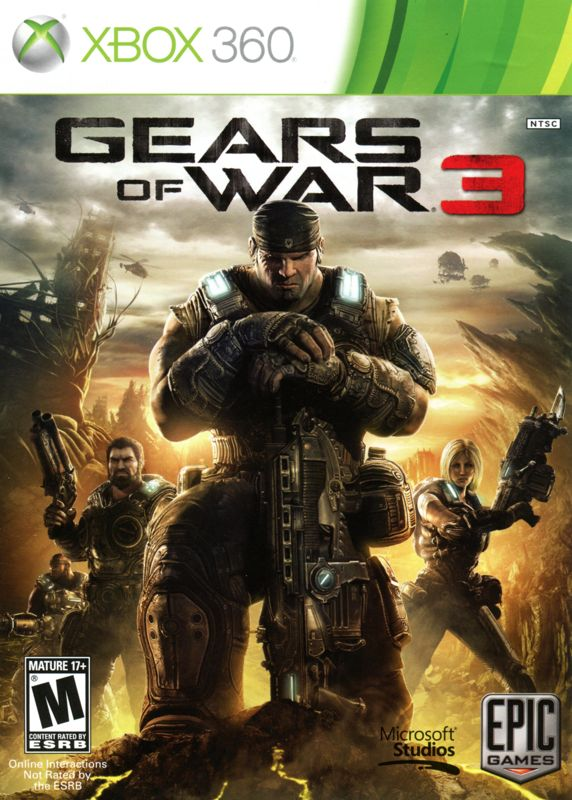
Featured image: complete Gears of War 3 Xbox 360 box front. Used with permission from Microsoft. Zypher XP is an independent store publication.
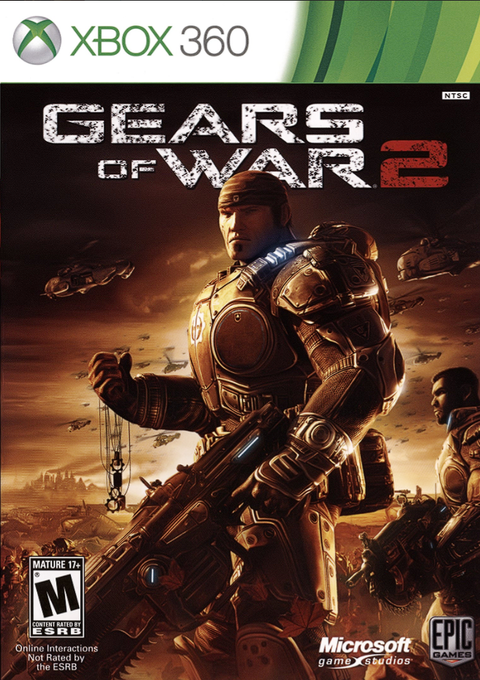
Horde in Gears of War 2: make the position work
The official Gears of War 2 retrospective describes Horde's fifty waves and escalating Locust opposition. The appeal of that format is easy to explain: you have to keep solving a battlefield that refuses to stay solved.
Our design read is that survival changes the value of an ordinary bit of cover. In a short fight, a wall is useful because it gets you through the next exchange. Across repeated waves, the same wall becomes part of a team plan. Who can see the approach? Who can help someone who gets into trouble? What happens when everyone watches the obvious lane?
Those questions turn positioning into a shared responsibility. A player can be individually busy and still leave the squad with a terrible arrangement. Shooting something is not automatically the same as helping. Gears provides an especially loud way to discover that distinction.

Gears of War 3: defending becomes a construction problem
The official Gears of War 3 page highlights Horde's barriers, turrets and boss waves. That matters because defensive equipment changes what the squad is organizing. You are thinking about a position you can help shape, as well as the weapons in your hands.
In editorial terms, fortifications make the group's plan tangible. A barrier says, “We expect trouble here.” A turret says, “This approach deserves attention.” Whether the plan is sensible is another matter. Equipment gives an idea a physical form; it does not give the idea a free pass.
That distinction is useful when comparing co-op games. More things to buy or place do not automatically create better teamwork. The interesting part is whether those tools make players coordinate their choices. Gears of War 3's defensive additions give a squad more ways to express its priorities, including the embarrassing possibility of discovering it has several incompatible priorities.
Beast: now you are the problem coming through the door
The same official page describes Beast as five-player co-op in which players control the Locust and fight human opposition. This is a more interesting change than simply making another Horde variant tougher. It reverses which side of the encounter the team occupies.
Our interpretation: Horde teaches you to look at a defensive position and ask how to preserve it. Beast invites the opposite question: how do we break that arrangement? A familiar battlefield problem becomes a different kind of teamwork exercise when the squad is responsible for applying pressure.
That reversal is why Beast deserves attention in a series discussion. A good co-op idea does not always need a bigger map or a longer progression ladder. Sometimes it needs to hand the same group a different responsibility. The people who were arguing about protecting the line now have to agree on how to get through one.
Gears 5 Horde: a base can become a decision, not a destination
Xbox Wire's 2019 Horde reveal described collecting power, building defenses and using Power Taps that encouraged teams to move their bases for greater rewards. It also introduced Jack as a flying support option able to assist allies and take control of enemies.
Read that as a launch-era design snapshot. We are not presenting every 2019 character rule as the current system: the present official Gears 5 page describes choosing a character and a class separately.
The broader design point is the tension between security and opportunity. Once a team has invested in a position, moving becomes a real discussion. Is the extra reward worth disturbing something that works? Support roles add another consideration: contribution can involve keeping a plan functioning, rather than competing to be its most visible shooter.
Escape: stop treating every room like your new address
Xbox Wire introduced Escape as three-player co-op attacking enemy hives from within. The Coalition's launch-map breakdown makes the emphasis on routes concrete: The Mines offers a path choice, while The Gauntlet puts three major fights ahead of players with Venom behind them.
Our reading is that Escape changes the squad's relationship with space again. Horde makes staying effective the recurring problem. Escape makes progress part of the problem. A defensible corner can be useful without being somewhere the team should remain.
That is a meaningful difference for a regular co-op group. The player who naturally wants to establish control and the player who wants to keep pushing may suddenly have to renegotiate their habits. The game has changed the assignment; repeating yesterday's argument louder will not fix it.
Which Gears co-op fits your group?
For a group comparing these games, start with the experience you want to organize: repeated defensive survival, a defense with more tools, coordinated attacks as the Locust, or a route through hostile territory. Those are distinct reasons to revisit Gears, even before campaign preferences enter the discussion.
Then check the actual edition and setup. The Zypher listings linked here are Gears of War 2 and Gears of War 3 for Xbox 360, and Gears 5 for Xbox One. A mode's squad size is not a statement about local split-screen support. Check the exact game's platform requirements before arranging a session, and do not treat an old launch announcement as a current matchmaking or subscription guarantee.
Build your next Gears session with Zypher
Compare Zypher's Gears of War 2 Xbox 360 listing, Gears of War 3 Xbox 360 listing and Gears 5 Xbox One listing. Read each listing's edition and condition details before ordering. These links do not promise unused bonus codes or expansion access.
Clearing space for the next squad night? Sell your old games to Zypher through the Buy List. Check what Zypher is currently buying before sending anything in.