Ninja Gaiden: Ragebound gives you a useful reason to look before you swing. The enemy that looks easiest to remove may be the one that powers your next attack. Ignore that relationship and a crowded screen becomes a queue of separate problems. Read it correctly and one takedown can prepare the next.
This guide focuses on Kenji and Kumori’s combined toolkit, particularly the difference between earning Hypercharge, using ranged attacks and choosing upgrades. It covers Ragebound, the side-scrolling game developed by The Game Kitchen and released on July 31, 2025, as recorded in Dotemu’s official press kit. It is a different game from the original Xbox Ninja Gaiden Black.
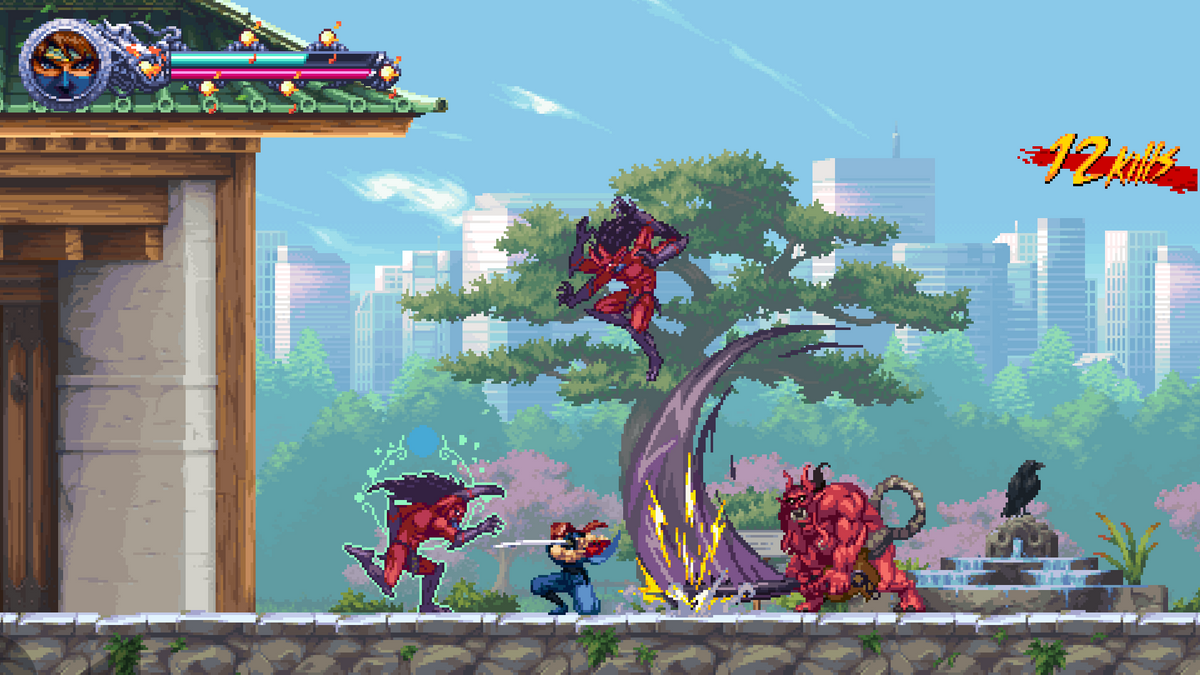
Featured image and inline screenshots: official Ragebound press captures supplied by Dotemu. © KOEI TECMO GAMES CO., LTD. Developed by The Game Kitchen, published by Dotemu. Images are unmodified; capture platform and build are unspecified.
Read the aura before choosing the attack
Stephen Tailby’s release review of the PS5 version explains the important color distinction: defeat a blue-aura enemy with melee, or a pink-aura enemy with Kumori’s kunai, to gain Hypercharge. The resulting power boosts the next attack for a limited time and can dispatch a tougher enemy in one hit.
The useful habit is to identify both ends of that exchange. Which enemy provides the charge, and which threat deserves the powered attack? Those are two decisions. Treating every enemy as an invitation to press the same button can waste the opportunity to make the second decision.
Our recommendation is to read the nearby group as a sequence: acquire power, then spend it deliberately. That does not mean every scene has one perfect route. It means a glowing enemy is information, not decorative mood lighting for a demon with excellent branding.

Two ninjas give you different ways to reach a target
In his developer explanation of Kumori, producer and game director David Jaumandreu distinguishes Kenji’s close-range katana from her ranged kunai. Their fusion combines abilities without stopping the action to switch characters.
For a player, the point is reach. Before closing a gap, consider whether the ranged option already addresses the target. Before firing, consider whether melee is the input that earns the charge you want. The weapon choice and the enemy’s aura belong to the same decision, rather than two unrelated systems to remember.
This also changes what “fast” should mean. A quick response that uses the wrong tool can create more work. Aim for a clear choice made early enough to act on it, rather than frantic corrections made after enemies have crowded your position.

Keep the resource names separate
Jaumandreu describes Ki gathered from enemies powering Kumori’s Spider Weapons, including the Kama and Chakram. He separately explains that Hypercharged defeats build toward a powerful Ragebound attack. These are connected parts of the toolkit, not permission to treat every glowing meter as the same resource.
When reading an equipment description, ask what it changes: the attack you can perform, the resource it consumes, or an existing effect. That makes a purchase easier to judge. A powerful-sounding technique is only useful to your current plan if you understand when it is available and what you are spending.
The developer also identifies Golden Scarabs as a route to upgrades, with Kenji’s talismans providing passive benefits and Kumori’s arts expanding her options. Read those descriptions around a specific goal, such as improving a favored attack, rather than expecting a new purchase to solve every difficult section.
Kumori’s solo sections have a different pressure
The same developer account describes Demonic Altars allowing Kumori to act in physical form in an alternate dimension, exposing hidden routes. Those sections operate under a time limit. Recognizing that change is more useful than assuming the fused pair’s usual arrangement continues everywhere.
Our advice is to identify the destination and the available route as soon as the section begins. The task now includes reaching an exit in time, so an interesting corner and the immediate objective can compete for attention. Follow the section’s actual instructions rather than turning every detour into an unplanned expedition.

Momentum is a design goal, not a command to panic
In the team’s original design introduction, Jaumandreu describes the work on transitions and move cancellations needed to connect movement, attacks and evasions. The aim was responsive action across ground, walls and air.
Zypher’s reading is that the satisfying part is connecting decisions. The aura tells you which attack matters; the weapon determines your reach; the next target gives the charge a purpose. That is a more useful way to approach the speed than treating every interruption as proof that your reflexes have retired.
If you want assistance, Tailby’s PS5 review documents options to reduce game speed and incoming damage and disable knockbacks. Use the settings that suit the session. Learning how the toolkit fits together and choosing a comfortable difficulty can happen in the same playthrough.
Put the right Ninja Gaiden on your shelf
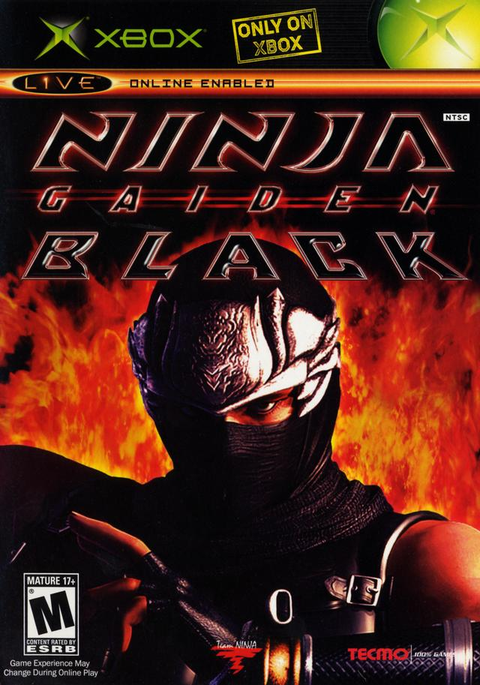
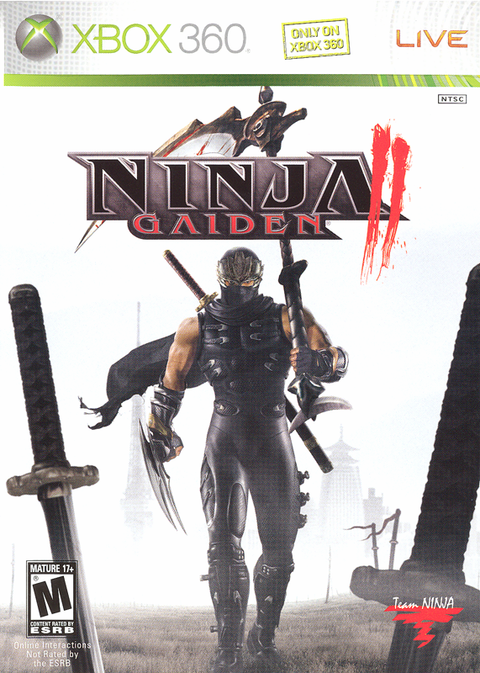
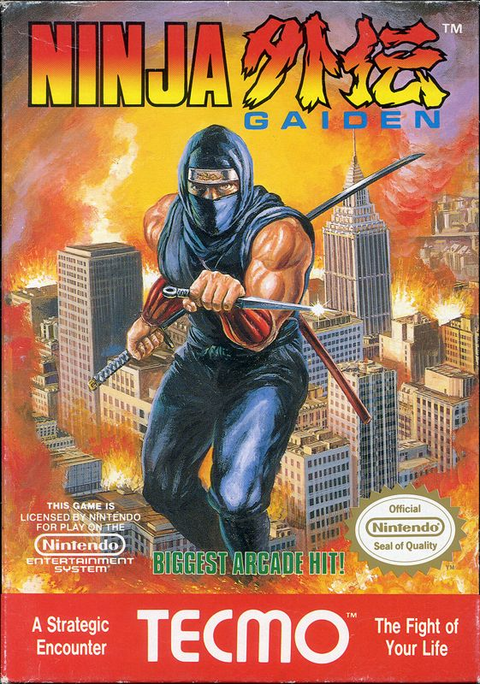
Buy your next physical game from Zypher Trading Video Games. For other Ninja Gaiden releases, explore Ninja Gaiden Black for Xbox, Ninja Gaiden II for Xbox 360 and Ninja Gaiden for NES. These are separate games, not Ragebound editions or bundles. Check the selected copy’s platform, condition and included contents.
Shop Zypher’s games, or sell your old games to Zypher when the next adventure needs shelf space.