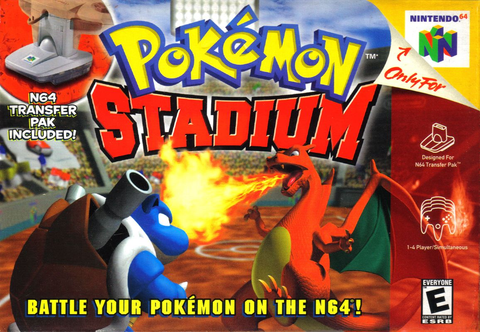
The team on your Game Boy cartridge had somewhere else to show off in Pokémon Stadium for Nintendo 64: the creatures associated with your handheld save could become the competitors on the television.
The connection changed what the handheld cartridge represented. It was something to bring to a match, with a team already attached to it. Stadium gave that preparation another destination. For a collector revisiting the original hardware, understanding that relationship is more useful than treating the Transfer Pak as a mysterious lump included in somebody’s bundle.
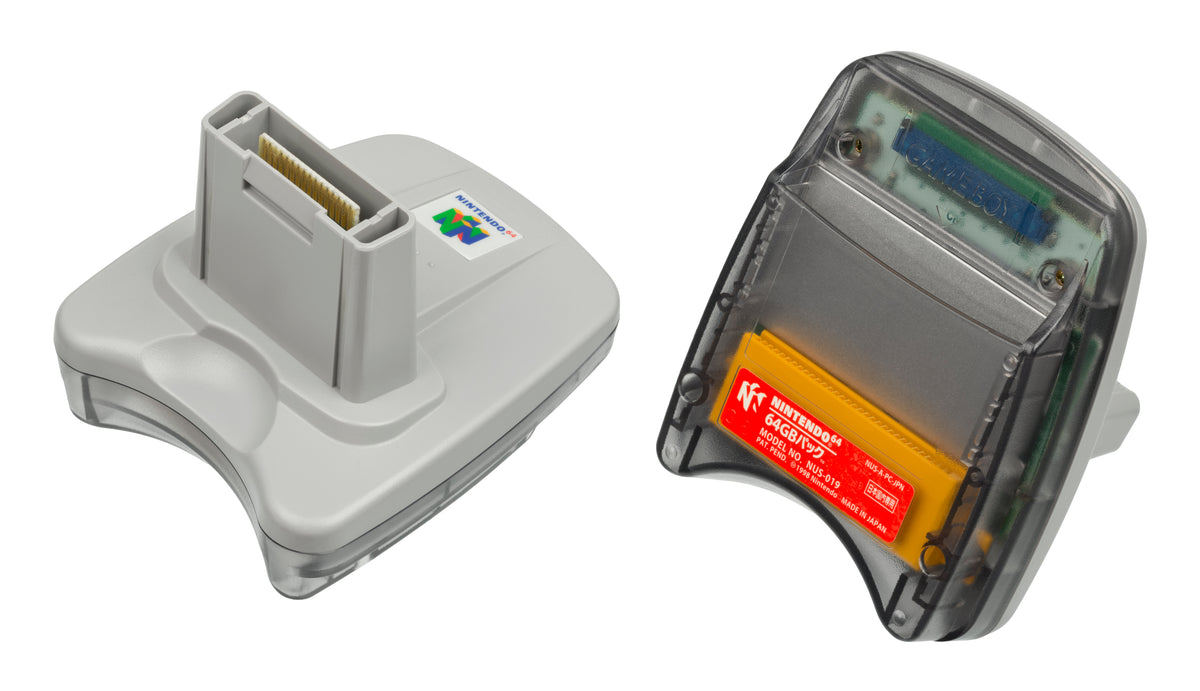
Featured photograph: two views of an N64 Transfer Pak, showing its cartridge slot and controller connector. Photo: Evan-Amos, public domain. These are hardware reference views, not pictures of Zypher’s individual stock.
The handheld cartridge became part of the console game
Nintendo’s original Australian English-language Stadium instruction booklet describes connecting Pokémon Red Version, Blue or Yellow through the Transfer Pak and N64 controller. That lets the player select Pokémon saved on the handheld cartridge for battle.
Our reading of the design is that this makes preparation personal in a way a selection menu alone cannot. A familiar species and a particular saved Pokémon can look like the same choice from across the room. For the person carrying the cartridge, they can mean different things. One is an available competitor; the other belongs to the collection they brought.
That is a strong reason to care about the link even if you are not interested in buying every accessory Nintendo ever produced. The extra hardware has a specific job. If using your own cartridge’s team is the attraction, the connection is part of the experience you are choosing.

Rentals keep the door open
The original manual also provides Rental Pokémon, allowing entry into the Cups without a personally trained collection. It permits mixing rentals with your own Pokémon.
That keeps a battle night from becoming a hardware inspection at the door. The player who arrives without a handheld save can still have a reason to pick up a controller. Meanwhile, the person bringing a cartridge gets an additional choice. The hardware link adds a route into the battle instead of being the price of admission to every contest.
For a present-day buyer, those are two sensible ways to approach Stadium. You can want the battle game first, or you can want to reconnect it with a compatible handheld collection. Neither goal requires pretending you have the same equipment list. Decide which evening you are trying to assemble before shopping for the pieces.
Registration is different from handing over your Pokémon
Registering a team lets Stadium use it later without the Game Boy Game Pak present. Nintendo’s manual explains that the Pokémon remain on the handheld cartridge.
That distinction makes the console feel like another place for the team to appear. It also gives a collector a useful question to ask: are you interested in a registered lineup already on a used Stadium cartridge, or in establishing the link with your own game? Those are different experiences, even when both lead to the same battle screen.
Existing save data should therefore be treated with care. A secondhand cartridge may carry choices made by a previous owner. Ask what is present before clearing anything, and make your own plans around the game you actually receive. An unfamiliar save is not automatically disposable just because its team was not yours.
GB Tower points the connection back toward the adventure
GB Tower allows play of the Game Boy Pokémon game on the N64. The original booklet warns against turning the power off while its saving message is displayed.
That reverses the appeal of the link. Bringing the team into Stadium makes the handheld collection useful in a console contest. Returning to the handheld game through the television makes the adventure itself part of the living-room setup. It is an unusually direct relationship between owning the small cartridge and using the larger machine.

Choose the version around the feature you want
Nintendo’s April 18, 2023 announcement describes the Switch Online release’s Cups, Gym Leader Castle and nine Kids Club minigames, while explicitly excluding transfers from Game Boy titles. That is a documented edition difference, not a newly announced change.
Someone mainly interested in the battles or minigames has a different priority from someone trying to use a particular physical save. The original cartridge connection is the subject here. Do not assume that finding the same title on a newer platform also recreates its relationship with your old Game Boy games.
For an original-hardware purchase, ask for a demonstration of the intended connection, check the exact game and region, and read the included contents. Nintendo’s booklet says to turn the N64 off before inserting or removing the Transfer Pak or Game Boy cartridge. Keep that instruction with the setup. An accessory is more useful when its operating notes survive alongside it.
Bring the right Pokémon games home from Zypher
Buy Pokémon games from Zypher Trading Video Games. Check our Pokémon Stadium for N64 and Pokémon Red Version for Game Boy listings. Review each copy’s condition, region and contents. A game listing does not imply an included Transfer Pak, controller or other game.
Shop Zypher’s games, or sell your old games to Zypher. For a separate collecting question, our Pokémon cartridge collecting guide covers condition and authenticity considerations.
Sources, original-document text, photograph permissions and native Zypher listings checked November 4, 2026. Original-hardware details follow Nintendo’s 2000 Australian English-language Stadium booklet. The 2023 Switch announcement is cited for its stated transfer limitation, not as a promise about every later service revision. Design observations and buying priorities are Zypher editorial interpretation.