Game Boy Micro looks like Nintendo tried to fit a Game Boy Advance into the space left over in your pocket. That was the attraction. It was also a difficult reason to buy another handheld: Nintendo had to sell the pleasure of holding this particular object, not a new library of games.
The familiar Game Boy name could get attention. Explaining why this tiny version deserved money was the harder part. Nintendo eventually acknowledged that problem itself.
Featured photograph: a visibly worn Game Boy Micro, by Evan-Amos, CC BY-SA 3.0. Full photograph reused without compositional changes. Hardware supplied for the photograph by Video Games New York. This is an illustrative unit, not Zypher inventory.
The pitch was a smaller, more personal Game Boy
Nintendo's August 17, 2005 US announcement, preserved by Nintendo World Report, announced national shipping beginning September 19 at a $99.99 MSRP. Those are historical launch details, not a current price. The pitch emphasized pocketable hardware, a two-inch screen and removable faceplates.
The Japanese hardware page records a September 13, 2005 launch there and describes an aluminum body, backlit display and five brightness settings. The Micro gave an existing platform a different physical identity. A cartridge collection could be familiar while the machine holding it felt like a new purchase.
A redesign can appeal to someone who already owns the platform. Nintendo was asking the hardware itself to do a lot of the selling. A photograph can show small. It cannot put the controls in your hands.
Nintendo explained the sales problem in unusually plain terms
In Nintendo's 2006 management briefing, question 17, Satoru Iwata said Micro sales had missed expectations. He described promising initial interest in Japan, followed by Nintendo concentrating its marketing energy on DS toward the end of 2005. In his assessment, that cost Micro momentum.
He gave a separate explanation for overseas markets. People who physically handled Micro were impressed, but consumers judging it through advertising did not get that same experience. Nintendo had expected a more conventional new-Game-Boy marketing approach to work and had not communicated the product's value effectively. Iwata also acknowledged that Nintendo had overestimated its prospects.
Iwata was describing a gap between demonstrations and purchase decisions. The people who got to handle Micro were experiencing something its advertising struggled to communicate.
Zypher's read: Micro had an awkward selling job. Its central advantage was physical, while the sales message had to reach people who could not hold it. Meanwhile, the same company had another handheld demanding attention. “Look how small this is” needed to become a convincing answer to “why am I buying it?”

The Game Boy name needs a compatibility footnote
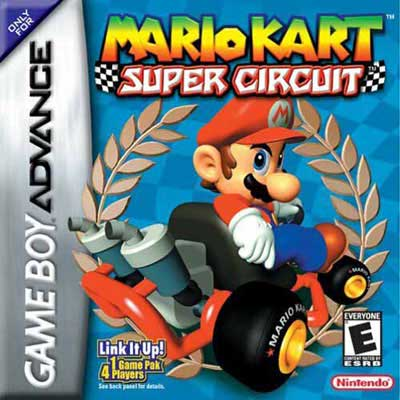
The original US instruction booklet supports Game Boy Advance Game Paks and excludes original Game Boy and Game Boy Color cartridges. A GBA game such as Mario Kart: Super Circuit belongs to the right cartridge generation. A collection built around older Game Boy games needs a different hardware decision.
Multiplayer was possible, but the connections matter. Nintendo documented a Micro-specific link cable, a Micro Wireless Adapter and a converter arrangement for linking to GBA or GBA SP hardware. That does not mean every accessory works directly or every game supports every connection. Check the individual game's instructions before buying a pile of cables that merely look promising.
Our Game Boy compatibility guide handles the wider system comparison. Micro's place in this story is narrower: an attractive form factor does not erase the practical limits of the version you are buying.
What survives for players and collectors?
Micro still offers a specific collecting proposition: own and use this compact interpretation of GBA hardware. You do not need to turn a disappointing commercial result into a claim that the machine was worthless. You also do not need to turn that disappointment into a rarity certificate.
For a buying decision, separate the things that make a unit appealing from the things that make it usable. Ask for clear photographs of the screen, faceplate, controls, connectors and rear markings. Ask what functions were tested. A nice shell and a successful power-on are different pieces of evidence.

The manual specifies the Micro's OXY-002 AC adapter and warns that it is not interchangeable with the listed older Game Boy, GBA, SP or DS systems. Confirm the appropriate charging equipment and region before purchasing. Its original battery-life specification is not a test result for a used unit today.
Micro makes the most sense when its particular size and design are what you want. If those are secondary to library coverage or your existing accessories, start with those requirements. Collect the hardware because you want to use or appreciate it, not because a seller discovered the word “investment.”
Put the GBA shelf to work with Zypher
Buy your next handheld game from Zypher Trading Video Games. Check our Mario Kart: Super Circuit listing for the actual condition and included contents, or shop Zypher's games. A game listing does not include a Micro, charger or multiplayer accessories unless it explicitly says so. Making room for the next shelf project? Sell your old games to Zypher.
Sources, image licenses and product listing checked November 4, 2026. Buying suggestions and the interpretation labeled above are Zypher editorial judgment. No current valuation, production-run estimate or future-price claim is implied.