
Buying an Xbox One was once also buying a Kinect. At the console's 2013 reveal, Microsoft made its new sensor part of every system. A year later, it announced an Xbox One without one. By the next hardware redesign, even the dedicated Kinect socket was gone. Those decisions trace how an ambitious interface became an accessory that players had to make a deliberate effort to keep using.
Kinect's history is useful because the original idea remains easy to understand: let a camera read a player's movements, then build games around the body. The harder question was how far that idea should reach into the rest of Xbox.
The games made the invitation clear
Kinect for Xbox 360 reached North American stores on November 4, 2010. Microsoft's launch announcement emphasized movement and voice input, with Kinect Adventures included alongside the sensor and 17 games planned for the holiday lineup.
The announced games gave that pitch concrete shapes. Dance Central asked players to learn dance routines. Kinect Sports translated activities including bowling and table tennis into physical gestures. Kinect Adventures built challenges around jumping, ducking and reaching. Those are distinct uses for motion tracking: the player can understand why the game needs to see them.
The camera matters differently to each design. In a dance routine, following the player's body is the point; in an obstacle course, dodging becomes a command. Revisiting Kinect through those mechanics helps explain what it offered before the Xbox One strategy gave it a much broader assignment.

Xbox One gave the sensor a much bigger job
At the May 21, 2013 Xbox One presentation, Microsoft showed a living room organized around voice commands, identity recognition and quick movement between games, television and applications. Kinect was meant to help operate the system itself. The company said a new Kinect would be paired with every Xbox One.
Putting it in every box changed the proposition. A developer could plan around that shared piece of hardware, and Microsoft could demonstrate console features with the expectation that an owner had the sensor. Players who primarily wanted conventional gamepad games were also buying into that package.
Our reading is that this expanded the burden on Kinect. A specialist game can justify its camera with one compelling activity. A standard console component needs to justify its place across many different players' habits.
The decisive change was what came in the box
On May 13, 2014, Xbox announced a console option without Kinect, launching June 9 at a US price of $399. The announcement framed the change around feedback and choice, while saying Kinect remained part of Xbox's vision and that the premium Kinect bundle would continue.
This was a concrete retreat from universal inclusion. Once new Xbox One buyers could choose a system without the camera, its presence could no longer be assumed across the expanding audience. A Kinect-dependent game now asked some owners to obtain an additional accessory.
That creates an understandable problem for an optional interface: a player needs a reason to buy the hardware, while a game built around it needs players who own it.

The next consoles made the distance visible
When Xbox One S arrived in August 2016, Microsoft removed the dedicated Kinect port. Its announcement connected that change to the smaller case and internal power supply. Kinect for Xbox One could still connect through the USB Xbox Kinect Adapter, but using it now required another part.
The distinction became sharper in the July 2020 Series X compatibility plan. Microsoft's promise to bring Xbox One games forward explicitly excluded games that required Kinect. The same announcement discussed carrying Xbox One controllers into the new generation. Compatibility was being drawn around particular kinds of input, not simply the name printed on a game's box.
What collectors should preserve
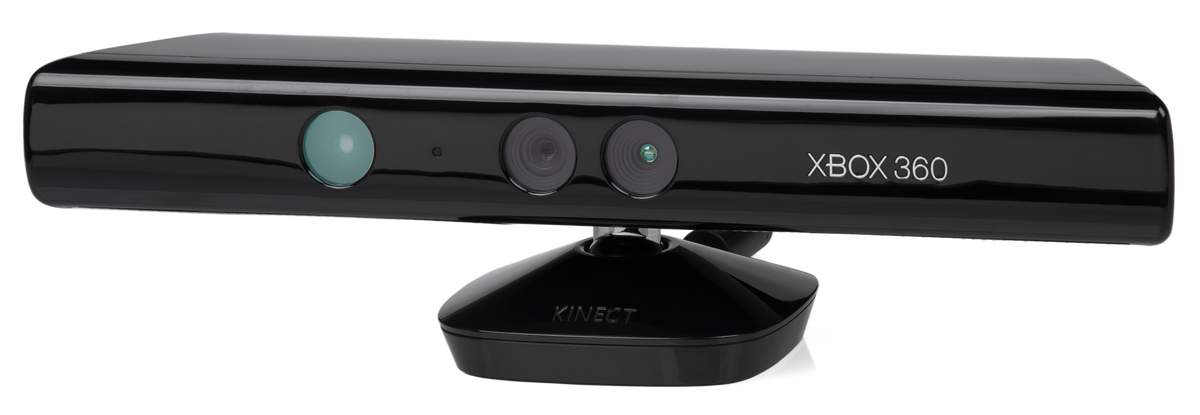
A Kinect collection needs its input hardware as well as its software. Keep the console generation, exact sensor, required connection and game requirements together in your records. The Xbox 360 launch hardware pictured at the top is distinct from the Kinect designed for Xbox One; the One S adapter announcement concerns the latter.
Test the actual combination before treating a setup as complete. A console reaching its dashboard does not establish that the camera works inside a particular game. Likewise, a general backward-compatibility claim should never substitute for checking a game's special accessory requirements.
Kinect's Xbox story leaves a specific preservation problem: some games depend on a way of interacting that later console plans did not carry forward. Keeping those experiences available means retaining the physical chain that makes their movements meaningful. The useful question for an old sensor is which game and system it can still serve.
Image credits
- Featured image: original Xbox 360 Kinect sensor, photographed by Evan-Amos and released into the public domain, via Wikimedia Commons. Source transparency preserved.
- Xbox One console and controller: Evan-Amos, public domain, via Wikimedia Commons. The sensor is not shown in this photograph.
- Xbox One controller: Evan-Amos, public domain, via Wikimedia Commons. This controller detail is the existing Commons derivative; Zypher made no additional crop.
Published as part of Zypher XP's WTF Happened To...? series. This retrospective draws on the dated Microsoft and Xbox announcements linked above, checked October 10, 2026.


