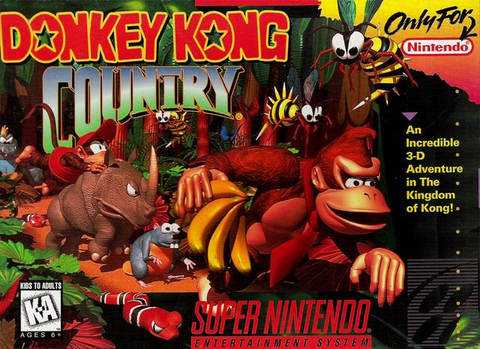
Two controllers, two Kongs, one very reasonable expectation that both people will be playing at once. Original SNES Donkey Kong Country has other plans. Its two-player modes share control by taking turns. Choosing between Team and Contest decides whether you are working together or competing over progress.
Here is how to set expectations before someone spends the evening pressing buttons on a controller that is waiting for its turn. This guide covers the original Super Nintendo game. Keep its rules separate from other games and editions carrying the Donkey Kong Country name.
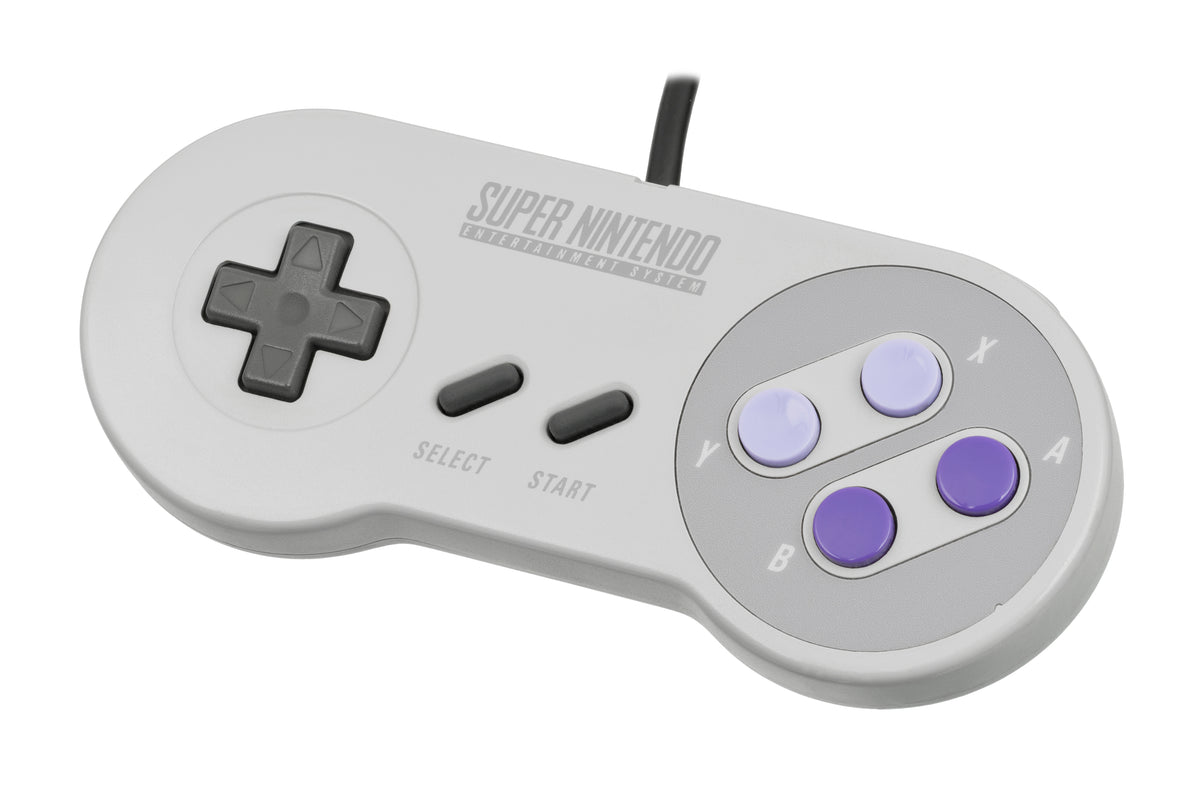
Featured hardware reference: a North American Super NES controller, photographed by Evan-Amos and released into the public domain. The photograph identifies the original button layout; it is not a gameplay capture or an included accessory.
Team means sharing the adventure
Page 8 of Nintendo's original instruction booklet describes Two Player Team as alternating control, with one person controlling Donkey Kong and the other Diddy Kong. You cooperate through the game, rather than steering both characters simultaneously.
Choose this when the appeal is tackling the adventure together. Our recommendation is to agree on the handoff before starting: ask for a turn, make room for someone learning, and decide whether help means advice or actually taking control. The mode provides the shared objective. It cannot provide household diplomacy.
There is a useful distinction between watching and being excluded. A waiting player can follow the next obstacle and talk through an approach, but constant instructions can make someone else's turn feel like a driving test. Ask whether they want a suggestion first. That is a recommendation for a better couch session, not an undocumented game mechanic.
Contest means comparing your progress
The same original manual describes Two Player Contest as alternating with a friend to finish the most levels in the shortest time. Nintendo's historical Virtual Console instructions likewise distinguish alternating competitive play from the cooperative Team option.
Pick Contest when both people want a competitive reason to take their turns. Pick Team when helping the other person is the point. Neither choice is a promise of simultaneous movement. That menu decision matters more than whether your friend calls every shared-screen game “co-op.”
For players with different experience levels, discuss what would make the evening enjoyable. Competition can be fun when both people want it. If one person wants to learn and the other wants to keep score, selecting a mode will not magically settle that disagreement.
The handoff buttons are worth learning
On page 11, the original SNES booklet lists both A and Select for switching Kongs and switching players in Team mode. It lists B for jumping and swimming, Y for rolling or cartwheeling and running when held, and Start for pausing.
Learn the handoff deliberately in a comfortable spot instead of discovering it during a difficult jump. If you are using a rerelease with a different controller, consult that version's control instructions. Matching a physical button's position by memory is a poor substitute for checking its assigned function.

Save before the session ends
Nintendo's compact game manual, section 7, says to jump into Candy Kong's save barrel to save progress through cleared areas. It also warns that erasing a file cannot be undone.
Make saving part of the plan before everyone gets tired. Do not use an existing owner's file as a disposable test slot. If you are trying a secondhand copy, ask permission before changing saved progress, and avoid the erase option entirely unless you intend to remove that file.
A successful jump, a completed level and a saved session are different things to check. For a shared evening, agree on where you are stopping and confirm that the progress you want to keep has been saved. That small habit is less exciting than another level, but considerably more useful than arguing over who turned the console off.
Get the SNES copy from Zypher
Looking for the version covered here? Check Donkey Kong Country for SNES at Zypher Trading Video Games. Confirm the selected condition and included contents on the listing. The controller and console photographs explain this guide's setup; they do not mean hardware comes with the game.
Making room on your shelf? Sell your old games to Zypher and check the Buy List's current eligibility before sending anything in.