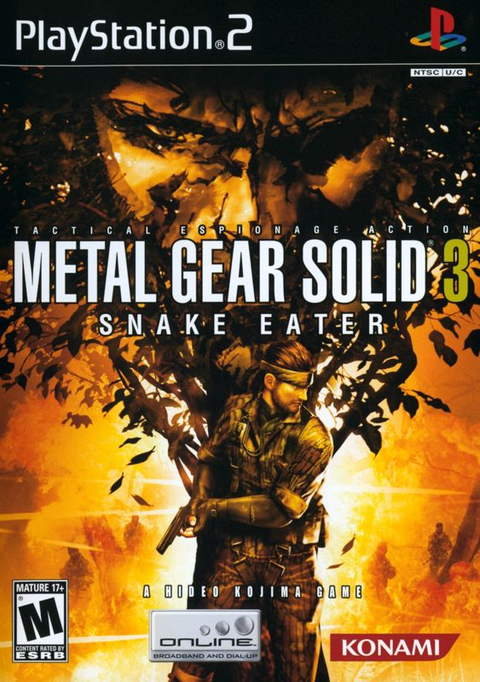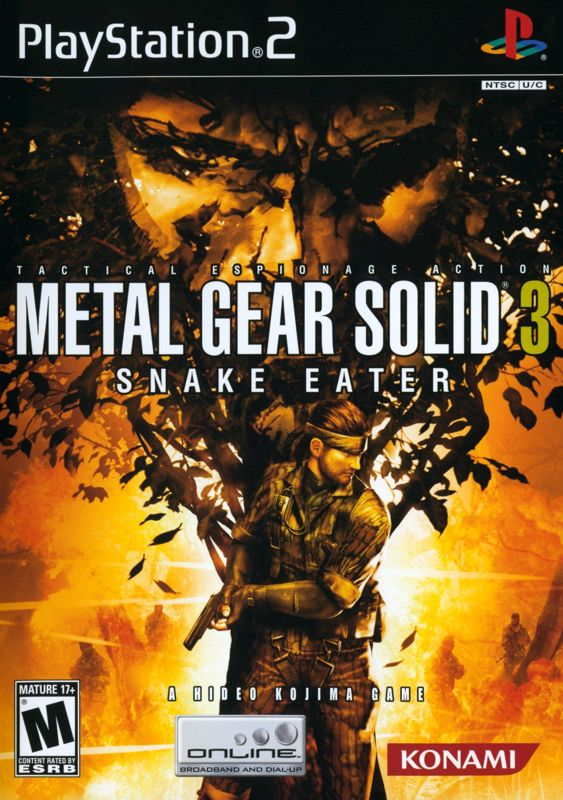
Metal Gear Solid 3: Snake Eater took the series out of steel corridors and dropped it into a jungle where the floor, walls, food supply, and dress code could all betray you. Plenty of stealth games ask you to stay out of sight. This one makes you stop and ask whether bark-pattern fatigues are appropriate for the shrubbery. Tactical espionage finally met wardrobe management, and somehow it worked.
Camouflage is more than a costume
Konami's official archive describes the central rule plainly: match Snake's camouflage and face paint to the environment to fool enemy eyes. The PlayStation Store's current description of the Master Collection version confirms the same design, alongside animal capture, stamina recovery, and close-quarters combat. Those systems are not separate gimmicks piled onto a stealth game. They make the environment part of the player's loadout.

The camouflage index turns positioning into readable feedback. Crawling through grass in the right pattern can be safer than standing beside a tree in the wrong one. Move from mud to concrete and yesterday's perfect outfit becomes today's loud fashion mistake. The menu switching can interrupt the action, but it also forces a deliberate question: what kind of space am I entering, and how do I want to use it?
The jungle becomes equipment
Earlier Metal Gear Solid games taught players to read cones of vision, guard routes, cameras, and hiding spots. Snake Eater keeps that foundation while making terrain itself an active system. Tall grass can conceal movement. Water changes the approach. Open soil may expose a pattern that looked brilliant ten seconds ago. You are not merely navigating a level; you are constantly renegotiating your relationship with it.
That change matters because it creates choices before an encounter starts. A player can prioritize concealment, carry a more visually ridiculous option for a situational advantage, or accept a weaker camouflage percentage to move quickly. The game can be patient, tense, or gloriously messy depending on how seriously you take the numbers. Naturally, the guards remain unimpressed by your commitment to tactical face paint once the alarm begins.

Survival supports the stealth instead of replacing it
The stamina and injury systems extend the same idea. PlayStation's current listing notes that Snake can capture animals for food, regain stamina, and use CQC at close range. The point is not to turn the game into a wilderness spreadsheet. Hunger, wounds, camouflage, sound, and movement all push the player to pay attention to circumstances. A quiet infiltration works because preparation and observation reduce risk. A loud recovery works because CQC and weapons are still there when your excellent plan trips over a patrol.
That balance is why the game remains approachable despite its pile of menus. The systems reward care without demanding perfection. A poor camo choice does not instantly end the mission. It narrows your margin for error. The result is a stealth game that can produce both a clean crawl through enemy territory and a desperate sprint involving tranquilizer darts, stolen food, and several guards wondering why the bush has a handgun.
Why the original PS2 release still matters
The 2004 PS2 version is the design in its original form, complete with the era's camera and menu habits. Later editions revised presentation and controls, and PlayStation identifies the 2025 Metal Gear Solid Delta: Snake Eater as a full enhanced remake of the 2004 game. The remake's continued emphasis on camouflage, survival, and CQC is strong evidence that these systems were not decorative experiments. They are the game's identity.
For collectors, the original disc is also a useful historical snapshot. Zypher currently has the North American PlayStation 2 release listed in game-and-case and custom-case-with-game configurations. Check the specific condition before ordering; a disc-only or replacement-case copy should never be assumed to include the original manual or inserts.

The verdict
Metal Gear Solid 3 made stealth feel physical. Clothing, ground cover, stamina, injuries, food, and close-range combat all connect the player to the space around Snake. The camouflage menu can be fussy, but the payoff is a jungle that behaves like more than scenery. It becomes a tool, a threat, and occasionally a very judgmental dressing room.