Zypher XP | Shovel Knight Showdown gameplay guide
A perfectly good fight can be a terrible decision in Shovel Knight Showdown. While two players trade blows on one platform, somebody else can be collecting the gems that actually decide Treasure Clash. Congratulations on settling that grudge. The treasure has left without you.
For this local platform fighter, the useful distinction is between winning an exchange and advancing the match objective. Treasure Clash rewards both movement and combat, but it does not ask you to fight every opponent you can reach. Here is how to read the rules, choose where to stand and recognize when the clock changes the job.
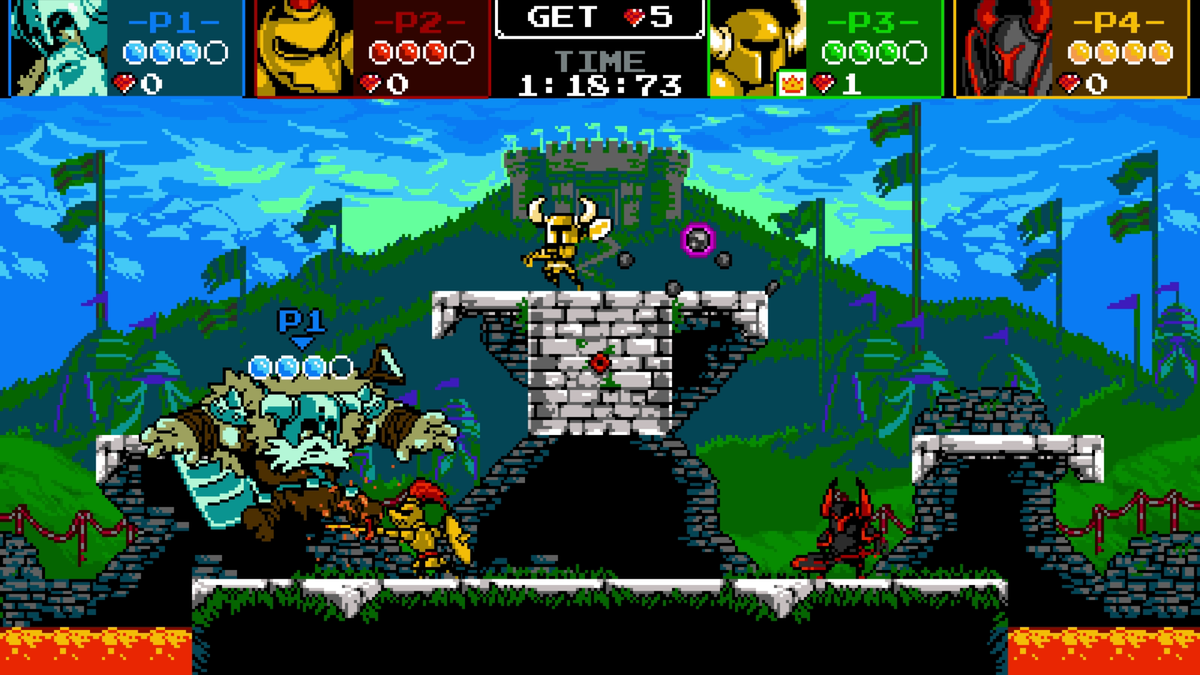
Featured image: an official Shovel Knight Showdown press screenshot with a five-gem target displayed. This is one match setup, not a universal goal. © Yacht Club Games; capture platform and build unspecified.
Read the goal before swinging the shovel
Yacht Club Games' instruction manual distinguishes two main rulesets. Treasure Clash asks you to reach the gem goal without exhausting your stock. Showdown is the last-player-standing mode. Stage defaults and battle options matter, so read the opening goal banner rather than carrying the previous match's assumptions into this one.
Watch your gem total alongside your remaining stock. Being close to the collection target and being close to elimination can happen at the same time. That should change which risks look sensible. An uncontested gem across a dangerous route is not automatically a bargain when you have very little room for a mistake.
Our advice is to make the objective your filter for aggression: will this attack help you collect, stop the leader collecting, or keep you alive? If the answer is none of those, consider leaving. You do not owe every knight a complete argument.
A knockout can create another collection fight
In its December 2019 explanation of the modes, Yacht Club describes a gem dropping when a player dies. A grounded death has a short delay before that drop. Gem spawns also use a visible swirl, and some stages add bubbles or simultaneous gems.
The practical consequence is that an attack and its reward can be separate moments. After a knockout, look at the space around the drop instead of immediately finding somebody else to hit. If another player is already better placed to collect, your impressive exchange may have improved their score more than your own.
Likewise, a new spawn is a movement problem before it becomes a fight. Think about your landing position and the route out. Diving into a crowded spot with no plan for the return journey gives the other players a very convenient place to aim.
The arena changes which ground is worth holding
The official stage guide gives a useful example in Pridemoor Keep: Hall of Springs: Treasure Clash gems appear only above the center platform. Springs help with travel. Controlling access to that central space therefore has a clear purpose; fighting in a distant corner may have much less value.
Clockwork Tower: Gear Factory asks a different question. Its screen edges wrap, including a route from the bottom back to the top, while gears make the lower area hazardous. A player disappearing below you has not necessarily been eliminated. Check where the route returns before declaring the chase finished.

Treat those as stage-specific facts. They do not make every edge in every arena safe. Before committing to a pursuit, work out whether the stage favors holding a collection point, using an alternate route, or letting another player come to you.
Parry creates space, but the timing has a cost
Yacht Club's mode-design article explains that every character has a parry. A successful one repels an incoming attack and knocks the opponent back; mistiming it leaves a vulnerable pause.
For Treasure Clash, consider the space a parry might create. Moving an attacker away could give you a route toward a gem or an escape from a bad position. That is an objective-based reason to use it. Pressing it because somebody is vaguely nearby is a much less convincing plan.
If a character's options are unclear, the pause-menu Moves List and Practice mode are available. Use those to understand the move before relying on it during a scramble. This guide's tactical suggestions are editorial advice drawn from the documented rules, not a claim of fresh hands-on testing or a guaranteed winning strategy.
The final seconds can become two different problems
At timeout, Yacht Club says Treasure Clash compares gems, while Showdown compares remaining stock. It also documents a five-second overtime extension when a late dropped gem could change the lead. That extension can happen repeatedly.
Do not mentally leave the match because the timer looks nearly finished. A late drop may still matter. If you are behind, recognize what could change the result; if you are ahead, recognize what you could lose by taking one unnecessary fight.
Sudden Death is different. When enabled to settle a tie, it removes the gems and brings in encroaching lava, shifting the contest toward combat and survival. Stop following the old collection route and watch the remaining space instead.

Set up a match everyone understands
Battle options let you adjust stock, time and gem goals; a 2x gem setting doubles that stage's default target. For a first session, agree on those settings before launching. Make sure everyone knows whether they are playing an elimination match or racing for treasure.
Want the wider campaign context? Read our Shovel Knight: Treasure Trove feature. For Treasure Clash itself, keep the immediate question concrete: where can the next useful gem come from, and what will it cost to reach it?
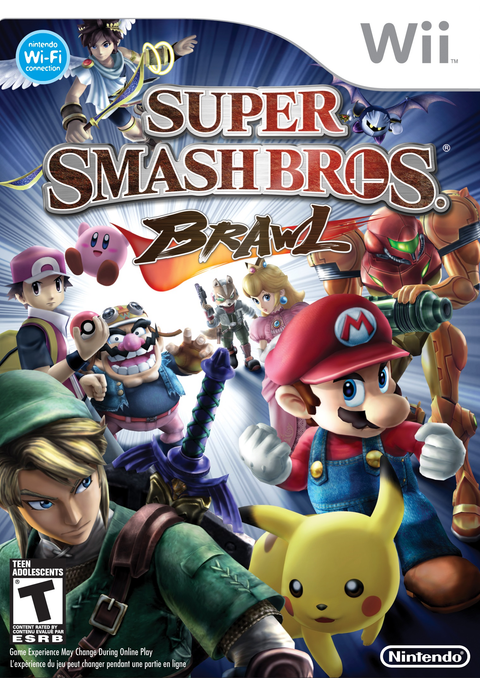
Build your game shelf with Zypher Trading Video Games. For a separate physical platform-fighter pick, browse our Super Smash Bros. Brawl for Nintendo Wii listing. Brawl is a different game, not a Shovel Knight Showdown edition. Check the selected condition and included contents before ordering. Ready to make room? Sell your old games to Zypher through our Buy List.
Sources, press assets and Zypher listing checked November 1, 2026. Rules follow Yacht Club Games' manual, developer mode explanation and stage guide linked above. Images are unmodified official Shovel Knight Showdown press screenshots, © Yacht Club Games.