Give a wizard the power to create boxes and you might expect him to use it for something more dignified than emergency scaffolding. Trine gets plenty of mileage from a less dignified solution. A gap needs crossing. The party has magic, a rope and a knight. Somewhere in that inventory is a plan.
Frozenbyte's series has spent years exploring what happens when those tools share a platforming world. Its identity comes from Amadeus the Wizard, Zoya the Thief and Pontius the Knight having different ways to deal with the same obstacle. The interesting franchise story is how that relationship changes across editions, a move into 3D and a larger cooperative party.
Featured image: the three heroes in Deadly Dustland, part of Trine 2's Goblin Menace expansion. Frozenbyte / Trine 2 - www.trine2.com. Source, CC BY-SA 3.0. Hosting-recompressed image; no editorial cropping or retouching. Capture platform and build unspecified.
Three heroes give an obstacle three meanings
Amadeus can summon boxes and move objects with magic. Zoya carries a bow and a grappling hook. Pontius brings a sword and shield. Those are concrete differences, and the original game's publisher description makes combining abilities central to solving its physics-based challenges.
Our reading is that Trine makes the player inspect a place twice: once for where to go, and again for what could make that route possible. A platforming gap can become a construction problem for the wizard or a question about a useful attachment point for the thief. The characters change the questions you ask before attempting the jump.
That gives an improvised solution its appeal. Building an awkward route can be satisfying because it came from understanding the tools and the room. A perfectly respectable staircase is optional. Whether the current arrangement deserves to be called a staircase is a separate discussion.

Playing solo and sharing the tools are different pleasures
In Trine Enchanted Edition, one player can switch among the heroes. Local or online cooperation supports up to three players. Solo play therefore lets one person carry the whole set of possibilities, while cooperation can divide those possibilities among people.
That distinction changes the kind of satisfaction on offer. A solo solution can be a sequence you organize yourself. With friends, an idea may need someone else to supply the next useful action. Trine's particular attraction is that the contribution can come from a different tool, rather than everybody performing the same move at once.
There is also a useful restraint for experienced players: leave room for somebody else's experiment. If one person supplies every solution, the other controllers become unusually expensive audience tickets. For a different example of deliberately paired puzzle design, our Portal 2 cooperative feature examines Valve's separate two-player campaign.
The version names explain part of the history
The original Trine reached Windows PC in 2009. Enchanted Edition followed in 2014, revisiting it with Trine 2's engine and adding online cooperation. The publisher advertises the original build as selectable on Windows through the Steam release. That is a specific version feature, not a promise about every console copy.
Trine 2 first appeared in 2011. Its 2012 Goblin Menace expansion extended the adventure. Complete Story arrived in 2013 with the original game, that expansion and the Dwarven Caverns chapter previously associated with Wii U's Director's Cut.
Those subtitles are worth reading. A player remembering a scene from an expanded edition may be remembering content beyond the base release. Check the subtitle before deciding that two packages contain the same adventure.

Trine 3 changes the space around the familiar cast
Trine 3: The Artifacts of Power moved the adventure into 3D in 2015. Frozenbyte describes physics puzzles and three-player local or online cooperation, with the familiar wizard, thief and knight still at the center.
That is a substantial experiment for a series whose appeal depends on reading an obstacle. Changing the space can change how a player judges a route and thinks about positioning. This is a design interpretation, rather than a claim that adding a dimension automatically improves or ruins a game.
For a newcomer, it is the clearest warning against assuming that a numbered sequel supplies precisely the same kind of movement. Try the 3D entry because that variation interests you. Do not treat it as interchangeable with the side-view games merely because the same three people turned up.
Trine 4 and 5 expand the party without abandoning the toolkit
Trine 4: The Nightmare Prince returned to 2.5D in 2019. Its publisher description identifies puzzles involving elements such as light, magnets and electricity, with challenges adjusted to the number of players. It supports up to four players locally or online.
The fourth controller is a practical distinction. A three-person cast does not, by itself, establish a three-player limit across an entire franchise. Check the actual game rather than counting the heroes on its cover.
Trine 5: A Clockwork Conspiracy followed in 2023 with another 2.5D adventure, one-to-four-player solo/local/online support and a character-specific skill quest system. Frozenbyte also describes puzzles adapting to the player count. The useful question is how a group wants to engage with those abilities, rather than simply whether a later game contains more scenery.
The next game is still debating what a Trine puzzle should ask
Trine 6: Together in Time is upcoming, not a released chapter covered by this retrospective. Frozenbyte's October 22, 2026 development update gives its planned launch as March 4, 2027, superseding the older September 2026 date still visible on the series homepage.
The same update describes two puzzle approaches. Classic emphasizes distinctive hero abilities and switching or combining roles. Freestyle allows any hero to tackle each puzzle, putting more emphasis on movement, timing and freedom of character choice. These are the developer's descriptions of a game in development.
That distinction makes a useful question explicit: do you want to work out which tool a situation needs, or use a favorite character to handle a different kind of challenge? A group can enjoy one approach more than the other without needing a referendum on who is a proper fan. The series' future is interesting because it is making room to ask.
Check your player count and package contents
For the original three-hero structure, examine Enchanted Edition or Trine 2: Complete Story and verify the exact platform. For the 3D variation, look at Trine 3. For a four-player session, examine the supported modes of Trine 4 or Trine 5. Those are starting points for a decision, not cross-play or hardware guarantees.
Read the exact package contents too. An expanded edition, a collection and a used individual game are different purchases. Do not assume that a reused title, a download insert or a collection name guarantees the same included content across platforms and releases.
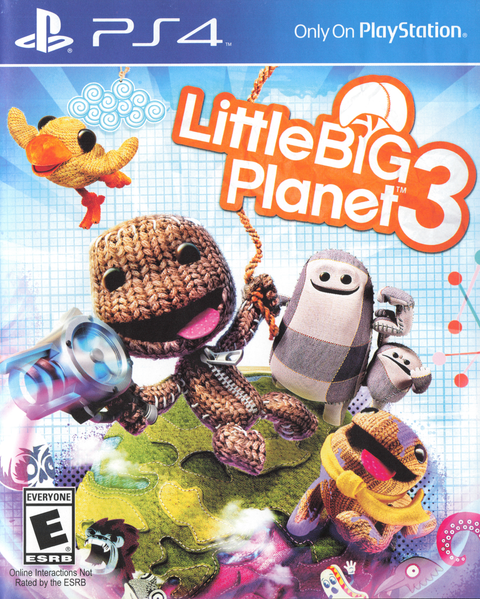
If physical platformers are next on your shelf, compare Zypher's Rayman Legends for PS4 and LittleBigPlanet 3 for PS4. These are separate related-game picks, not Trine editions or bundles; check each listing's condition and included contents.
Put the next platforming adventure on your Zypher shelf
Buy your next physical game from Zypher Trading Video Games. Shop Zypher's games, use the exact platform links above, and read the selected listing before ordering. Making room for another adventure? Sell your old games to Zypher.
Sources and image credits
Opened publisher and platform sources checked November 1, 2026: Trine / Enchanted Edition history; Enchanted Edition's Steam features and version distinction; the heroes; Trine 2 edition history; Trine 3; Trine 4; Trine 5; and the dated Trine 6 update linked above. Years describe the cited original releases or editions, not simultaneous launches on every platform. Analysis and related-game recommendations are Zypher editorial judgment.
All screenshots are Frozenbyte's actual Trine or Trine 2 imagery under CC BY-SA 3.0, with rightsholder permission recorded in Wikimedia VRT tickets 2009072810058751 and 2013042610008573. Images retain their original composition and dimensions. Some hosted JPEGs were recompressed; no editorial cropping or retouching was applied. The image reproductions remain under CC BY-SA 3.0. The early-game illustrations are not captures from Trine 3, 4, 5 or the upcoming Trine 6.