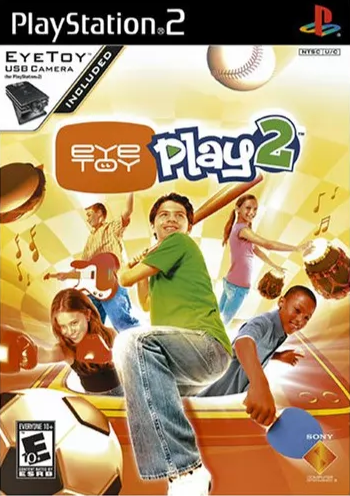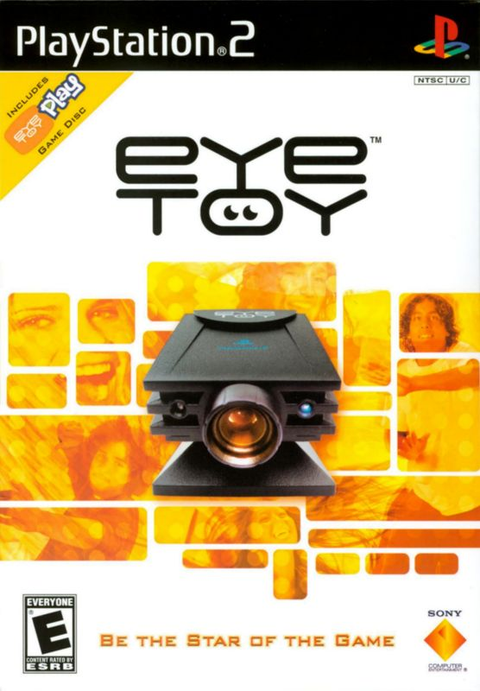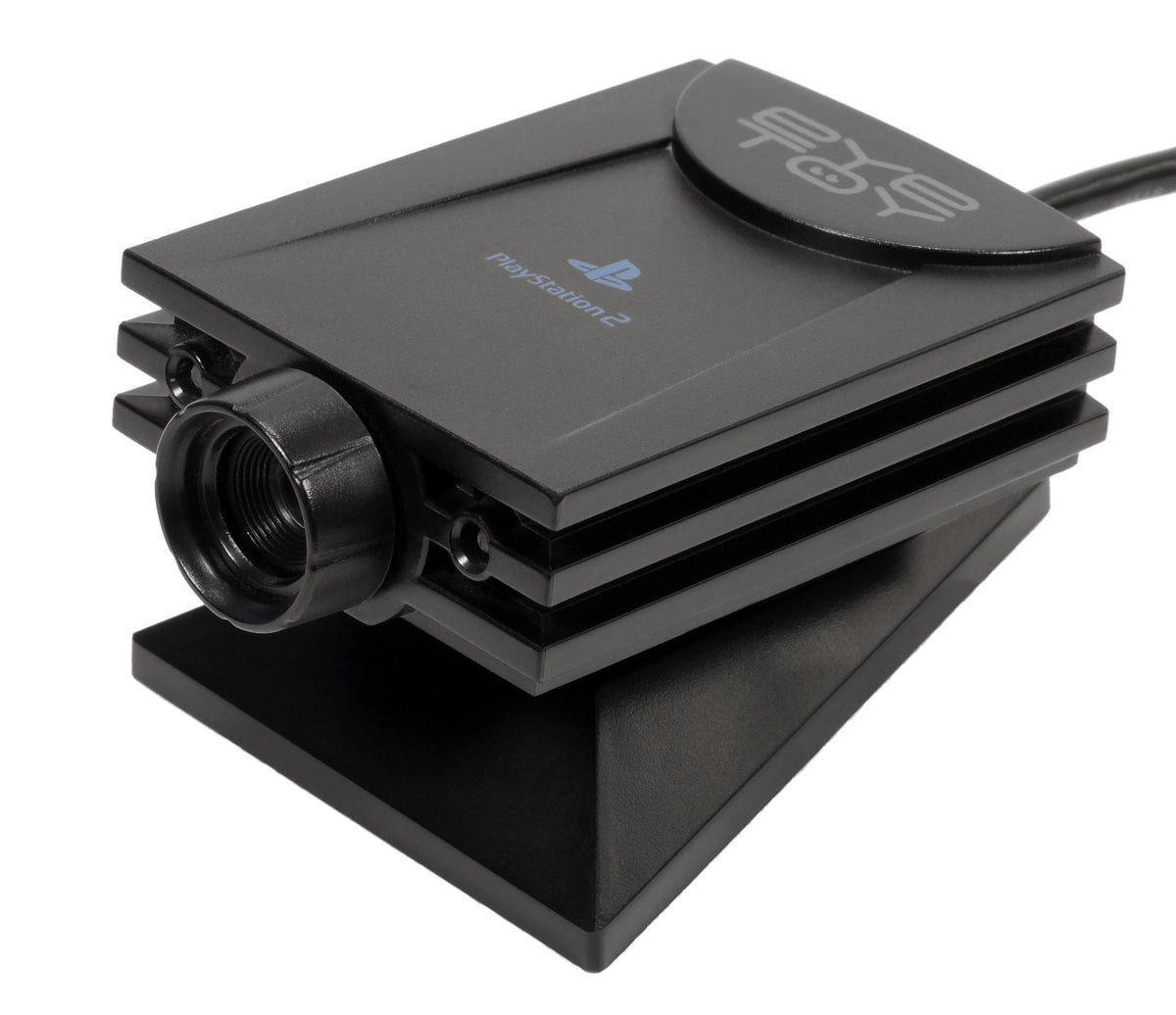
EyeToy asked a wonderfully unreasonable question: what if your PS2 controller was the person standing in front of the television? EyeToy: Play put your camera image inside the action, then made your movements the input. No memorizing which shoulder button did what. The living room had become the controller, complete with furniture that refused to cooperate.
That is still the reason to revisit it. EyeToy captures a particular PlayStation 2 ambition: bring somebody into a game before they have time to announce that they do not play games. Its history deserves more than being filed under accessories that failed.
The promise was immediate participation
Sony’s 2004 annual report describes EyeToy: Play arriving first in Europe in July 2003, followed by other regions. A USB camera connected to PS2 let players interact using their hands, legs and heads while appearing on screen. That is a much more concrete sales pitch than another box promising immersion.
The screen showed the relationship between action and result. You moved; the game responded around your image. Zypher’s take: that visible connection matters more than the novelty of owning a webcam. A controller expert and somebody who barely knew the console could understand the basic invitation together.
In his November 2003 GameSpot review, Tim Tracy described twelve minigames. Kung Foo had players swatting approaching ninjas; Soccer Craze involved keeping a ball aloft with their head. He found the collection approachable for company, but less challenging alone. Those examples explain both the attraction and the ceiling: an instantly readable action is excellent party material, while a long solo campaign asks for something different.
It was a hit, with a room-sized catch
Sony’s report lists EyeToy: Play among the hits of the fiscal year ended March 31, 2004, reporting shipments above three million units. That figure concerns the software title in that period. It is not a lifetime count of every EyeToy camera, and it certainly does not support a story about nobody buying the thing.
The catch was getting that immediate experience ready. Tracy’s contemporary review explains that the camera used a front PS2 USB port, with placement and playing distance needed to frame the person. He also reported that inadequate lighting could prevent movements registering properly. A clear patch of floor was part of the practical setup.

That changes the buying question today. The interesting question is not just whether a camera is in the box. It is whether you can give this particular kind of game a suitable place to work. A bargain peripheral that never leaves the drawer has achieved excellent drawer compatibility and very little else.
Lighting was a design problem, not an excuse invented later
In Henner Thomsen’s 2024 interview with Richard Marks, the EyeToy developer identified changing home lighting as the overriding technical challenge. He recalled a prototype demonstration failing after the lighting changed, followed by work on dynamic settings.
The same interview explains a deliberate design choice: EyeToy: Play centered the game on the visible player, rather than treating camera input as an invisible replacement for buttons. That distinction helps explain its character. Watching the person participate was part of the entertainment.
Marks also agreed that preparation effort mattered and suggested that seeing yourself on television no longer carried the same technological novelty. His broader suggestions about why gaming-camera popularity waned were explicitly uncertain. They are retrospective possibilities, not a verified list of causes for EyeToy’s retirement.
Our interpretation is narrower: a game can remove the controller learning curve while adding a setup chore. EyeToy made participation easier to explain, but the room still needed to cooperate. That tradeoff is enough to discuss without inventing a cancellation meeting or blaming one rival console.
Sony’s camera idea moved onto PS3
On April 26, 2007, Sony announced PlayStation Eye for PS3, explicitly building on EyeToy’s PS2 heritage. The company promoted better low-light operation, faster capture, a two-position lens and microphone features. This was a new device for a new platform, not merely the old camera receiving a different sticker.
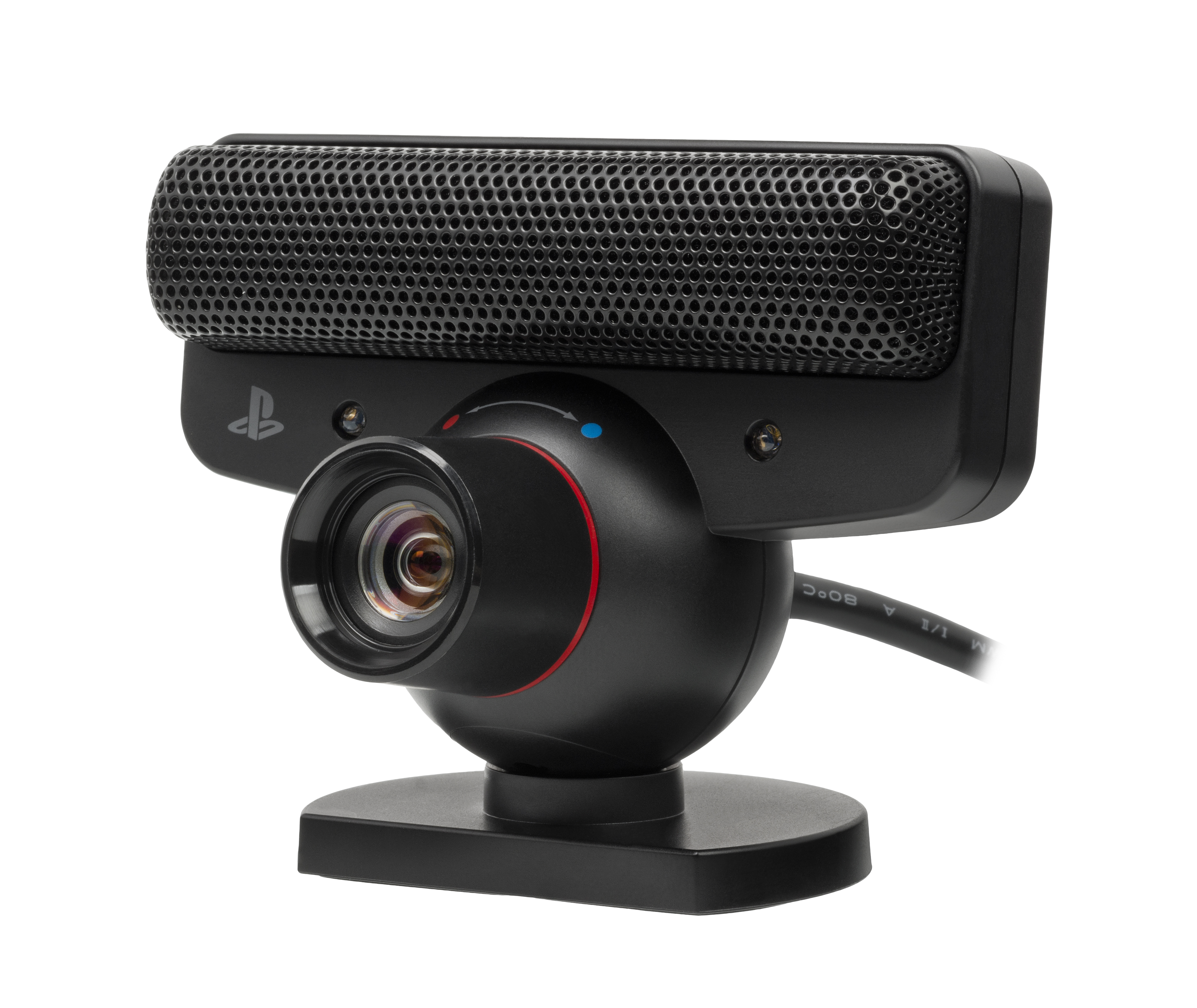
For collectors, the important distinction is the platform and device. Keep PS2 EyeToy and PS3 PlayStation Eye separate when assembling a setup; the 2007 announcement is not an EyeToy support-end date. For the later controller story, read our PlayStation Move retrospective.
What is worth collecting now?
Buy toward a playable experience. Start with the EyeToy game you actually want, identify the camera it calls for, and check what the individual listing includes. A disc listing is not evidence that a camera, stand or other accessory comes with it. Ask for clarification when the contents are unclear.
For a used camera, request clear photographs of the lens, cable, connector and base, plus a demonstration with the intended game where possible. Treat cosmetic appearance and demonstrated operation as separate questions. For a boxed collection, compare the photographed contents with that exact edition’s packaging rather than assuming every regional release supplied the same items.
EyeToy’s surviving appeal is the particular experience of making a PS2 respond to the person on screen. Collect it because you want to see that design in action. You do not need a speculative rarity story to justify keeping an unusual piece of PlayStation history.
Build your PS2 collection with Zypher
Browse Zypher’s listings for EyeToy: Play and EyeToy: Play 2, checking each listing’s edition, condition and included contents before buying. Explore more games at Zypher, or sell your old games to Zypher when it is time to make shelf space.