Give Zelda's developers another trip to Hyrule and you might expect more story, more bosses and another substantial adventure. Link's Crossbow Training went in a different direction. Its development is a useful example of Nintendo deciding that the next thing a familiar world needed was a smaller, more focused job.
The result makes more sense when you look at the game and the Wii Zapper together. One supplied the targets and challenges. The other gave existing controllers a different shape to hold. This is the documented design story behind that partnership, rather than a claim that every Zelda spin-off needs to follow its rules.
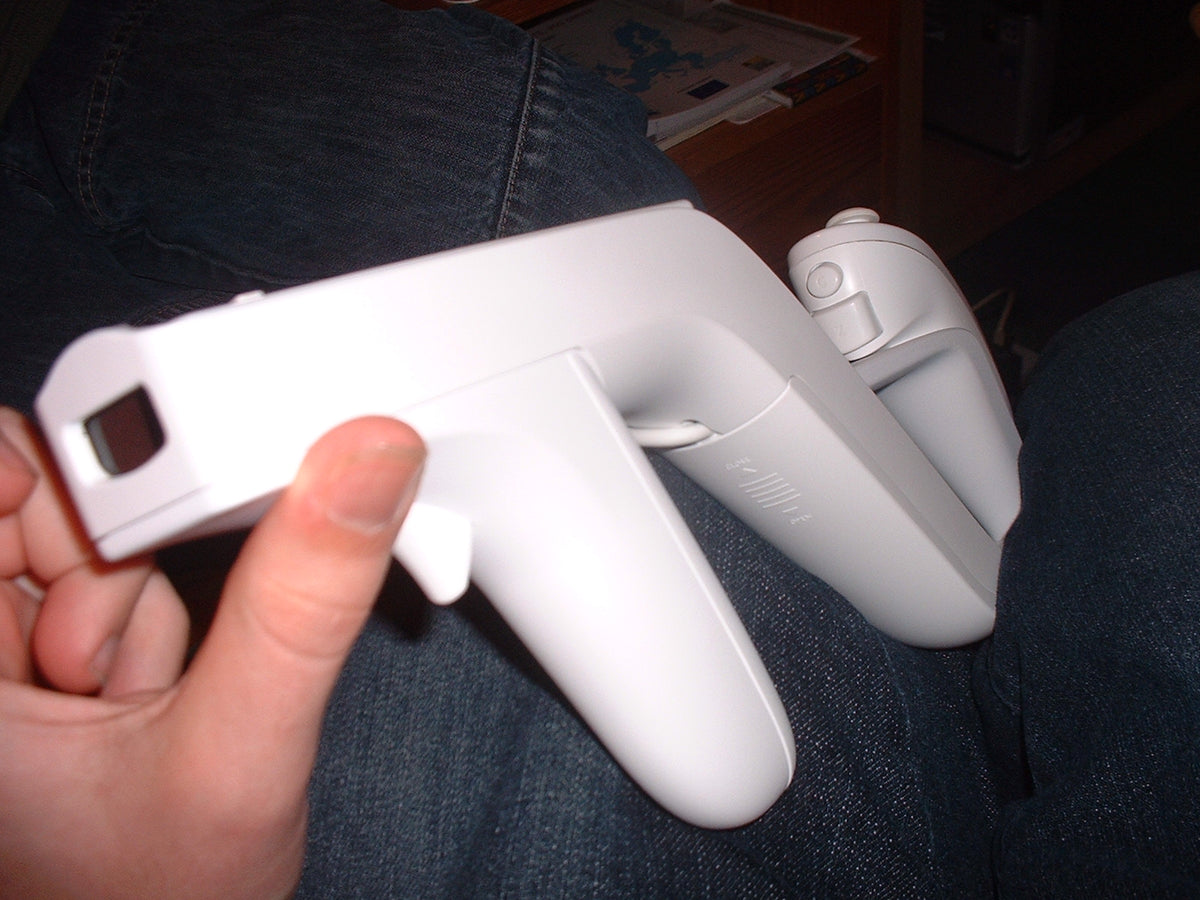
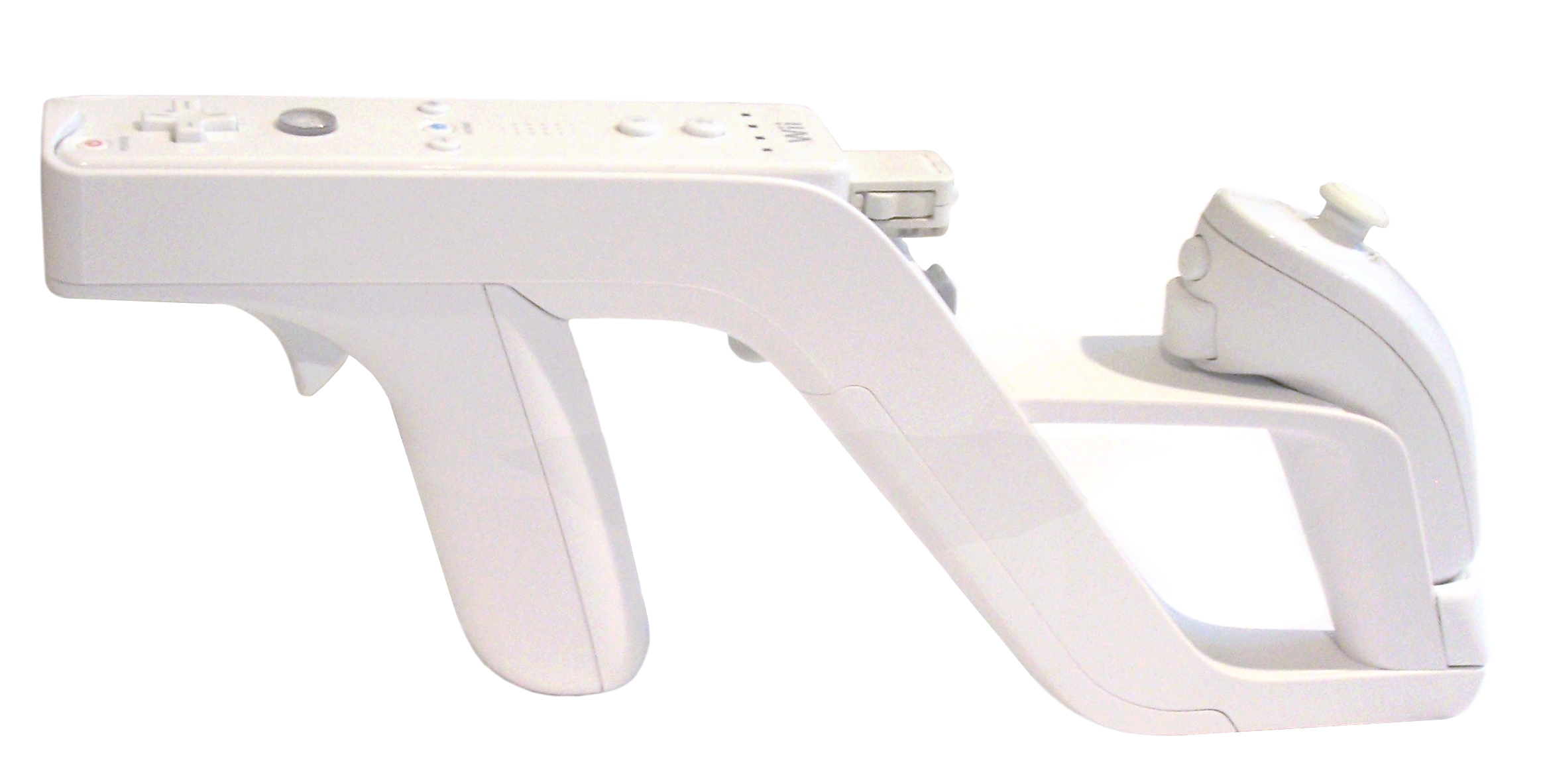
Featured photograph: Wii Zapper with Remote and Nunchuk inserted, viewed from the front. Photo: Antoine Turmel, source, CC BY 2.0. Full photograph reused without compositional changes. Hardware reference, not Zypher's individual stock.
A familiar world was given a different assignment
In Nintendo's developer interview, Shigeru Miyamoto explained that he wanted to do more with the extensive terrain created for The Legend of Zelda: Twilight Princess. The proposed side project grew into ambitious stories. He redirected it toward using the Wii Zapper, then set limits that included keeping stages completable within three minutes.
Our read is that the restriction changed the question being asked of Hyrule. Another quest would need to sustain curiosity about what happens next. A brief shooting challenge can instead ask what you could do better on another attempt. Recognizing a location gets you started, but it does not make the next shot for you.
Miyamoto also described asking for no bosses, before ultimately agreeing to one. That detail makes the priorities unusually clear. The team had to spend its attention on the activity between the big encounters. A famous boss is useful, but it cannot personally carry every minute leading up to its entrance.

The title deliberately lowered the expectation
In the interview's opening chapter, Miyamoto described wanting an approachable route into FPS-style games. He also explained why the name avoided sounding like a grand Zelda sequel. The word “training” helped communicate the smaller assignment.
That is useful context for a player encountering the disc today. The name is telling you what sort of session to expect. Judging it entirely by the size of a mainline Zelda quest would miss the design problem Nintendo was trying to solve.
The same conversation includes Miyamoto recalling an early proposal for a first-person Ocarina of Time. That was a proposal, not the perspective of the released adventure. It shows that his interest in this way of navigating games predated the Zapper project. The eventual shooting game was one place to pursue that interest without rebuilding an entire Zelda quest around it.
The plastic had a development story too
The hardware chapter describes a prototype made with wire and rubber bands. Miyamoto recalled trying a staff member's construction during Twilight Princess development and finding it comfortable enough to pursue with the hardware team.
Another prototype added vibration with an extra battery. Nintendo rejected that arrangement because it did not want customers to need the additional battery. A promising idea still had to survive the practical question of what someone would have to buy and maintain.
Link's weapon also required a compromise. Miyamoto described settling on a crossbow, then accepting rapid fire despite its questionable realism. In Zypher's view, that is the right argument to have for this particular game: does the action suit the challenge?
More than one kind of target practice
Nintendo's game overview distinguishes target shooting, fixed combat and free-movement combat. Those formats change what aiming is attached to: hitting a target, defending against surrounding attackers or moving through an area to find enemies. In free-movement stages, the Nunchuk stick controls Link.
The scoring rewards strings of accurate hits. That gives another attempt a specific purpose beyond simply seeing the location again. You can consider where the sequence broke and what you want to change. It is a compact form of progress, especially appealing when you want a challenge without settling in for a long quest.
Nintendo also describes up to four people competing by taking turns and passing the Zapper. That is a shared score contest, not four simultaneous players filling the screen. The distinction matters when planning a group session: everyone can have a turn without everyone doing the same thing at once.

The old bundle is not a promise about a used copy
Nintendo's July 2008 article promoted the Zapper and Link's Crossbow Training as a bundle. That explains their relationship at retail. It does not establish what is included with a particular secondhand disc or accessory today.
For collecting, separate the historical package from the item being offered. Ask whether a listing contains the game, the holder, the controllers or a stated combination. Keep the software and accessory instructions with the setup. The hardware photographs here illustrate the design story; they do not add those parts to an order.
Bring Hyrule home from Zypher
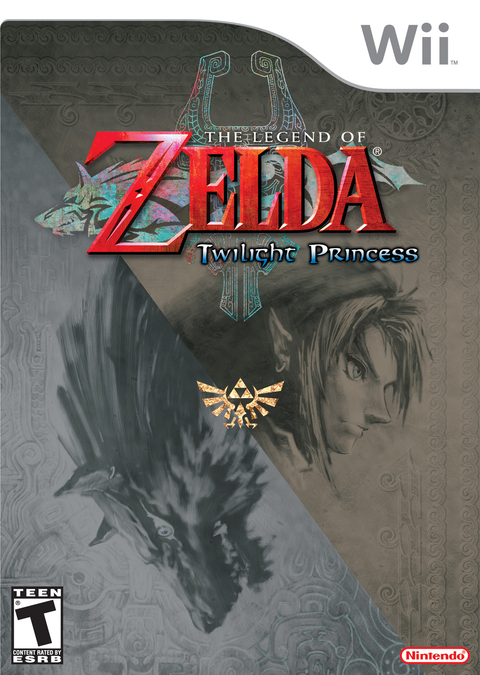
Buy Zelda and Wii games from Zypher Trading Video Games. Check our Twilight Princess for Wii listing for the adventure whose world helped inspire this project. It is a separate game from Link's Crossbow Training. Review the selected copy's condition and included contents.
Shop Zypher's games, or sell your old games to Zypher. A game listing includes a Zapper, Remote or Nunchuk only when its contents explicitly say so.
Developer interviews, original Nintendo product descriptions, photo permissions and native Zypher listing checked November 5, 2026. Development accounts are attributed to Miyamoto and Nintendo; the interpretations above are Zypher editorial judgment. Historical bundle descriptions are not current inventory or compatibility guarantees.