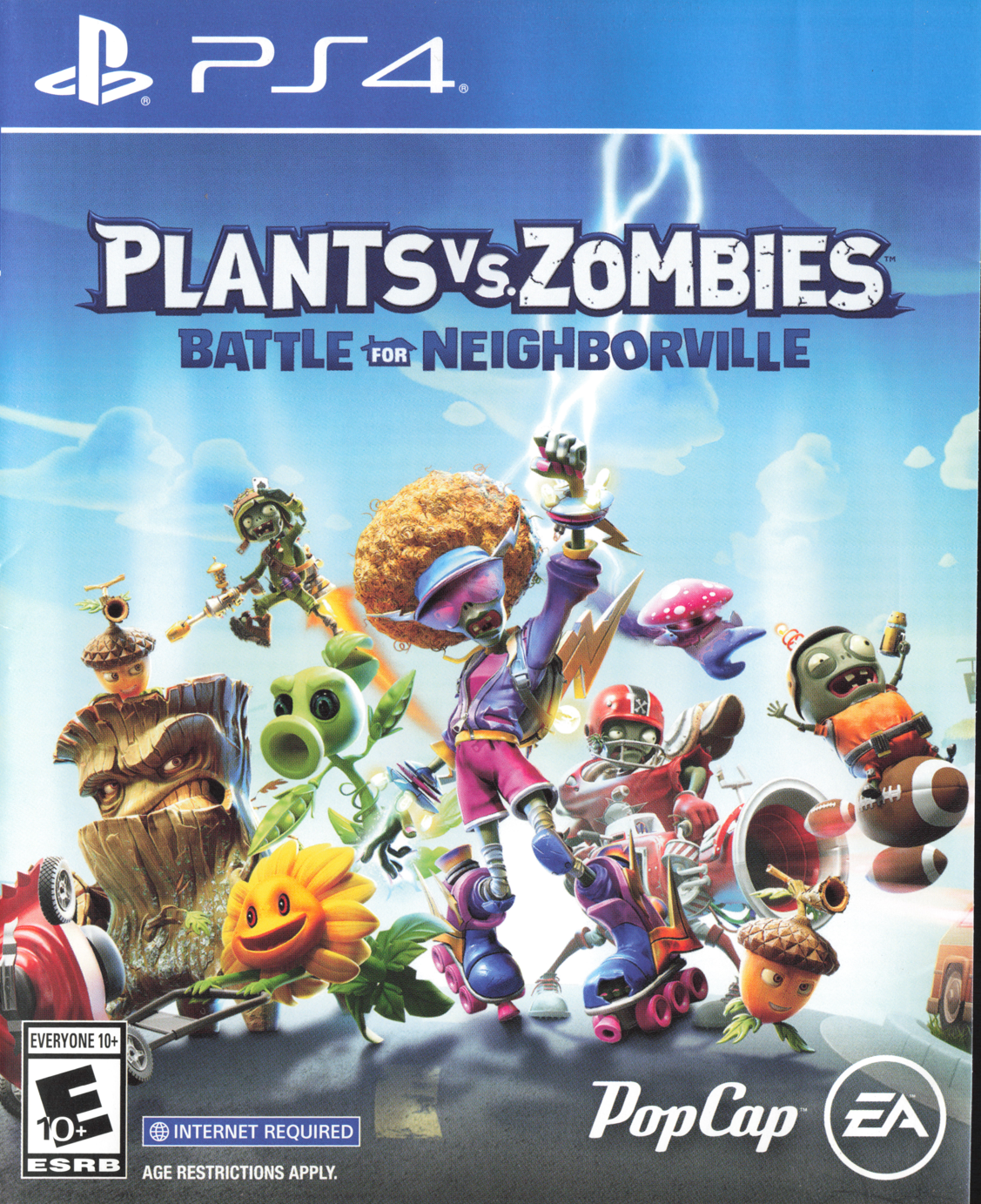
Plants vs. Zombies: Battle for Neighborville
Plants vs. Zombies: Battle for Neighborville turns the rivalry between garden defenders and the undead into a colorful third-person shooter. Instead of arranging plants on a lawn, you directly control a character, aim its weapon, and use a set of abilities while exploring or competing. The setting surrounds that action with suburban jokes, unusual technology, and exaggerated personalities. Beneath the bright presentation is a team game about character roles and useful decisions. A player who heals, protects a position, or helps an ally can contribute as meaningfully as one who focuses on defeating opponents.
Both factions offer characters with distinct jobs. Some are comfortable pressing an attack, others hold positions or work at a distance, and support characters keep teammates active. Trying different choices changes the way you read a battle. A long-range character benefits from sightlines and careful positioning, while a close-range character needs a safe way to approach. A healer needs to notice allies as well as enemies. That variety is central to the game: the same objective can feel different depending on which plant or zombie you bring and how the rest of your team behaves.
Each character combines a primary weapon with abilities that create tactical opportunities. Peashooter can use explosive pressure and a stationary rapid-fire form. Chomper operates at close range and can threaten opponents from below ground. Cactus specializes in distant shots and can send a drone into the air, while Sunflower supports allies through healing. These differences encourage you to make decisions about timing and distance. An ability is most useful when it changes a situation in your favor, so learning when to commit it becomes part of mastering a character.
The zombie roster provides its own interpretations of those roles. Foot Soldier supplies a versatile shooting approach, Scientist offers mobile healing, and Captain Deadbeard works effectively at long range. The Imp can call in a larger mech, temporarily changing the size and power of its presence in a fight. Switching factions therefore gives familiar team needs a new set of tools and personalities. You may enjoy a particular zombie because it resembles a role you understand, or because it makes you rethink how to reach an objective and survive the pressure around it.
Team Play characters make cooperation visible in the character itself. Acorns can join an Oak, and Space Cadets can combine into a Space Station, bringing several players into a shared fighting formation. A combined unit offers meaningful strength but also gives the other team a conspicuous target. This makes cooperation a practical choice rather than only a social feature. Coordinating with others can create a more capable presence, while the team still has to consider exposure and support. The playful visual idea connects directly to the question of how a group should fight together.
Giddy Park serves as a social hub from which you access other activities and character options. The free-roam regions provide quests, enemies, collectibles, and objectives beyond competitive matches. Town Center, Mount Steep, and Weirding Woods give the two factions different problems to investigate, with Town Center approached from faction-specific areas. You can use maps to check progress and identify points of interest. These spaces make the game useful for players who enjoy working through a region at their own pace, looking for discoveries and completing tasks between more demanding team encounters.
Regional progress introduces rewards that connect exploration with customization. Medals record different accomplishments, while regional stores exchange the area's currency for items once their requirements are met. The map and progress displays help you see what remains to be discovered. This gives exploration a clear direction without reducing every activity to defeating another player. Finding collectibles, following the region's adventures, and working toward its medals provide different kinds of goals. A player can spend time investigating a place and still contribute to the broader development of their profile and characters.
Competitive modes and cooperative Ops use the character roster in different ways. Team Vanquish focuses on defeating the opposing side, while Turf Takeover ties fighting to control of objectives. Ops places a team against computer-controlled attackers. The multiplayer portal connects these activities from the hub. The important distinction is what the team needs to accomplish: chasing an opponent is not always the best response when an objective needs defending. Character roles become especially useful when players respond to that purpose, supporting one another instead of treating every mode as an isolated hunt for eliminations.
Character progression comes from participating in play, including vanquishes, objectives, heals, and revives. Reaching the level threshold lets a character be promoted, opening additional upgrades and marking its development. Your overall player rank grows as characters level, encouraging exploration of the wider roster. Cosmetic customization provides another way to make a favorite character feel personal. Progression works alongside learning the character's practical tools: an upgrade choice matters most when you understand what it contributes to your style. The goal is to build familiarity and useful options across the characters you enjoy.
The PS4 version supports split-screen play and online groups, with competitive multiplayer reaching up to twenty-four players depending on mode. It requires an internet connection and an EA account, and online multiplayer requires PlayStation Plus. The offline-oriented changes associated with the Nintendo Switch Complete Edition should not be assumed for this PS4 release. On PlayStation, the draw is the combination of accessible shooting, expressive character classes, quest-filled regions, and team play. You can work through objectives with a friend, learn a support role, or experiment with a new faction while enjoying Neighborville's deliberately ridiculous world.
Quick Specs
| Developer | PopCap Games |
|---|---|
| Publisher | Electronic Arts |
| Genre | Third-person shooter |
| Perspective | Third person |
| Players Offline | Local split screen supported; internet required |
| Online Requirement | Internet and EA account; PlayStation Plus for online multiplayer |
| Players Online | Up to 24 |
| Game Modes | Free-roam PvE; Ops; competitive multiplayer |
| Character Progression | XP, levels, promotions, upgrades |
| Edition Note | PS4 game, distinct from Nintendo Switch Complete Edition |