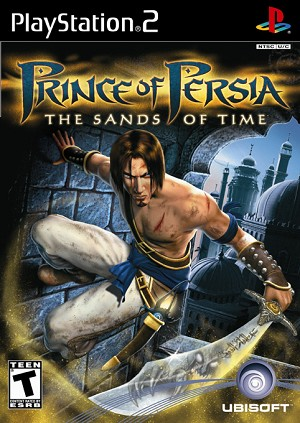
Prince of Persia: The Sands of Time opens with an excellent bad decision. The Prince takes a magical dagger, gets tricked into unleashing the Sands of Time, and turns a palace full of people into monsters. Congratulations, hero. Now clean it up.
That setup gives the 2003 game exactly what it needs: one enormous ruined palace, a tool that can erase a few seconds of disaster, and a character athletic enough to treat walls as suggestions. More than two decades later, the clever part is not simply that the Prince can rewind time. It is that rewind makes ambitious 3D platforming feel inviting instead of fragile.

Rewind turns failure into information
Ubisoft's 2024 retrospective says the team built the game around a simple desire: let players undo a recent mistake instead of repeatedly dying and restarting. That decision matters because The Sands of Time asks for more than basic jumps. The Prince runs across and up walls, swings from poles, balances on beams, climbs ledges and threads those moves through trap-filled rooms.
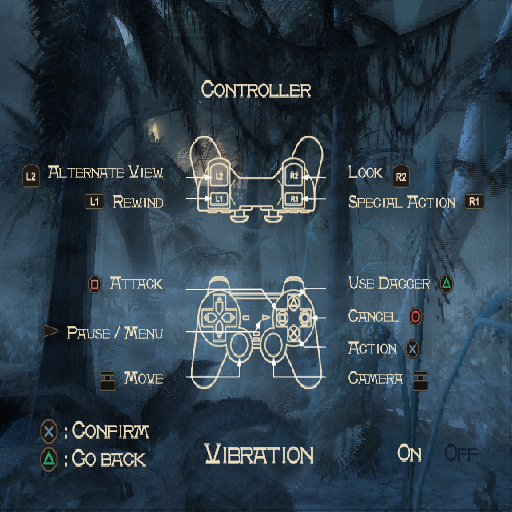
A missed jump is usually clear. You aimed too early, picked the wrong wall or failed to spot the next handhold. The Dagger of Time lets you roll back the error and try the corrected input while the room is still fresh in your head. Rewind is limited by stored sand, so it is not a permanent undo button. It is a small reserve of second chances, and that is just enough to make experimentation feel smart.
Modern games use forgiving checkpoints constantly. This one made the correction itself part of the fantasy. The Prince does not reload a menu because you slipped. He reaches backward through time because the adventure says he can. Mechanical mercy rarely arrives with this much style.
The palace is the real star
Most of the game happens inside one palace, but it keeps changing the question. How do you cross the chamber? Which switch opens the route? Can the Prince reach that pole from the wall, or is the camera politely showing you a terrible idea?
Ubisoft's retrospective describes how the team designed the palace around verticality, turning poles, columns and broken architecture into navigation. The result is a place that reads like a giant obstacle course without feeling like a stack of disconnected challenge rooms. Sunlit courtyards, blue-lit interiors and crumbling machinery keep the route visually varied while the same movement language gets deeper.

Farah keeps the adventure from becoming a gymnastics demo
The Prince is not alone. Farah can slip through spaces he cannot, activate parts of the environment and help in combat with her bow. You still control the Prince, so this remains a single-player game, but her presence gives the palace a relationship instead of just an itinerary.
The pair begin with every reason to distrust each other. The Prince helped create the catastrophe, and Farah has no obligation to applaud his recovery plan. Their exchanges give the quieter traversal stretches some personality, while her knowledge of the Dagger and the palace ties her directly to the journey. Ubisoft's own retrospective frames that relationship as one of the game's central supports alongside rewind, parkour and combat.
Combat is the rougher half of the bargain
The acrobatics still feel like the headline. Combat can become repetitive, especially when a room asks you to clear another group of sand creatures before moving on. The sword work includes vaults, wall rebounds, blocks and dodges, while the Dagger finishes enemies and recovers the sand needed for its powers.
There is a nice connection between movement and fighting, but the encounters do not evolve as gracefully as the traversal puzzles. That is not a deal-breaker. It is the part most likely to remind you that this adventure came from 2003, when a lot of action games believed every room needed a small convention of enemies before opening the door.

Which version should you buy?
Zypher currently carries physical listings for the PlayStation 2 version and the Nintendo GameCube version. Nintendo's official archive lists the GameCube release as a one-player action-adventure game. Both store pages separate condition variants, so check the exact platform and included materials before ordering. A disc is not magically complete because the product photo looked confident.
If you want the original console-era experience, either listing gets you the core game described here. The GameCube edition also has version-specific extras and optional Game Boy Advance connectivity, but those require additional hardware and software. Treat those as collector details, not a reason to assume every copy includes a tiny connectivity laboratory.

Why it still earns the spotlight
The Sands of Time understands that a great movement system needs permission to fail. Wall-running and precision jumping would have been impressive on their own, but rewind makes players willing to test them. The palace teaches a visual language, the Dagger turns errors into quick revisions, and Farah gives the trip a human pulse.
Some fights drag. Some camera angles still think they are helping. Yet the central idea remains clean, readable and satisfying: see the route, commit to it, rewind the disaster, and nail it on the next attempt. That loop has aged better than plenty of games that arrived with twice the attitude and half the architecture.