Putting dinosaurs in a shooter is a strong pitch. Giving a Triceratops artillery suggests the pitch meeting went extremely well. Turok never had much interest in keeping the prehistoric wildlife separate from the science fiction weapons.
That combination is the obvious attraction, but the series has spent decades changing what surrounds it. Exploration-heavy Nintendo 64 campaigns became multiplayer arenas, a more directed sequel, a console-generation jump, a military reboot, restored classics, and now another incoming reinvention.
This deep dive follows the major game branches and explains what makes each worth understanding. It also separates the handheld games, the remasters, and the announced Turok: Origins from the original releases. Facts and release status were checked on October 23, 2026. Recommendations and design judgments are Zypher's editorial take.
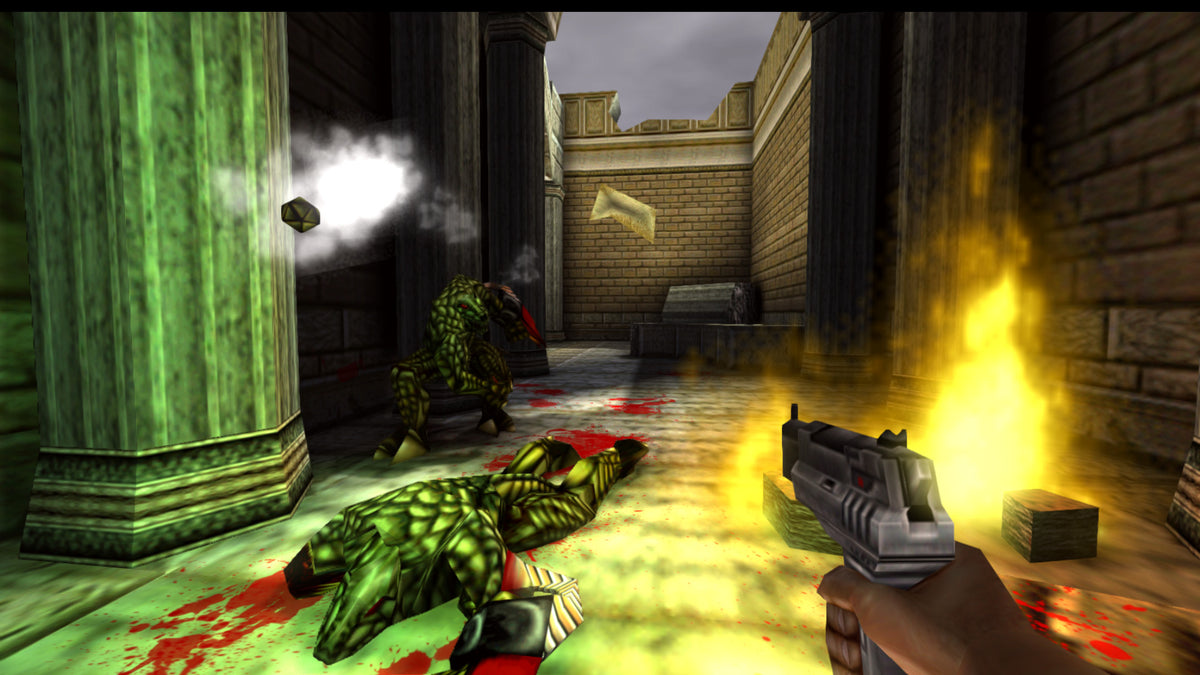
Featured image: Turok 2: Seeds of Evil in Nightdive's PC remaster, from the official publisher gallery. Historical console images below are labeled by platform; remaster screenshots do not demonstrate original N64 image quality.
Before the cartridge: a comic-book hero with more than one identity
Turok existed long before the Nintendo 64. The character debuted in comics in 1954, with different publishers and creative teams later reworking the premise. SYFY's interview with writer Ron Marz traces that history while discussing another comic reinvention.
Those roots matter because the games did not invent a completely blank dinosaur-hunting brand. An Indigenous hero, a strange lost world, and a collision with creatures from another age were already part of the attraction. The games added their own characters, settings, weapons, and continuity choices.
It is a mistake to assume that every person called Turok is the same protagonist. Tal'Set, the Fireseed family, and the later Joseph Turok belong to different parts of that history. The recurring identity gives the series room to continue without sending exactly the same man back into exactly the same jungle.
For a newcomer, the useful question is which game branch you are buying. You do not need to solve several decades of comic continuity before picking up a controller. The dinosaur in front of you is unlikely to check your reading list.
1997: Dinosaur Hunter makes the Lost Land a place to explore
Turok: Dinosaur Hunter began the game series on Nintendo 64 in 1997. Iguana Entertainment's shooter mixed an arsenal of conventional and extravagant weapons with jumping, climbing, hidden routes, and a world that demanded more than moving down one corridor.
Nightdive's account of the original identifies the Lost Land, the Campaigner, and the scattered pieces of the Chronoscepter. It also lists enemies ranging from raptors to alien infantry and a heavily armed T-Rex. This was science fantasy with prehistoric teeth from the beginning.

The exploration changes the rhythm of the shooting. A battle can be a local problem inside a much larger navigation problem. You may win the encounter and still need to figure out where the route continues, what an elevated ledge connects to, or what you have not yet found.
That is the distinction we would keep in mind before buying. Dinosaur Hunter is appealing if you want movement and discovery alongside the shooting. It can ask for patience from someone expecting an uninterrupted sequence of clearly marked encounters.
The original N64 presentation also gives the world its particular atmosphere. The limited view distance makes the space ahead uncertain, while the cartridge-era textures and geometry have their own character. Nightdive's later remaster changes how clearly you can read that space. Both are relevant versions, with different reasons to choose them.
Turok 2: Seeds of Evil goes bigger, stranger, and more demanding
The 1998 sequel, Turok 2: Seeds of Evil on N64, changes the enemy to the Primagen and builds a broader set of missions and environments around the hunt. The Fireseed branch of the story becomes central, with Joshua Fireseed as its Turok.
The locations are a major part of its personality. Nightdive's overview identifies six quest levels, including the Port of Adia, the Death Marshes, and the Lair of the Blind Ones. That is a substantial change of scenery from a simple promise to shoot dinosaurs in the woods.

The sequel also makes the series' weapon design impossible to ignore. The Cerebral Bore locks onto a suitable target and sends a drilling projectile after it. The Shredder offers ricocheting shotgun fire. These are weapons with recognizable behaviors, rather than a row of guns distinguished mainly by a damage number.
Our favorite thing about that approach is how it affects memory. You remember an enemy encounter partly through the absurd tool you brought to it. A good arsenal gives the player more than efficiency; it gives the action a personality.
The same sequel can be a test of attention. Its large spaces and objectives invite you to learn a level, but can also leave you feeling that the last missing piece is somewhere you have already been. Bigger is useful only when you enjoy the kind of navigation the extra size creates.
We would start with the first game if you want to follow the original design progression. If the weirder arsenal is the main attraction, Seeds of Evil makes a very convincing argument on its own. Just arrive prepared to explore, rather than expecting every objective to line up politely in front of the muzzle.
1999: Rage Wars takes the arsenal into the arena
Turok: Rage Wars on N64 puts multiplayer competition at the center. Games Database’s historical listing records its 1999 release and multiplayer focus. The format includes arena battles and trials rather than another sprawling narrative campaign.
That makes sense as a use of the series' weapons. An unusual gun can create a memorable single-player fight, but another human can learn to avoid it, retaliate, or make a spectacularly poor decision with it. The attraction becomes competition and repetition rather than uncovering the next part of the Lost Land.
It is also why we would not recommend treating Rage Wars as the missing campaign between 2 and 3. Its place in release order does not establish its purpose. Someone collecting the N64 run may want it for the multiplayer branch; someone seeking a solo story should understand the difference first.
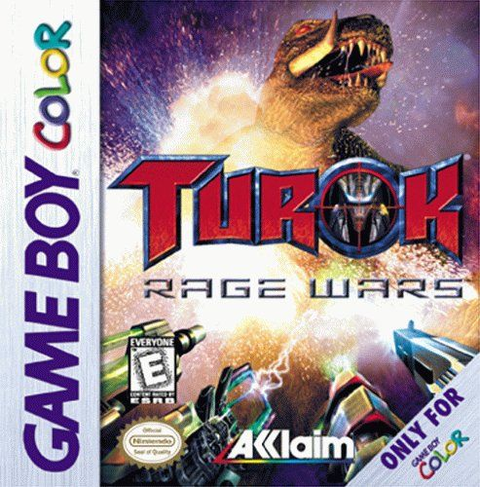
Platform checking is especially important here. The Game Boy Color game with the same title is a different design. A small cartridge with a familiar logo is not evidence that the N64 arena experience has somehow been squeezed into your handheld.
2000: Shadow of Oblivion makes the family tree playable
Turok 3: Shadow of Oblivion originally released on N64 in 2000. Its story follows the events of Seeds of Evil, with Joseph and Danielle Fireseed as the selectable protagonists facing Oblivion and the Flesh Eaters. Nightdive and Atari's trilogy announcement identifies them as Joshua's siblings.

That family connection makes the third entry a more direct continuation than a title alone would communicate. It gives the series a reason to change its playable lead while keeping consequences from the earlier story in view.
The third game's more directed progression also changes the appeal. Where the earlier games can turn navigation into a major part of the challenge, a stronger forward pull puts more weight on the sequence of scenes and encounters. That trade can feel welcome or restrictive depending on what brought you to Turok.
We would play it after Seeds of Evil for the story connection. If you are comparing versions, the image here is from Nightdive's remaster. The 2000 N64 cartridge and the later restoration are different releases, even when a listing abbreviates both to “Turok 3.”
The handheld games deserve their own branch
Turok: Dinosaur Hunter, Turok 2, Turok 3, and Rage Wars all have Game Boy or Game Boy Color counterparts. Evolution also received a Game Boy Advance game. The shared titles can make a collection look straightforward until you start comparing what is actually on the screen.

The Game Boy Color Rage Wars, for example, uses an overhead action perspective. It is visibly a different game from the N64 first-person arena shooter. Our Rage Wars listing is the Game Boy Color release, so that is the experience the link refers to.
Evolution on GBA is another useful example: its side-scrolling action is a separate interpretation of the name, rather than a miniature version of the home-console camera and levels. M! Games' archived GBA review describes that 2D approach.
We would collect these as parallel versions. Different hardware often required a different answer to the same licensed premise. That can make the portable games interesting in their own right, but it also makes them poor substitutes when you are searching for a specific console game.
2002: Evolution trades the hub for a more direct campaign
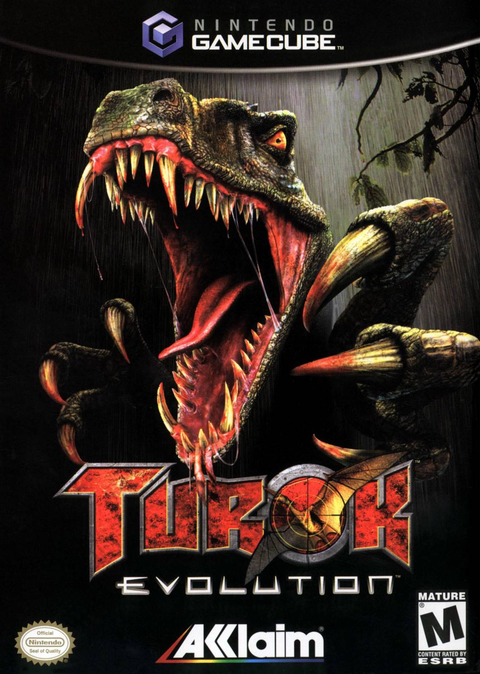
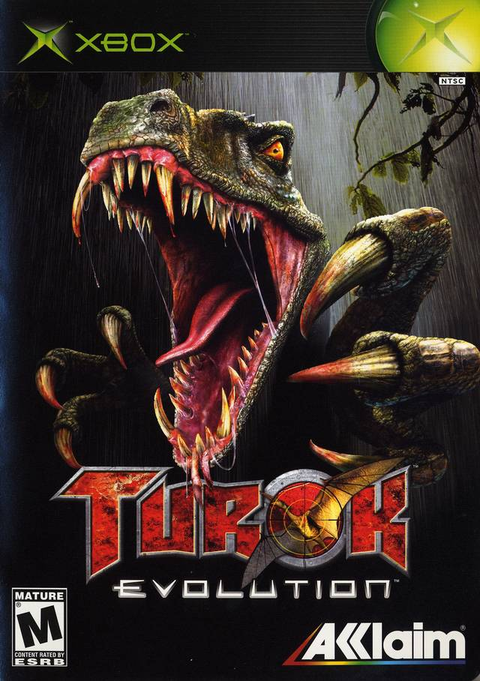
Turok: Evolution brought the series to GameCube, PS2, and Xbox in 2002. Its home-console campaign returns to Tal'Set and the Lost Land, with on-foot shooting and flying sections among its major changes.
In a contemporary development interview, creative director David Dienstbier described a more straightforward progression with no hub to unlock through collected artifacts. Lead designer Neill Glancy discussed vegetation, concealment, and using the environment against enemies. Those are documented development goals, rather than a claim that every preview promise shipped unchanged.

That change of structure matters more than simply having better hardware. A hub gives you reasons to return, search, and connect separate routes. A more directed campaign can spend its attention on the next situation. You gain momentum while changing the role exploration plays.
The flying sections also show a series trying to broaden its scale. Leaving the ground changes how you read a location and where threats can come from. It is a different fantasy from carefully working through a jungle path with a weapon at eye level.
Our reason to revisit Evolution would be that transition. It sits between the N64 identity and the later reboot, still connected to the Lost Land while changing the campaign around it. Treating it as merely “Turok on a newer console” misses the actual design decisions.
For physical copies, we have separate listings for PS2, Xbox, and GameCube. Compare the exact platform and included items before choosing.
2008: the reboot puts a soldier between human enemies and dinosaurs
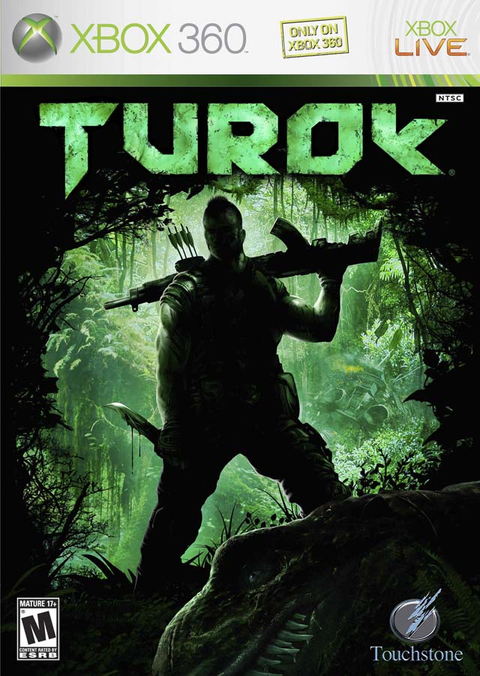
Propaganda Games' Turok is a separate reboot, published under Disney's Touchstone label. It arrived on PS3 and Xbox 360 in 2008, with a PC version following. Studio head Josh Holmes's launch-period interview explains the new production and its console release plan.
The protagonist is Joseph Turok, rather than Joseph Fireseed from Turok 3. The shared first name is an excellent little obstacle course for anyone trying to follow the series from a list of search results.

The Xbox 360 packaging captures the new pitch clearly: human enemies, dangerous dinosaurs, quiet kills or heavier firepower, and the possibility of using the wildlife against enemies. That is a different encounter structure from assuming everything on the screen exists only to charge the player.
Our reading is that a creature becomes more interesting when it can disrupt someone else's plan as well as yours. A firefight can turn into a three-way problem. The knife and stealth options also move the action toward proximity and opportunity, rather than making every encounter about selecting the strangest gun.
That does not make the reboot the same experience as Dinosaur Hunter with more detailed foliage. The military framing, character presentation, and encounter priorities give it another identity. Whether that is the Turok you want is a more useful question than whether the title is allowed to look different.
Check our Turok Xbox 360 listing for this game. The packaging describes the 2008 feature set. Check current service availability before buying specifically for online play.
Nightdive's remasters make returning a different proposition
Nightdive restored the first three numbered campaigns for modern platforms. Its first-game description lists widescreen and high-resolution support, updated visual effects, and freely rebindable controls. Those changes make a practical difference when revisiting a shooter originally designed around much older hardware.
The PC remaster of Seeds of Evil also lists updated maps, improved movement, a quick-warp system for previously visited portals, and saving and loading anywhere. Those are meaningful navigation and convenience changes, not simply a sharper texture pack.
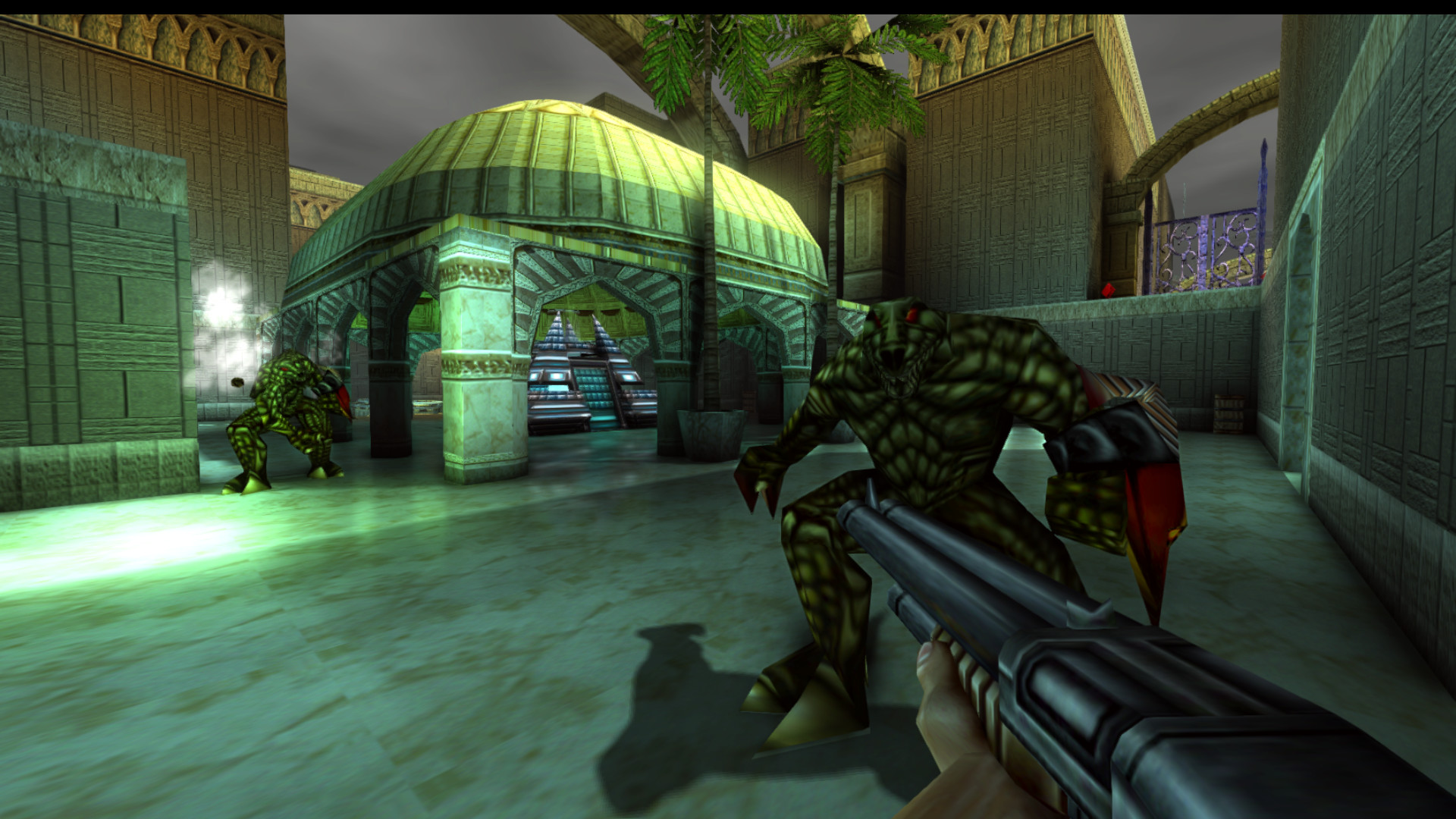
Quick travel is particularly relevant to the second game. If the problem is returning to an already visited location, reducing the journey changes the amount of friction between understanding an objective and completing it. You still need to make sense of the space, but less of the session has to be spent retracing the same steps.
Turok 3: Shadow of Oblivion Remastered released in 2023, using Nightdive's KEX technology and rebuilding elements of the presentation. Its listing describes enhanced environments, models, lighting, and support for modern controls. Performance claims depend on the platform, so do not treat a PC feature list as a guarantee for every console.
For a player who wants to try the classic campaigns with contemporary controls, the remasters are our first suggestion. For a collector interested in original hardware, the N64 cartridges remain a different proposition. A restoration makes a game easier to revisit without turning the original object into the same purchase.
There is also a modern Turok Trilogy Bundle. The publisher's physical-edition announcement identifies the first three campaigns. That bundle is not a collection of Rage Wars, Evolution, the 2008 reboot, and every portable game.
Escape from Lost Valley: the small, strange side trip
Released in 2019, Pillow Pig Games' Turok: Escape from Lost Valley uses a much softer visual style and follows Turok with Andar through a third-person adventure. The publisher's Steam page explicitly bases it on the Son of Stone comic characters.

It is worth including because a franchise history built only from the loudest first-person games misses how far the license has traveled. A different art style and a smaller adventure can be part of the same publishing history without being the next numbered shooter.
That Steam page currently states that the game is no longer available on the store. An archived product page can preserve useful history after a game has left sale.
Turok: Origins is the next reinvention, not another N64 remaster
As of October 23, 2026, Turok: Origins is announced for spring 2027. Saber's August 2026 story-trailer announcement supplies that window. The older 2026 target should not be presented as the current plan, and there is no exact launch day in that announcement.
In the director's original introduction, Jesus Iglesias explained the move to third person and the opportunity for solo play or online co-op. He also identified it as a standalone adventure that does not require playing the older games first.
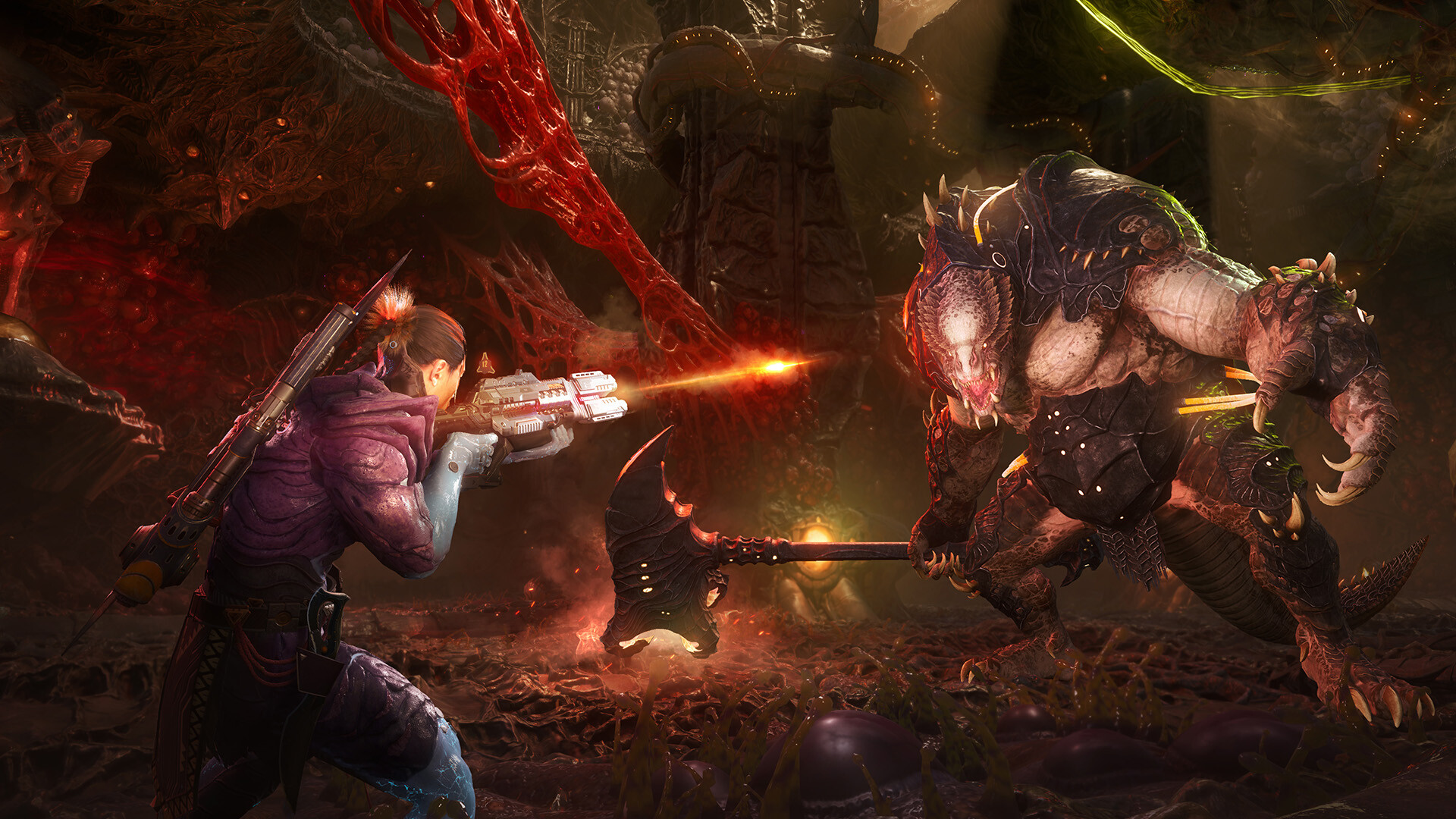
The current publisher listing describes futuristic weapons, abilities gained through enemy DNA, and journeys across the Lost Lands. The story-trailer update also confirms the Cerebral Bore's return. That is a recognizable part of the old arsenal inside a new campaign structure.
Our interest is in what the team does with that change. Co-op shifts attention toward coordination. A third-person view changes the player's relationship with the character and the creatures around them. Neither feature, by itself, tells us whether the finished encounters will be satisfying.
The right comparison will be how well the game makes exploration, unusual enemies, and extravagant weapons work together. The logo earns curiosity. It does not get to submit the final review in advance.
Which Turok should you start with?
For the original design: begin with Dinosaur Hunter, then Seeds of Evil, then Shadow of Oblivion. Choose original hardware for the cartridge-era experience, or Nightdive's remasters for the modernized route.
For the wild arsenal: Seeds of Evil is the obvious draw. Give its navigation and mission structure room to work; the interesting guns are only part of the game.
For the other branches: Rage Wars on N64 is the arena-focused option. Evolution shows the next console generation's change of direction. Turok (2008) is the military reboot. The handheld counterparts need to be chosen individually, because the name does not establish the gameplay.
For Origins: follow current announcements and wait for the finished release. Check Saber’s updates as the spring 2027 target approaches.
Keep regional hardware, platform compatibility, condition, and contents separate when buying physical games. “Turok” can identify a franchise, a 1997 game in a remaster listing, or the 2008 reboot. The full listing is your friend here.
Buy your Turok games from Zypher
Want to build the collection? Buy the games covered here from us at Zypher. Check Dinosaur Hunter on N64, Seeds of Evil on N64, Evolution on GameCube, Evolution on Xbox, Turok on Xbox 360, and Rage Wars on Game Boy Color.
Open the exact product page for current availability, condition, and included items. You can also browse our Turok catalog, or sell your old games to Zypher when you are ready to make shelf space.
The dinosaurs have enough firepower. Your collection could use some attention.