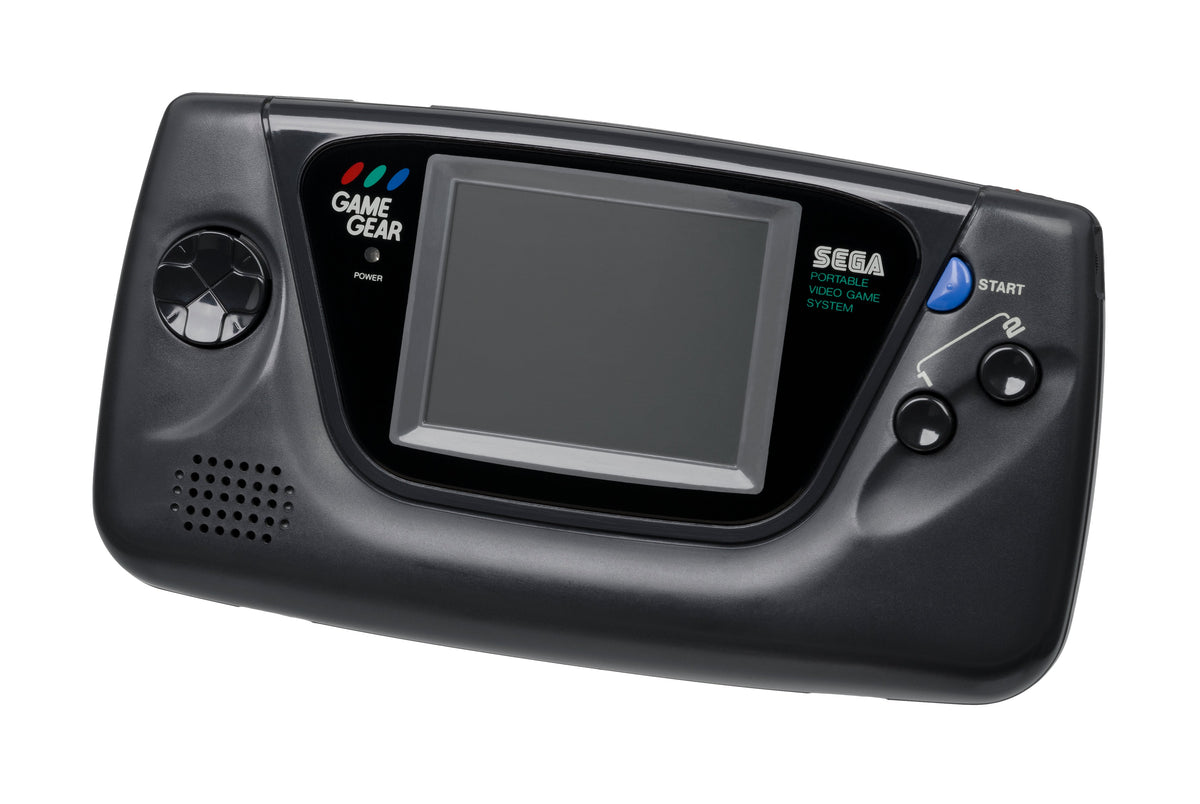
Sega Game Gear put a backlit color screen between your hands in 1990. It also asked you to feed it six AA batteries. That is a spectacular way to make a handheld feel futuristic and your next shopping list feel very practical.
For this WTF Happened To...?, we're revisiting an overlooked Sega machine through a specific question: what did you gain, and what did you have to carry, to get that color screen? Its appeal and its compromises belong in the same conversation. A hardware obituary that only counts who beat whom misses the object people actually owned.
Featured image: Sega Game Gear hardware. Photo by Evan-Amos, public domain, via Wikimedia Commons. No changes made. This is a reference photograph, not a Zypher item for sale.
The promise was visible before you pressed Start
Sega's Japanese hardware archive dates the Japanese launch to October 6, 1990 and identifies a 3.2-inch backlit color LCD. Its layout puts the directional pad on one side of the screen and the action buttons on the other. You can see the proposition in the featured photograph without reading a specification table.
The backlight is the important word alongside color. This was a display with its own illumination, rather than a screen whose visibility depended entirely on surrounding light. Our reading is that Game Gear sold a particular kind of independence: a more self-contained viewing experience on a machine you could hold.
That promise still makes the original hardware interesting. A modern screen can make an old game look crisp, but it cannot demonstrate exactly what Sega was asking people to carry in the early nineties. The shell, controls and display are part of the historical experience.
The batteries were part of the specification
For the HGG-3200 described in its archive, Sega specifies six alkaline AA cells and approximately three to four hours of continuous use. Treat that as the manufacturer's historical specification, not a runtime guarantee for a particular used unit today.
The Centre for Computing History's collection entry identifies battery endurance as a disadvantage against the original Game Boy. It also points out the extra weight of the separately sold rechargeable pack. For the battery specification here, we're using Sega's figure for the identified model.
This is the tradeoff that deserves more attention than a simple color-versus-monochrome argument. A brighter-looking specification can win the first comparison and still complicate the day-to-day purchase. Batteries, charging arrangements and what fits in the bag are part of a portable system's design. The screen does not get to submit its review separately from the power supply.

The accessory dream grew larger than the handheld
Sega's archive also describes a separate TV tuner and accessories including a battery pack and car adapter. It even comments on how a heavily accessorized setup grew in size and weight. The company was selling more possibilities for the screen, but the attachments had to go somewhere.
For collectors, that is a useful distinction between an interesting accessory and an essential purchase. Decide whether you want a working game machine, a display of period hardware, or a particular complete package. Those are different projects with different evidence requirements.
A tuner in a photograph should not persuade you that a console listing includes one. Nor does an accessory's historical purpose establish what it will receive or do in your location now. Buy the documented object and its verified functions, rather than the possibilities you remember from an old advertisement.
What actually happened?
The Centre for Computing History dates Sega's withdrawal of Game Gear support to early 1997. That places the original machine's story across several years, rather than making it a product that vanished immediately after its launch.
The museum also records limited Japanese popularity and early build-quality difficulties. Those are its historical assessments. Together with the power requirements, they describe a machine whose appeal came with real compromises. They do not establish a single cause for Sega ending support.
Our interpretation is that Game Gear demonstrates the limits of selling portability through display specifications alone. The display was real. So were the power requirements. That remains a useful way to evaluate a used example: include the power arrangements and accessories in the decision, rather than judging the display by itself.

What is worth owning now?
The surviving value is the original hardware experience and the physical game collection around it. Start with a game you want to play, then ask whether the exact console being offered can demonstrate it clearly. A clean shell is a pleasing photograph; a readable running game answers a more useful question.
Ask a seller for a demonstration of the screen, sound and controls, plus photographs of the battery compartments and the included power equipment. If the unit has been repaired or modified, ask what changed and whether the original parts remain. Avoid assuming that an unspecified “refurbishment” means a particular screen upgrade or internal repair.
Keep repair decisions separate from collecting enthusiasm. The internal photograph above helps show that this is an electronic assembly, not a box that becomes healthy because its outside looks good. If a seller reports a fault, get a repair assessment before treating a replacement part as a guaranteed solution.
Put a Sega handheld game on your Zypher shelf
Buy your next game from Zypher Trading Video Games. Our current Sonic the Hedgehog 2 for Sega Game Gear listing is one place to start a physical handheld shelf. Check the selected condition and included items. It is a game listing, not a promise of a console, tuner or power supply.
Shop Zypher's games, or sell your old games to Zypher. Choose the game you want first. The accessory mountain can wait until you have somewhere to put it.
Sources, photograph permissions and Zypher listing checked November 3, 2026, America/Denver. Historical claims are attributed above; evaluations and buying suggestions are Zypher editorial judgment. Reference photographs do not establish the condition or contents of any store listing.